• Skip to primary navigation
  • Skip to content
  • Skip to primary sidebar

IZA Newsroom

IZA – Institute of Labor Economics

  • Home
  • Archive
  • Press Lounge
  • DE
  • EN

Mark Fallak

How parental role models shape gender inequality in labor markets

December 17, 2024 by Mark Fallak

The persistent gender gap in labor market outcomes, especially the child penalty — the career setbacks women experience compared to men after becoming parents — remains a critical issue in understanding and addressing gender inequality. In a recent IZA discussion paper, Henrik Jacobsen Kleven, Giulia Olivero, and Eleonora Patacchini explore the formative role of parental role models during adolescence in shaping these penalties.

Using longitudinal data from U.S. adolescents tracked from middle and high school into adulthood, the researchers leverage quasi-random variation in classroom exposure to peers with working mothers or fathers. The study finds that adolescents exposed to a higher proportion of peers with working mothers during their school years experience significantly smaller child penalties in adulthood.

Working fathers reinforce traditional gender roles

In contrast, exposure to peers with working fathers amplifies the child penalty, reinforcing traditional gender roles that associate men with breadwinning and women with caregiving roles. This dual influence underscores how male and female parental role models shape diverging career trajectories for women.

The findings persist across various model specifications and control factors, confirming that the observed effects are indeed tied to parental work behavior rather than correlated characteristics like education or income. The research provides compelling evidence that local and immediate social environments, such as the parental employment behaviors of peers, play a crucial role in shaping gender-role ideals. These ideals, in turn, have long-lasting effects on labor market trajectories.

Filed Under: Research Tagged With: child penalty, gender norms

CEO pay disclosure drives wage inequality

December 16, 2024 by Mark Fallak

Policies mandating CEO pay disclosure are often designed to promote transparency and curb wage inequality by addressing concerns over excessive executive compensation. However, a recent IZA discussion paper by Agata Maida and Vincenzo Pezone reveals a stark contrast between the intended and actual effects of such reforms. Instead of reducing income disparities, the disclosure of CEO pay in Italy following a 1998 reform disproportionately benefited top earners within firms, ultimately exacerbating wage inequality.

High CEO pay leads to uneven wage growth

The study finds that firms with high-disclosed CEO compensation experienced significant wage increases at the top end of the pay scale. Workers in the top 5% and 1% of the wage distribution saw notable gains, while the impact on average wages was marginal. As a result, wage inequality within these firms expanded, benefiting the highest earners disproportionately.

Bargaining power as the catalyst

The researchers attribute this effect to shifts in bargaining power rather than changes in workforce composition. High-earning employees, particularly those with access to top management, leveraged the transparency to negotiate higher wages, further skewing the pay distribution.

Regional and experience-based variations

The impact of CEO pay disclosure was not uniform across all workers. Less experienced employees and those based in the primary regions of a firm’s operations were more likely to experience wage increases at the top end. This highlights how proximity to company headquarters and limited prior knowledge of pay structures amplify the effects of transparency.

Filed Under: Research Tagged With: CEO compensation, income inequality, wage bargaining, wage disclosure

Assessing dishonesty in cocoa value chains

December 15, 2024 by Mark Fallak

Dishonest practices in agricultural value chains undermine trust, reduce transparency, and disrupt fair trade. In the cocoa industry, where middlemen play a crucial role in connecting farmers to cooperatives and exporters, these behaviors can distort the flow of certified products and inflate profits at the expense of ethical standards.

To address this issue, Delphine Boutin, Marine Jouvin and Louis Olié conducted a lab-in-the-field experiment in Côte d’Ivoire, the world’s largest cocoa producer. Their IZA discussion paper focuses on understanding the extent and drivers of dishonesty among middlemen and evaluating potential solutions to curb it.

Dishonesty is widespread, but not universal

The study reveals that dishonesty among cocoa middlemen is common but not uniform. Using a modified “die-under-cup” task, the researchers observed that 78% of participants cheated at least once. Most troublingly, 59% of middlemen consistently engaged in dishonest behavior when faced with unfavorable outcomes. In contrast, 22% of participants maintained honesty even when it meant financial disadvantage, pointing to the influence of intrinsic values or ethical considerations.

Who cheats, and why?

The propensity to cheat varies based on individual characteristics. Younger middlemen, those with higher risk tolerance, and those without strong religious affiliations were more likely to engage in dishonest behavior. These findings suggest that age, attitudes toward risk, and moral frameworks play a significant role in shaping decision-making within the cocoa value chain.

Monitoring and penalties can work, but limits remain

The introduction of monitoring mechanisms and financial penalties led to a significant reduction in dishonest behavior. Middlemen were 42% less likely to cheat when there was a chance they could be observed and 52% less likely when observation was paired with financial penalties. However, 59% of participants continued to cheat regardless of these deterrents, highlighting the limits of these measures in isolation. The experimental nature of the setup, where the stakes were limited compared to real-world scenarios, may also explain why such a large group remained unaffected.

Implications for tackling dishonesty in global value chains

This research underscores the potential of combining monitoring and penalties to reduce dishonest behavior in agricultural supply chains. However, it also raises questions about the broader applicability and effectiveness of such measures. Addressing entrenched dishonesty may require more robust interventions, including stricter penalties, enhanced traceability systems, and initiatives that promote ethical decision-making.

By focusing on the cocoa value chain in Côte d’Ivoire, this study provides a foundation for addressing similar challenges in agricultural markets worldwide. Improved transparency and integrity in these systems will be essential for building trust and ensuring fairer outcomes for all stakeholders. According to Reuters, Côte d’Ivoire’s cocoa regulator is currently implementing a reform of the domestic cocoa marketing system that aims at eliminating middlemen to prevent risk and overpayment.

Filed Under: Research

Early inheritances widen the gender wealth gap

December 14, 2024 by Mark Fallak

A recent IZA discussion paper by Charlotte Bartels, Eva Sierminska, and Carsten Schröder explores the persistent gender wealth gap in Germany, uncovering the significant role of inheritance timing in shaping wealth inequalities between men and women. The analysis, based on the German Socio-Economic Panel, provides insights into how wealth accumulation diverges across genders and life stages.

The gender wealth gap: More than earnings

The study reveals that women, on average, possess 40% less wealth than men, a disparity magnified at the top of the wealth distribution. Among the richest 1% in Germany, women comprise less than 30% of individuals. While income and labor market participation play a role, the researchers emphasize the influence of inheritance patterns and lifetime gifts, shedding light on previously overlooked contributors to this inequality.

Timing is key: Inheritance and wealth-building opportunities

The research highlights stark differences in when men and women receive wealth transfers. Men typically inherit earlier in life, providing a critical advantage for wealth-building activities such as entrepreneurship and investment. Conversely, women often inherit later, frequently after the death of a spouse. These later-life inheritances arrive too late to drive substantial wealth accumulation during active, wealth-creating years. Consequently, the average wealth gap conceals a deeper inequality in opportunities available during the prime phases of economic productivity.

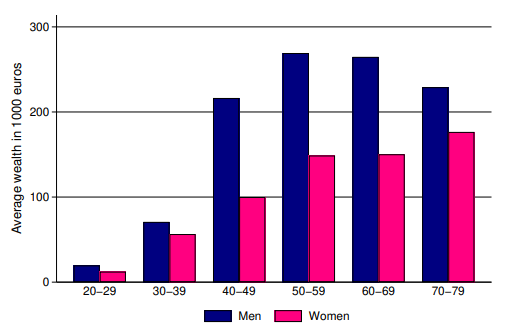
Figure: Average wealth by gender and age

Average wealth is similar for young men and women but diverges sharply from ages 40 to 69, with a gap of around €100,000. The disparity narrows again in retirement and older age.

“Wealth creators” vs. “wealth inheritors”

An important distinction arises between “wealth creators,” who build wealth through earnings and investments, and “wealth inheritors,” who rely on gifts and inheritances. Men dominate the “wealth creator” category, particularly at higher wealth levels, while women are more often classified as “wealth inheritors,” reflecting smaller, delayed wealth transfers.

Filed Under: Research Tagged With: gender, inheritance, wealth

Managerial trust linked to remote work adoption

December 13, 2024 by Mark Fallak

As the COVID-19 pandemic transformed workplaces worldwide, the adoption of remote work varied dramatically between regions and industries. A recent IZA discussion paper by Adam Gill and Oskar Nordström Skans identifies managerial trust as a crucial factor in this divergence.

The study finds a strong association between managers’ beliefs about whether employees can be trusted to work independently without direct oversight and the intensity of work-from-home (WFH) practices. To measure managerial trust, the researchers used survey data from the European Social Survey, focusing on managers’ responses to the question: “Do you think that most people would try to take advantage of you if they got the chance, or would they try to be fair?” Their answers were then linked to regional and occupational variations in WFH intensities.

The findings reveal that countries, regions, and industries where managers exhibited higher trust levels—such as the Nordic nations, Switzerland, and the Netherlands—were more likely to embrace remote work. In contrast, regions in Southern and Eastern Europe, including Bulgaria, Cyprus, and Slovakia, were slower to adopt remote work, reflecting lower levels of managerial trust.

This association holds even after controlling for other dimensions of societal trust and structural factors like broadband access, digital skills, and occupational types. The findings highlight that managerial trust is not merely a reflection of infrastructure or institutions—it is a key correlate of workplace autonomy.

Crucially, the pandemic amplified these dynamics. High-trust regions expanded WFH adoption during the crisis, while low-trust regions failed to “catch up,” reinforcing disparities. The study suggests that fostering managerial trust could unlock the full potential of remote work technologies and practices.

Filed Under: Research Tagged With: management, remote work, shirking, Trust, work from home

Personality traits and signals as predictors of workplace behavior

December 12, 2024 by Mark Fallak

A recent IZA discussion paper by David L. Dickinson and David Masclet investigates how personality traits and other observable characteristics, such as religiosity or a history of time in prison, shape behaviors critical to workplace settings, including honesty and task effort. Through two online experiments, the researchers explored whether these factors reliably predict workplace-relevant outcomes.

The first experiment contrasted individuals with “dark” personality traits, such as narcissism and psychopathy, with those displaying “light” traits, like humanism and faith in humanity. Results showed that individuals with darker traits were more likely to act dishonestly in an honesty task and were less productive in an effort task compared to their lighter counterparts. These findings highlight the value of personality assessments in identifying tendencies that may affect workplace performance.

The second experiment examined two commonly observed signals: regular participation in religious activities and a history of time in prison. It revealed that individuals with “ex-convict” status were more productive in the effort task than religious participants but were more likely to display dishonest behaviors in certain conditions. This nuanced finding challenges the interpretation of weak signals, demonstrating their predictive complexity.

The study concludes that both personality traits and weak signals can provide useful insights into workplace behaviors, but it emphasizes the importance of recognizing their limitations. While dark personality traits and a history of time in prison were linked to undesirable behaviors in some contexts, they also indicated strengths in some instances, such as with ex-convicts being more productive in a simple effort task than religious types. These findings offer a framework for refining recruitment and workforce management strategies.

Filed Under: Research Tagged With: effort, experiment, honesty, personality traits, personnel economics, screening

Can AI match human educators?

December 11, 2024 by Mark Fallak

As artificial intelligence rapidly transforms industries, its role in education is under increasing scrutiny, with tools like ChatGPT promising to ease workloads and personalize learning. A new IZA discussion paper by Arnaud Chevalier, Jakub Orzech and Petar Stankov investigates whether AI-powered tools, specifically ChatGPT 3.5 and 4, could match human instructors in providing feedback and grading student work.

Using a randomized controlled trial (RCT), undergraduate students were divided into three groups: those receiving feedback from human graders, ChatGPT 3.5, or ChatGPT 4. The quality of the feedback was evaluated based on the students’ performance on the subsequent assignment. The double-blind design ensured neither students nor instructors knew the source of feedback, isolating its effects on student outcomes.

Inconsistencies in grading reveal critical shortcomings

The results show that ChatGPT 4 can deliver feedback comparable to human instructors, with students receiving its guidance performing on par with those who received human feedback. In contrast, students who received feedback from ChatGPT 3.5 performed worse in subsequent assessments, suggesting that this earlier version of the AI struggled with providing actionable and effective insights.

When it came to grading, the study highlighted significant gaps. Both versions of ChatGPT tended to assign more generous grades than human graders, and their evaluations lacked consistency and contextual understanding. For example, ChatGPT 3.5 struggled with complex tasks like assessing draft work or interpreting tables and empirical data. Even ChatGPT 4, while more capable, showed limitations. Not only do the grade distributions differ, but the rank of students within the grade distribution varies considerably. Crucially, the variability in grades—where the same submission could receive drastically different scores—further highlights the current unsuitability of AI for grading.

AI shows potential to save educators time

While AI tools like ChatGPT show promise in reducing the time educators spend on feedback provision and marking, allowing them to focus more on teaching-oriented tasks, the study concludes that these tools are not yet ready to fully replace human expertise in grading. As generative AI technology continues to improve, this research provides critical insights for educators and policymakers navigating its integration into the classroom.

[Editor’s note: In keeping with the focus of the study, this summary is based on a ChatGPT-generated draft, edited by a human.]

Filed Under: Research Tagged With: AI, artificial intelligence, education, feedback, grading, teaching

Affordable housing improves individual labor market outcomes

December 10, 2024 by Mark Fallak

A recent IZA discussion paper by Wolfgang Dauth, Andreas Mense, and Matthias Wrede demonstrates that living in affordable housing has long-lasting positive effects on the employment outcomes of low-income individuals. The research integrates data on 465 subsidized rental housing projects in five major Bavarian cities with administrative social security data. This approach allows the researchers to identify individuals who have lived in these housing projects and to track their employment trajectories before and after moving into affordable housing. Given the similarity of the funding scheme to the American LIHTC program, the findings have relevance beyond Germany.

The study’s key finding is that labor income for affordable housing tenants begins to increase two years after admission, compared to what it would have been had they not moved into social housing. By 12 to 13 years after admission, their annual labor income is approximately EUR 4,000 higher—a 20% increase. A substantial part of this income growth is attributed to a significant reduction in unemployment. For this group, the unemployment rate drops from 25% to 15% following admission to affordable housing.

The paper explores four potential mechanisms behind these results:

  • First, subsidized housing units tend to be more centrally located and better connected to public transport than previous residences, enhancing access to local labor markets and improving employment opportunities.
  • Second, affordable housing allows residents to invest in human capital, with a higher likelihood of vocational training enrollment observed within one to five years after moving in.
  • Third, the high stability of affordable housing arrangements in Germany extends residents’ planning horizons by protecting them from being priced out of the local housing market. This stability increases the returns on firm-specific human capital investment, fostering more stable employer-employee relationships.
  • Fourth, object-based housing subsidies may reduce labor supply disincentives associated with tenant-based housing assistance.

These findings underscore that affordable housing can yield benefits beyond simply maintaining housing affordability for low-income households. However, these outcomes depend significantly on the design of housing policies, their interaction with other welfare programs, and the location of affordable housing projects.

Filed Under: Research Tagged With: affordable housing, housing policy, labor market access, labor supply, unemployment, urban

In-person collaboration boosts creativity in virtual teams

December 9, 2024 by Mark Fallak

As remote work becomes a permanent fixture in the modern workplace, questions about its impact on creativity and productivity have taken center stage. The COVID-19 pandemic accelerated the shift to virtual work, and while many employees have embraced the flexibility, employers are increasingly concerned about the long-term effects on collaboration and innovation.

As a result, a growing number of companies are calling their employees back to the office, at least part-time, to restore the in-person interactions that many believe are essential for creative work. This shift raises a critical question: Can virtual teams be as creative and effective as those working face-to-face, or is something lost in the translation to a digital workspace?

A recent IZA discussion paper by  Christian Grund, Christine Harbring and Lisa Klinkenberg offers some answers. Their research reveals that teams working in person are significantly more creative than those working entirely online. The findings suggest that hybrid work models, where teams alternate between in-person and virtual settings, may offer the best of both worlds for fostering creativity.

The study involved a two-phase experiment in which 122 teams, each consisting of two members, were asked to complete the “Unusual-Uses Task,” a well-known measure of creative thinking that resembles a typical non-routine task found in modern work. In this task, participants were required to come up with as many creative uses as possible for everyday objects, such as a tin can or a hanger.

The experiment simulated different workplace environments: some teams worked entirely in person, others entirely online, and some switched between the two settings over the course of the experiment.

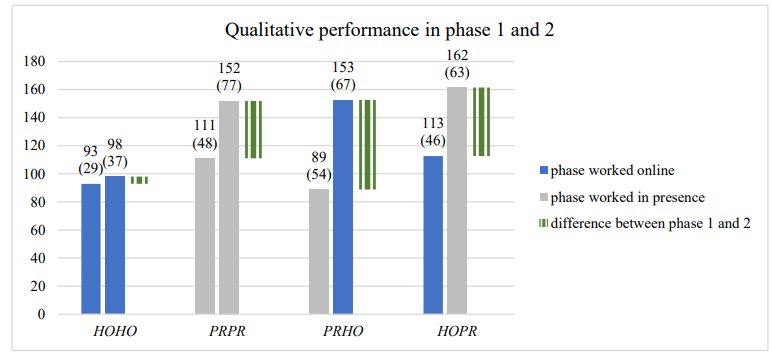
As the figure illustrates, teams that collaborated in person consistently outperformed those who worked solely online. Even more interestingly, teams that experienced at least one phase of in-person collaboration demonstrated higher creative performance in subsequent online phases compared to those who worked entirely online. This finding underscores the importance of face-to-face interaction, even in an era where remote work is becoming increasingly common.

The researchers also explored whether allowing participants to choose their preferred workplace setting would impact creativity. Surprisingly, the study found no significant difference in creative output between teams that self-selected their work environment and those that were assigned one. This suggests that the physical setting itself may play a more crucial role in enhancing creativity than individual preferences.

The findings indicate that integrating in-person collaboration into remote work schedules could be key to unlocking higher levels of creativity and innovation in teams, especially for tasks that require divergent thinking and idea generation.

Filed Under: Research Tagged With: creativity, hybrid working models, remote work, self-selection, teams, work from home

Bonuses and overtime payments drive the gender wage gap

December 8, 2024 by Mark Fallak

The gender wage gap has narrowed significantly in industrialized nations since World War II. Yet, in recent decades, progress has slowed as women remain underrepresented in high-paying firms and tend to earn less than their male counterparts even when working in the same roles. A new IZA discussion paper by István Boza and Balázs Reizer highlights a specific driver of this persistent disparity: flexible wage components like bonuses and overtime payments.

Flexible wages widen the gap

Using extensive Hungarian administrative data linked with wage surveys spanning 2003 to 2017, the study reveals that the gender wage gap is significantly larger in firms where bonuses and overtime payments are prevalent. While firms without these flexible components show negligible gender wage differences, those that rely heavily on them exhibit a gender wage gap exceeding 11% in firm-specific wage premiums—the additional pay provided by firms beyond base wages.

A quarter of the gap stems from flexible wages

Performance and overtime payments contribute 60% to the gender gap in firm-specific wage premiums and 25% to the overall gender wage gap of 23.4% in Hungary’s private sector. This is partly due to sorting: women are less likely to work at high-paying firms offering these wage components. Even within the same firm, women receive a smaller share of firm premiums when flexible wages are involved, suggesting disparities in negotiation outcomes or allocation practices.

Implications for policy and equality

The findings underscore the disproportionate impact of flexible wage components on the gender wage gap. Addressing this inequality requires targeted interventions, such as revisiting the structure and regulation of performance and overtime payments. While these components may boost productivity, their uneven distribution exacerbates wage disparities, particularly for women. This research provides valuable insights for policymakers aiming to enhance fairness and equality in labor markets.

Filed Under: Research Tagged With: bargaining, overtime, performance pay, sorting, wage inequality

  • Previous Page
  • Page 1
  • Page 2
  • Page 3
  • Page 4
  • Page 5
  • Page 6
  • …
  • Page 30
  • Next Page

Primary Sidebar

© 2013–2025 Deutsche Post STIFTUNGImprint | Privacy PolicyIZA