• Skip to primary navigation
  • Skip to content
  • Skip to primary sidebar

IZA Newsroom

IZA – Institute of Labor Economics

  • Home
  • Archive
  • Press Lounge
  • DE
  • EN

Mark Fallak

Men face a tougher time finding part-time work

April 5, 2024 by Mark Fallak

Many juggle work and family commitments, making part-time jobs a desirable option. A recent IZA discussion paper by Daniel Kopp delves into this topic, exploring how readily men and women find part-time work in Switzerland.

Using large-scale data from an online recruitment platform and an online job board, Kopp’s analysis exposes a concerning trend: recruiters favor full-time applicants over part-time ones. Interestingly, this “part-time penalty” is harsher for men than women.

Even when accounting for job and workplace characteristics, the bias persists. The study suggests gender stereotypes as a significant factor behind this disparity. Men seeking part-time work face greater resistance compared to women, potentially hindering a more balanced division of paid and unpaid labor between genders.

Filed Under: Research Tagged With: full-time, gender equality, hiring, online labor markets, part-time, recruitment

How are firms affected by parental leave absences?

April 3, 2024 by Mark Fallak

Motherhood and parental leave are frequent causes of worker absences and employment interruptions. Paid parental leave is a key family policy helping parents to reconcile work and family life, but it presents logistical challenges to firms in managing these employment gaps. The potential costs are frequently raised as arguments against more generous parental leave policies.

In a new IZA discussion paper, Mathias Huebener, Jonas Jessen, Daniel Kuehnle and Michael Oberfichtner study how small- and medium-sized firms are affected by parental leave absences using linked employer-employee data from Germany.

Increased pre-leave hiring, incomplete replacement

Analyzing high-frequency data, the study shows a rise in firm hiring around six months before childbirth. However, this increase suggests replacement for only one-third of mothers. Notably, replacement hiring is significantly higher for mothers with fewer colleagues performing similar tasks, which implies they cannot easily be replaced internally.

Most pre-leave hires have similar demographic characteristics as mothers (young women). Interestingly, there is no evidence that they are more likely to exit the firms again upon the mothers’ return, suggesting that joining a firm as a parental leave replacement can be an important stepping stone into permanent employment.

No long-term impact of extended leave

The study further examines the effects of a 2007 leave extension for higher-earning mothers. While the reform delayed mothers’ return to their pre-birth firms in the first year, it had no lasting impact on their long-run employment outcomes. The delay was more significant for mothers with fewer co-workers, who previously took shorter leave.

During the extended parental leave period, firms showed a reduction in employment levels, suggesting that replacement hiring did not fully cover the absences. However, there were no effects on firms’ employment or wage bill in the long run. Firm closures rates were also unaffected by longer parental leave absences.

No reduced hiring of young women

Finally, the study investigates whether firms adjust hiring practices based on anticipated longer leave absences. Since replacements are costly, firms might avoid hiring young women who are statistically more likely to take extended leave after the reform. The well-intended policy could then backfire at the expense of young women, harming their labor market prospects.

However, comparing long-term hiring decisions in firms experiencing post-reform leave absences to those with pre-reform absences, the study finds no evidence of a negative impact on the hiring probability of young women. This holds true across various estimation methods and even for smaller workgroups where internal adjustments might be more challenging.

One explanation could be the prevalence of part-time work among mothers returning from leave in Germany. The overall impact of a longer part-time absence might be much less significant for firms than the birth-related absence itself. Additionally, because parental leave absences are known several months in advance, firms can proactively adjust processes to minimize disruption.

Filed Under: Research Tagged With: parental leave, worker absences, worker substitutability

Work-home distances increase in Germany

March 25, 2024 by Mark Fallak

A new IZA discussion paper by IAB researchers Sena Coskun, Wolfgang Dauth, Hermann Gartner, Michael Stops and Enzo Weber examines how the rise of remote work during the COVID-19 pandemic is impacting career choices and where people live.

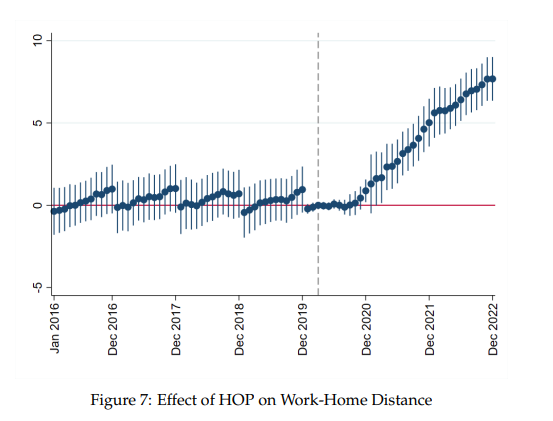
The authors analyze large datasets on employment history in Germany alongside a new indicator for remote work potential across different occupations. Their findings reveal a clear trend: since the pandemic, workers in jobs conducive to remote work have begun living farther from their workplaces.

The association of working-from-home potential and work-home distance has increased significantly since 2021 as compared to a stable pattern before.

This shift is particularly pronounced for new hires, suggesting a deliberate choice towards remote jobs with greater physical distance from the office.

The research also indicates that this trend is most significant in large cities, suggesting that remote work offers an escape from tight housing markets. Interestingly, the study doesn’t find a difference in how this trend affects men versus women.

Filed Under: Research Tagged With: commuting, urban labor markets, working from home

First-generation high achievers face hidden obstacles on path to success

March 22, 2024 by Mark Fallak

High-achieving university graduates from families without a history of higher education, despite their academic success, encounter disadvantages in their academic and professional journeys, according to an IZA discussion paper by Nikki Shure and Larissa Zierow.

The researchers examined data on scholarship recipients in Germany, all ranking in the top percentile nationally. Surprisingly, even these top performers from working-class backgrounds were more likely to choose universities closer to home and with lower prestige compared to their peers with college-educated parents.

The study suggests these first-generation graduates may prioritize factors beyond academic ranking, such as staying close to family or minimizing costs. Additionally, they were less likely to pursue fields with high earning potential and gravitated towards jobs with greater stability. The research also highlights a gender gap, with first-generation female graduates appearing to undervalue the professional networking opportunities offered by the scholarship program.

These findings point to hidden obstacles faced by high-achieving students from working-class families, even after gaining entry into top academic programs. Further efforts may be needed to ensure all students, regardless of background, can leverage their talents to achieve their full potential in the job market.

Filed Under: Research Tagged With: first-generation, higher education, socio-economic gaps

Vocational language courses boost skills but struggle to directly improve job prospects

March 20, 2024 by Mark Fallak

Since 2016, the German government has been offering Berufssprachkurse (BSK), or vocational language courses, to support the labor market integration of immigrants with a need for German language training. By the end of 2022, 775,000 people had started a BSK course.

A research group commissioned by the Federal Ministry of Labor and Social Affairs to investigate the effects of BSK found that participants significantly improved their German language skills compared to similar non-participants. However, the study found former BSK participants were less likely to be employed within 30 months of starting the course. This implies that employment rates remain lower even after completion of the course, which is usually full-time.

The study does highlight positive impacts. In particular, BSK graduates were more likely to pursue further training or education compared to the control group. Whether this translates into improved employment outcomes in the long run remains to be investigated.

The report proposes several improvements to BSK, including:

  • Earlier career guidance: Job centers and employment agencies should offer career advice to BSK participants before they finish the course.
  • More part-time options: Expanding part-time BSK courses, including online or hybrid formats, would allow more working individuals to improve their German.
  • Better childcare support: The government should explore ways to help BSK participants with childcare needs.
  • Improved teacher conditions: Better pay, more teaching autonomy, and flexible work models could attract and retain qualified BSK instructors.

Filed Under: Research Tagged With: immigration, labor market integration, language

IZA study analyzes HR practices to recruit and retain skilled workers

March 12, 2024 by Mark Fallak

German companies are struggling to hold onto skilled workers, according to a new IZA Research Report commissioned by the Federal Ministry of Labor and Social Affairs. The researchers analyzed data from the Linked Personnel Panel (LPP), a nationwide survey of businesses and employees over an eight-year period. The evaluation of the survey data collected every two years from 2012 to 2020 underlines the growing challenge of securing skilled workers, but also shows opportunities and key areas for corporate human resources to address this challenge.

The findings reveal a concerning trend: the number of applicants per open position is dropping, it takes longer to fill vacancies, and employee turnover intentions are rising. While companies acknowledge the importance of a positive work environment and competitive pay in retaining staff, the study identified a troubling gap between this awareness and actual implementation.

Despite recognizing the benefits of a good company culture, many businesses haven’t translated this knowledge into actionable practices. Employees report a decline in overall work atmosphere, suggesting companies are failing to address their concerns. The report highlights the need for companies to bridge this “knowing-doing gap” by actively implementing strategies that promote employee satisfaction and loyalty.

Filed Under: Research Tagged With: employee retention, HR strategy, human resources, skilled workers, work culture

25th IZA Summer School: Applications open!

March 11, 2024 by Mark Fallak

Fostering the next generation of researchers is a cornerstone of IZA’s mission. The IZA Summer School provides an unparalleled opportunity for PhD students to gain insights from leading international researchers on cutting-edge advancements in their fields. It’s a vibrant platform for discussing research, interacting with faculty, and building relationships with fellow students.

In celebration of its 25th anniversary (July 15-19, 2024), the IZA Summer School will embark on a new chapter. The program will now alternate its main focus between labor economics and behavioral economics each year.

This year’s group of lecturers include highly renowned international economists working at the intersection of both fields:

  • Stefano DellaVigna is a Professor of Economics and Business Administration at UC Berkeley and Co-Director of the Initiative in Behavioral Economics and Finance. He is also a co-editor of the American Economic Review.
  • Ernst Fehr is a Professor of Economics at the University of Zurich. He is a pioneer in behavioral economics and co-founder of the Zurich Center for Neuroeconomics.
  • Ulrike Malmendier is a Professor of Economics and Finance at UC Berkeley and Co-Director of the Initiative for Behavioral Economics and Finance. She is also a Member of the German Council of Economic Experts.
  • Andrew Oswald is a Professor of Economics and Behavioural Science at the University of Warwick. He is also an honorary Senior Research Fellow in the Wellbeing Research Centre at Manchester Harris College, University of Oxford, and Chair of the IZA Network Advisory Panel.
  • Amelie Schiprowski is an Assistant Professor of Economics at the University of Bonn and a faculty member of the ECONtribute Cluster of Excellence. She is also an Alumna of both IZA and the IZA Summer School.
  • Florian Zimmermann is a Professor of Economics at the University of Bonn, member of ECONtribute and IZA Research Director, having served in this capacity at the briq Institute of Behavior & Inequality before its reintegration into IZA.

+++

Applications for the 25th IZA Summer School are now open until March 31, 2024.

Filed Under: IZA News

Award-winning research in the economics of climate change

March 6, 2024 by Mark Fallak

To foster research into the nature and implications of climate change, IZA gives an award for “Innovative Research in the Economics of Climate Change” (IRECC) for the two best topical IZA Discussion Papers of the previous year. Worth 10,000 euros, the IRECC Award recognizes important new insights into the broader, often underestimated consequences of climate change and the effects of environmental policies on society and the labor market.

Real-world willingness to pay for carbon offsets

One of the two papers selected for the 2024 IRECC Award is “Willingness to Pay for Carbon Mitigation: Field Evidence from the Market for Carbon Offsets” (IZA DP No. 15939). In this study, Matthias Rodemeier sheds light on a crucial question: how much are people truly willing to pay to protect the environment? He does so by analyzing real-world behavior rather than hypothetical surveys.

Rodemeier examines the choices of over 250,000 German delivery service customers that were offered voluntary carbon offsets. Interestingly, consumer demand for offsets increased when prices were subsidized but not when the compensated amount of carbon was matched by the delivery service. However, transparency was key. When explicitly informed that the delivery service is matching the offsetting of emissions on its own costs, consumer behavior shifted dramatically. A salient 300% match of emissions boosted offset demand by 22%.

Thus, a simple intervention that advertises the firm’s participation in the offsetting costs makes subjects sensitive to the impact of carbon mitigation. The implied willingness to pay (WTP) for carbon mitigation increased from practically zero to €16 per tonne of CO2 (tCO2).

Two additional surveys reveal that the increase in WTP due to the firm’s contribution is mostly driven by fairness preferences and not by a higher intrinsic valuation for carbon mitigation.

This research further exposes a significant gap between what people say they would pay in surveys (hypothetical WTP) and what they actually do (revealed preferences). In this case, hypothetical WTP averaged €238/tCO2 – a staggering 1,338% higher than revealed preferences. This highlights the importance of using real-world behavior to understand true environmental values.

Long-term economic and social effects of climate change

The second award-winning paper, “The Effects of Climate Change in the Poorest Countries: Evidence from the Permanent Shrinking of Lake Chad” (IZA DP No. 16396) by Remi Jedwab, Federico Haslop, Roman Zarate, and Carlos Rodriguez Castelan, tackles a neglected aspect of climate change: its slow, gradual effects on societies. The research uses the dramatic decline of Lake Chad – once the world’s 11th largest – as a case study.

Lake Chad shrunk by 90% between 1963 and 1990 due to external factors. While water supply decreased, land supply increased, which could in theory generate both negative and positive economic effects. The researchers innovatively compiled population data for nearby regions across four African nations (Cameroon, Chad, Nigeria, and Niger) spanning from the 1940s to the 2010s.

Their findings are concerning. Population growth near the lake slowed significantly only after the shrinkage began. This implies limited ability for communities to adapt. Furthermore, the negative impacts on livelihoods – fishing, farming, and herding – outweighed any potential benefits from the newly exposed land.

The study employs a spatial model to estimate welfare losses, considering potential adaptation. The results show an overall decline of 6%, with Chad experiencing the most significant impact (9%). The model further explores the potential effects of various policies – migration, land use, trade, infrastructure, and urbanization – to understand how these factors might influence the situation.

The limited effectiveness of adaptation strategies in this case underscores the vulnerability of the poorest countries to climate change. These findings have broad implications for designing policies to support these nations in facing the challenges of a changing climate.

+++

The IRECC winners “represent the best of modern applied-economics research,” according to the award committee made up of Susana Ferreira (University of Georgia) and Andrew Oswald (IZA and University of Warwick).

Filed Under: IZA News Tagged With: climate change, IRECC

How the division of roles within the family shapes job satisfaction

February 15, 2024 by Mark Fallak

The impact of the pandemic and labor shortages has brought the issue of job satisfaction to the forefront of public discussion. Within the scientific community, this topic has been under investigation for a long time. A notable finding emerges when examining job satisfaction across genders: despite women earning less than men, they consistently report higher job satisfaction.

This observation persists even when comparing a woman and a man whose jobs have similar characteristics and are similar in other personal characteristics. The scientific literature has coined this phenomenon the “paradox of the contented female worker.”

How can the apparent satisfaction of women in lower-paying jobs be explained? In a new IZA discussion paper, Christian Bredemeier, Patrick Ndlovu, Suncica Vujić and Roland Winkler propose a novel hypothesis to explain this seeming paradox. They argue that the alignment of an employee’s preferences with the nature of their job is a pivotal factor.

Some workers may appreciate a team-oriented work environment, while others may be more interested in a more competitive work atmosphere. Consequently, workers with varying preferences may exhibit disparate satisfaction levels within the same workplace. For example, a company fostering a team-oriented work environment would experience high satisfaction among employees who prefer such an environment, while more competitively oriented colleagues would be less satisfied.

Secondary earners may choose more satisfying jobs

The study posits that women are more likely than men to choose employment opportunities that align more closely with their preferences. The authors attribute this to the typical household roles of men and women. A household’s decision-making process between opting for a better-compensated job and one that aligns with personal preferences is influenced by the relative earnings of both spouses.

When one assumes the primary responsibility for the household income, the job choice decision leans towards selecting a position with a higher salary at the expense of giving up appreciated non-pay job attributes. By contrast, individuals who take the role of secondary earner are more likely to prioritize personal preference over higher income.

Statistically, women are mostly secondary earners in their households. According to the researchers’ theory, this pattern leads to more frequent decisions of women in favor of jobs that align with personal preferences and higher job satisfaction. At the same time, this pattern leads to a strengthening of existing differences in earnings between men and women.

Job satisfaction gap among married couples with children

To test their theory, the authors analyze a combination of survey and tax data from over 5,000 Canadians, linking their information about job satisfaction with household income. The empirical findings align closely with the theory. On average, observed women report significantly higher job satisfaction than men, even after accounting for the average impact of individual and workplace characteristics.

However, this disparity in job satisfaction is not present in all population groups. It is distinctly evident within married couples with children and a traditional division of roles, where the male partner contributes more than half of the household income. In contrast, there are no discernible gender differences in job satisfaction among singles, childless couples, and couples with a less traditional division of roles. This underscores the pivotal role family decisions and within-family earner roles play in shaping an employee’s job satisfaction.

Filed Under: Research Tagged With: family, gender, household, job satisfaction

A dataverse for labor economics

February 14, 2024 by Mark Fallak

The IZA Research Data Center (IDSC) has recently launched the IDSC dataverse as a new service to improve the accessibility of research data along the FAIR principles (data is to be: Findable, Accessible, Interoperable and Reusable).

As part of a project funded by the German Federal Ministry of Education and Research (BMBF), the IDSC and IZA’s ICT group collaborated on migrating its IDSC research data repository to a version of the well-known IQQS Dataverse software. This BMBF project aims at developing tools for Trusted Data Custodians in data-driven research.

The new repository offers various models for depositing data, meta-data or code to meet the diverse needs of researchers, such as publication and funding requirements, as well as standards set by journals, projects, or organizations. Researchers or organizations that store a dataset with the IDSC dataverse can choose an availability status that meets their needs.

Options include datasets, which can be downloaded either anonymously or by registered users, a dataset under embargo or a dataset that is not available for download at all. Instead, this dataset can be processed against using Josua. In all cases, the depositors receive an IDSC-issued DOI for the proper citation of their dataset and any associated publications.

Data hosted on the IDSC Dataverse is accessible for academic purposes, including secondary research, replication, and teaching in a variety of ways. For clarity, here are examples illustrating different access modes:

  • An example of satisfying a difficult publication requirement. On the one hand the dataset is proprietary and may not be placed online for public download – even in anonymized form – and on the other hand the Journal requires the data be made available for replication as a prerequisite for publication. The IDSC Dataverse hosts replication files and replicators can run their replications using Josua, a code-to-data solution developed at the IDSC, both the proprietor and the Journal accept. Kuhn, P.J. & Shen, K. (2022). What Happens When Employers Can No Longer Discriminate in Job Ads? Research Data Center of IZA (IDSC). Version 1.0. doi:10.15185/w1405.1
  • An example of satisfying publication requirements as well but data is made available through the download of anonymous scientific and public use files after registration. Institute of Labor Economics (IZA). Global Climate Change Survey. Research Data Center of IZA (IDSC). https://dx.doi.org/10.15185/gccs.1
  • An example of a sub-dataverse within the IDSC dataverse: https://dataverse.iza.org/dataverse/G2LM-LIC which contains replication files for various research projects  funded by the G2LM-LIC project with downloadable data.
  • An example of a dataset whose availability status is “embargo” which expires on January 31, 2027 used, for example, by projects to create the container where replication files will be deposited upon completion to comply with funding and publication requirements: https://dataverse.iza.org/dataset.xhtml?persistentId=doi:10.15185/glmlic.596.1

For more information please contact idsc@iza.org

Filed Under: IZA News Tagged With: data repository, IDSC

  • Previous Page
  • Page 1
  • …
  • Page 7
  • Page 8
  • Page 9
  • Page 10
  • Page 11
  • …
  • Page 30
  • Next Page

Primary Sidebar

© 2013–2025 Deutsche Post STIFTUNGImprint | Privacy PolicyIZA