• Skip to primary navigation
  • Skip to content
  • Skip to primary sidebar

IZA Newsroom

IZA – Institute of Labor Economics

  • Home
  • Archive
  • Press Lounge
  • DE
  • EN

Men face a tougher time finding part-time work

April 5, 2024 by Mark Fallak

Many juggle work and family commitments, making part-time jobs a desirable option. A recent IZA discussion paper by Daniel Kopp delves into this topic, exploring how readily men and women find part-time work in Switzerland.

Using large-scale data from an online recruitment platform and an online job board, Kopp’s analysis exposes a concerning trend: recruiters favor full-time applicants over part-time ones. Interestingly, this “part-time penalty” is harsher for men than women.

Even when accounting for job and workplace characteristics, the bias persists. The study suggests gender stereotypes as a significant factor behind this disparity. Men seeking part-time work face greater resistance compared to women, potentially hindering a more balanced division of paid and unpaid labor between genders.
Filed Under: Research Tagged With: full-time, gender equality, hiring, online labor markets, part-time, recruitment

How are firms affected by parental leave absences?

April 3, 2024 by Mark Fallak

Motherhood and parental leave are frequent causes of worker absences and employment interruptions. Paid parental leave is a key family policy helping parents to reconcile work and family life, but it presents logistical challenges to firms in managing these employment gaps. The potential costs are frequently raised as arguments against more generous parental leave policies.

In a new IZA discussion paper, Mathias Huebener, Jonas Jessen, Daniel Kuehnle and Michael Oberfichtner study how small- and medium-sized firms are affected by parental leave absences using linked employer-employee data from Germany.

Increased pre-leave hiring, incomplete replacement

Analyzing high-frequency data, the study shows a rise in firm hiring around six months before childbirth. However, this increase suggests replacement for only one-third of mothers. Notably, replacement hiring is significantly higher for mothers with fewer colleagues performing similar tasks, which implies they cannot easily be replaced internally.

Most pre-leave hires have similar demographic characteristics as mothers (young women). Interestingly, there is no evidence that they are more likely to exit the firms again upon the mothers’ return, suggesting that joining a firm as a parental leave replacement can be an important stepping stone into permanent employment.

No long-term impact of extended leave

The study further examines the effects of a 2007 leave extension for higher-earning mothers. While the reform delayed mothers’ return to their pre-birth firms in the first year, it had no lasting impact on their long-run employment outcomes. The delay was more significant for mothers with fewer co-workers, who previously took shorter leave.

During the extended parental leave period, firms showed a reduction in employment levels, suggesting that replacement hiring did not fully cover the absences. However, there were no effects on firms’ employment or wage bill in the long run. Firm closures rates were also unaffected by longer parental leave absences.

No reduced hiring of young women

Finally, the study investigates whether firms adjust hiring practices based on anticipated longer leave absences. Since replacements are costly, firms might avoid hiring young women who are statistically more likely to take extended leave after the reform. The well-intended policy could then backfire at the expense of young women, harming their labor market prospects.

However, comparing long-term hiring decisions in firms experiencing post-reform leave absences to those with pre-reform absences, the study finds no evidence of a negative impact on the hiring probability of young women. This holds true across various estimation methods and even for smaller workgroups where internal adjustments might be more challenging.

One explanation could be the prevalence of part-time work among mothers returning from leave in Germany. The overall impact of a longer part-time absence might be much less significant for firms than the birth-related absence itself. Additionally, because parental leave absences are known several months in advance, firms can proactively adjust processes to minimize disruption.

Filed Under: Research Tagged With: parental leave, worker absences, worker substitutability

Work-home distances increase in Germany

March 25, 2024 by Mark Fallak

A new IZA discussion paper by IAB researchers Sena Coskun, Wolfgang Dauth, Hermann Gartner, Michael Stops and Enzo Weber examines how the rise of remote work during the COVID-19 pandemic is impacting career choices and where people live.

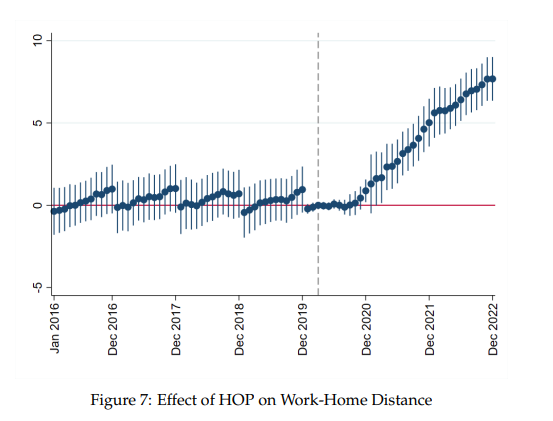
The authors analyze large datasets on employment history in Germany alongside a new indicator for remote work potential across different occupations. Their findings reveal a clear trend: since the pandemic, workers in jobs conducive to remote work have begun living farther from their workplaces.

The association of working-from-home potential and work-home distance has increased significantly since 2021 as compared to a stable pattern before.

This shift is particularly pronounced for new hires, suggesting a deliberate choice towards remote jobs with greater physical distance from the office.

The research also indicates that this trend is most significant in large cities, suggesting that remote work offers an escape from tight housing markets. Interestingly, the study doesn’t find a difference in how this trend affects men versus women.

Filed Under: Research Tagged With: commuting, urban labor markets, working from home

First-generation high achievers face hidden obstacles on path to success

March 22, 2024 by Mark Fallak

High-achieving university graduates from families without a history of higher education, despite their academic success, encounter disadvantages in their academic and professional journeys, according to an IZA discussion paper by Nikki Shure and Larissa Zierow.

The researchers examined data on scholarship recipients in Germany, all ranking in the top percentile nationally. Surprisingly, even these top performers from working-class backgrounds were more likely to choose universities closer to home and with lower prestige compared to their peers with college-educated parents.

The study suggests these first-generation graduates may prioritize factors beyond academic ranking, such as staying close to family or minimizing costs. Additionally, they were less likely to pursue fields with high earning potential and gravitated towards jobs with greater stability. The research also highlights a gender gap, with first-generation female graduates appearing to undervalue the professional networking opportunities offered by the scholarship program.

These findings point to hidden obstacles faced by high-achieving students from working-class families, even after gaining entry into top academic programs. Further efforts may be needed to ensure all students, regardless of background, can leverage their talents to achieve their full potential in the job market.

Filed Under: Research Tagged With: first-generation, higher education, socio-economic gaps

Vocational language courses boost skills but struggle to directly improve job prospects

March 20, 2024 by Mark Fallak

Since 2016, the German government has been offering Berufssprachkurse (BSK), or vocational language courses, to support the labor market integration of immigrants with a need for German language training. By the end of 2022, 775,000 people had started a BSK course.

A research group commissioned by the Federal Ministry of Labor and Social Affairs to investigate the effects of BSK found that participants significantly improved their German language skills compared to similar non-participants. However, the study found former BSK participants were less likely to be employed within 30 months of starting the course. This implies that employment rates remain lower even after completion of the course, which is usually full-time.

The study does highlight positive impacts. In particular, BSK graduates were more likely to pursue further training or education compared to the control group. Whether this translates into improved employment outcomes in the long run remains to be investigated.

The report proposes several improvements to BSK, including:

  • Earlier career guidance: Job centers and employment agencies should offer career advice to BSK participants before they finish the course.
  • More part-time options: Expanding part-time BSK courses, including online or hybrid formats, would allow more working individuals to improve their German.
  • Better childcare support: The government should explore ways to help BSK participants with childcare needs.
  • Improved teacher conditions: Better pay, more teaching autonomy, and flexible work models could attract and retain qualified BSK instructors.

Filed Under: Research Tagged With: immigration, labor market integration, language

IZA study analyzes HR practices to recruit and retain skilled workers

March 12, 2024 by Mark Fallak

German companies are struggling to hold onto skilled workers, according to a new IZA Research Report commissioned by the Federal Ministry of Labor and Social Affairs. The researchers analyzed data from the Linked Personnel Panel (LPP), a nationwide survey of businesses and employees over an eight-year period. The evaluation of the survey data collected every two years from 2012 to 2020 underlines the growing challenge of securing skilled workers, but also shows opportunities and key areas for corporate human resources to address this challenge.

The findings reveal a concerning trend: the number of applicants per open position is dropping, it takes longer to fill vacancies, and employee turnover intentions are rising. While companies acknowledge the importance of a positive work environment and competitive pay in retaining staff, the study identified a troubling gap between this awareness and actual implementation.

Despite recognizing the benefits of a good company culture, many businesses haven’t translated this knowledge into actionable practices. Employees report a decline in overall work atmosphere, suggesting companies are failing to address their concerns. The report highlights the need for companies to bridge this “knowing-doing gap” by actively implementing strategies that promote employee satisfaction and loyalty.

Filed Under: Research Tagged With: employee retention, HR strategy, human resources, skilled workers, work culture

How the division of roles within the family shapes job satisfaction

February 15, 2024 by Mark Fallak

The impact of the pandemic and labor shortages has brought the issue of job satisfaction to the forefront of public discussion. Within the scientific community, this topic has been under investigation for a long time. A notable finding emerges when examining job satisfaction across genders: despite women earning less than men, they consistently report higher job satisfaction.

This observation persists even when comparing a woman and a man whose jobs have similar characteristics and are similar in other personal characteristics. The scientific literature has coined this phenomenon the “paradox of the contented female worker.”

How can the apparent satisfaction of women in lower-paying jobs be explained? In a new IZA discussion paper, Christian Bredemeier, Patrick Ndlovu, Suncica Vujić and Roland Winkler propose a novel hypothesis to explain this seeming paradox. They argue that the alignment of an employee’s preferences with the nature of their job is a pivotal factor.

Some workers may appreciate a team-oriented work environment, while others may be more interested in a more competitive work atmosphere. Consequently, workers with varying preferences may exhibit disparate satisfaction levels within the same workplace. For example, a company fostering a team-oriented work environment would experience high satisfaction among employees who prefer such an environment, while more competitively oriented colleagues would be less satisfied.

Secondary earners may choose more satisfying jobs

The study posits that women are more likely than men to choose employment opportunities that align more closely with their preferences. The authors attribute this to the typical household roles of men and women. A household’s decision-making process between opting for a better-compensated job and one that aligns with personal preferences is influenced by the relative earnings of both spouses.

When one assumes the primary responsibility for the household income, the job choice decision leans towards selecting a position with a higher salary at the expense of giving up appreciated non-pay job attributes. By contrast, individuals who take the role of secondary earner are more likely to prioritize personal preference over higher income.

Statistically, women are mostly secondary earners in their households. According to the researchers’ theory, this pattern leads to more frequent decisions of women in favor of jobs that align with personal preferences and higher job satisfaction. At the same time, this pattern leads to a strengthening of existing differences in earnings between men and women.

Job satisfaction gap among married couples with children

To test their theory, the authors analyze a combination of survey and tax data from over 5,000 Canadians, linking their information about job satisfaction with household income. The empirical findings align closely with the theory. On average, observed women report significantly higher job satisfaction than men, even after accounting for the average impact of individual and workplace characteristics.

However, this disparity in job satisfaction is not present in all population groups. It is distinctly evident within married couples with children and a traditional division of roles, where the male partner contributes more than half of the household income. In contrast, there are no discernible gender differences in job satisfaction among singles, childless couples, and couples with a less traditional division of roles. This underscores the pivotal role family decisions and within-family earner roles play in shaping an employee’s job satisfaction.

Filed Under: Research Tagged With: family, gender, household, job satisfaction

Broad majority of global population supports climate action

February 10, 2024 by Mark Fallak

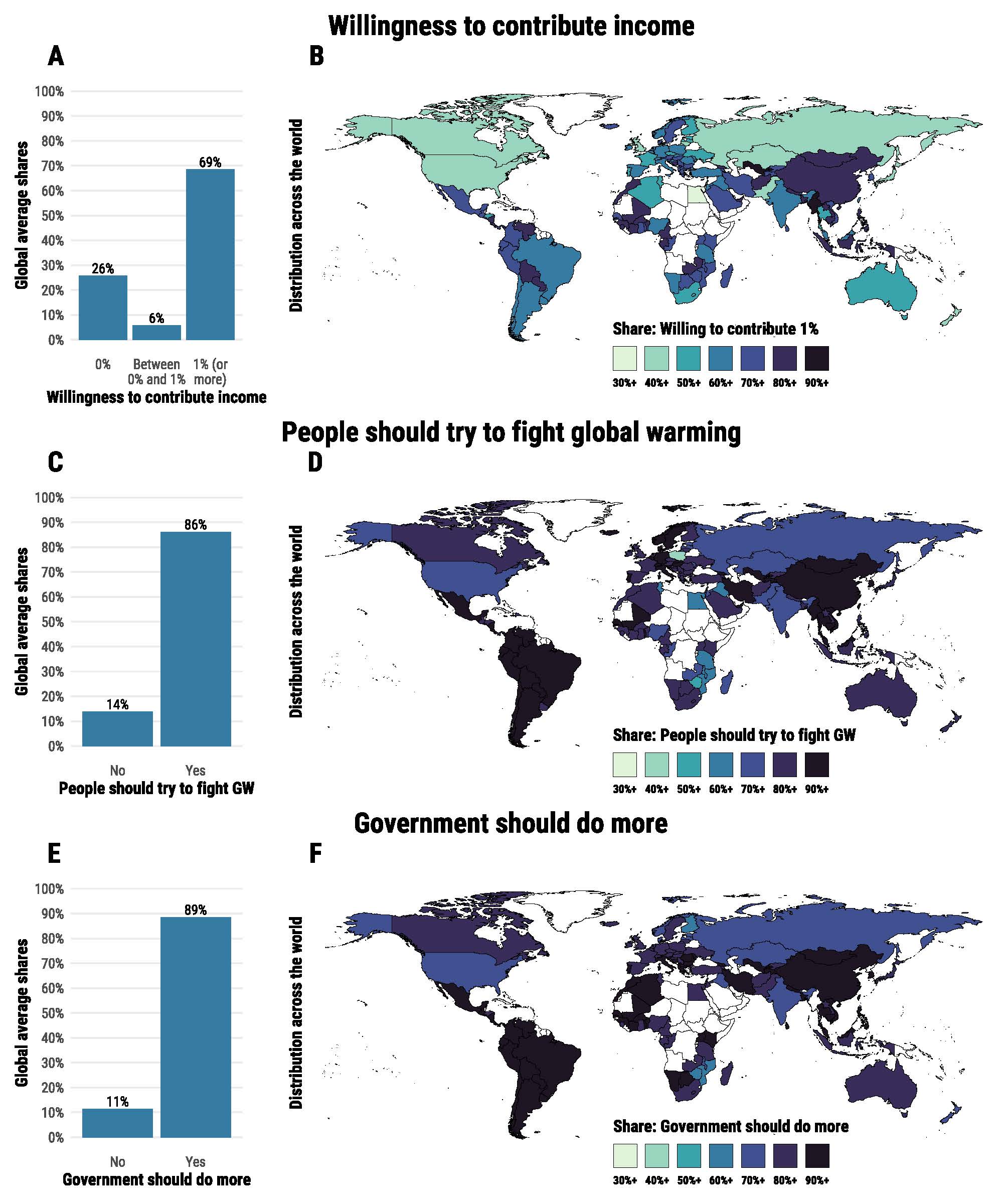
A recent study by Peter Andre, Teodora Boneva, Felix Chopra and Armin Falk demonstrates for the first time that a broad majority of the world’s population supports climate action and is willing to incur a personal cost to fight climate change. The findings, published in Nature Climate Change, are based on a globally representative survey conducted in 125 countries, involving approximately 130,000 individuals.

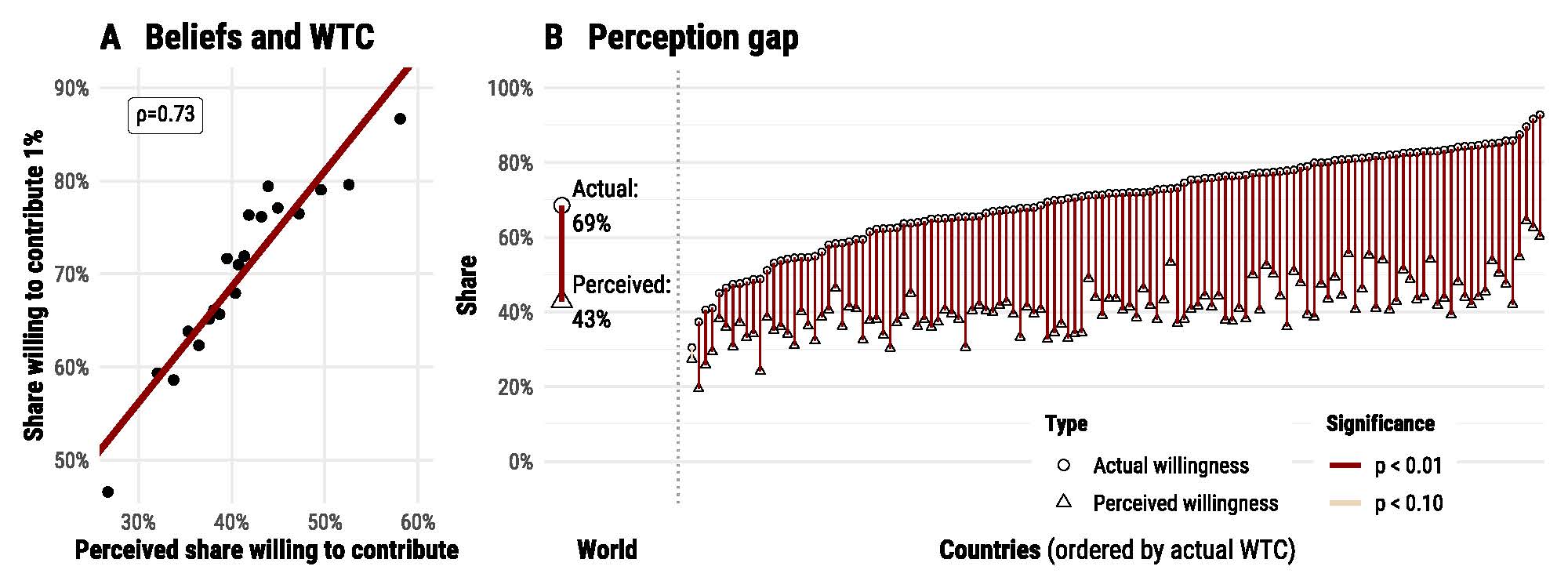
According to the study, 69 percent of the world’s population would be willing to contribute one percent of their personal income to the fight against climate change – a significant contribution to climate action. An overwhelming majority of 86 percent endorses pro-climate social norms, and 89 percent call for increased political action.

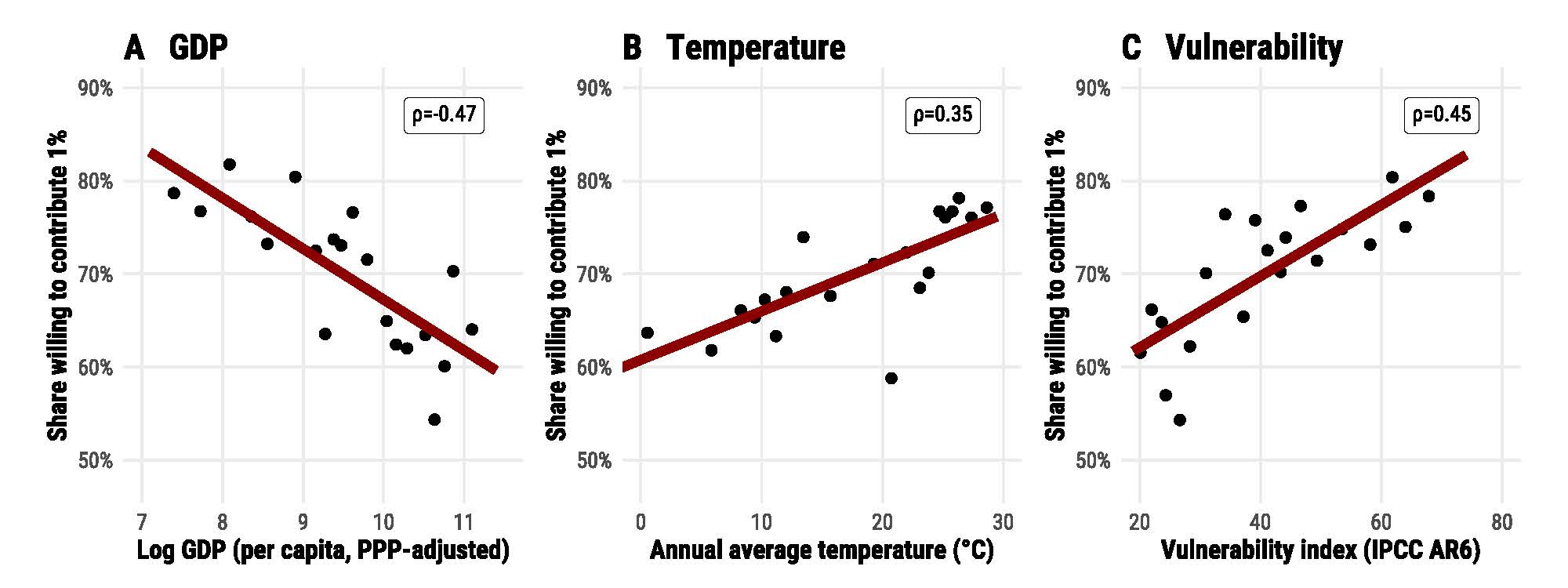
The authors view their results as “tremendously encouraging,” given that the world’s climate is a global public good, and its protection requires the cooperative effort of the world’s population. In countries particularly affected by global warming, the willingness to fight climate change is higher, while in high-income countries the willingness is lower compared to other countries:

Despite these encouraging statistics, the researchers also document that the willingness of fellow citizens to fight climate change is systematically underestimated in every single country. According to the study, the actual proportion of fellow citizens willing to contribute one percent of their income to climate action (69 percent) is underestimated by 26 percentage points globally.

Systematic misperceptions about other people’s willingness to take action against climate change can be an obstacle to the successful fight against climate change. People who systematically underestimate public support for climate action are often less willing to take action themselves, the authors explain.

“Rather than echoing the concerns of a vocal minority who oppose any form of climate action, we need to effectively communicate that the vast majority of people around the world are willing to act on climate change and expect their national government to act,” the researchers write, suggesting that more optimism about climate action could unleash positive dynamics.

Methodology

The survey was conducted as part of the 2021/2022 Gallup World Poll. The countries included in the Global Climate Change Survey account for 96 percent of global greenhouse gas emissions, 96 percent of global GDP and 92 percent of the world’s population. To ensure representativeness within countries, each country sample was randomly selected from the resident population aged 15 years and older. Interviews were conducted by telephone (in high-income countries) or in person (in low-income countries). Most country samples include approximately 1,000 respondents, and the total sample includes 129,902 individuals. To ensure comparability across countries and cultures, the survey was professionally translated and extensively tested.

Data

The project website hosted by IZA contains interactive maps and country rankings: https://gccs.iza.org/

The dataset is available for scientific purposes through the IDSC of IZA.

Filed Under: Research Tagged With: climate change

What motivates climate change denial?

February 2, 2024 by Mark Fallak

Do climate change deniers bend the facts to avoid having to modify their environmentally harmful behavior? IZA Research Director Florian Zimmermann and Lasse Stötzer ran an online experiment involving 4,000 US adults. Surprisingly, they found no evidence to support this idea. Whether this is good or bad news for the fight against global warming remains to be seen. The study was published today in Nature Climate Change.

Many people still downplay the impact of climate change or deny that it is primarily a product of human activity. But why? One hypothesis is that these misconceptions are rooted in a specific form of self-deception, namely that people simply find it easier to live with their own climate failings if they do not believe that things will actually get all that bad. This “motivated reasoning” helps us justify our behavior

For instance, people who fly off on holiday several times a year can give themselves the excuse that the plane would still be taking off without them, or that just one flight will not make any difference, or—more to the point—that nobody has proven the existence of human-made climate change anyway. All these patterns of argument are examples of motivated reasoning. Bending the facts until it allows us to maintain a positive image of ourselves while maintaining our harmful behavior.

Self-deception to preserve a positive self-image

The study by Zimmermann and Stötzer is the first to examine the role that this form of self-deception plays in how people think about climate change. At the center of the online experiments was a donation worth $20. Participants were randomly allocated to one of two groups. The members of the first group were able to split the $20 between two organizations, both of which were committed to combating climate change.

By contrast, those in the second group could decide to keep the $20 for themselves instead of giving it away and would then actually receive the money at the end. Anyone keeping hold of the donation needs to justify it to themselves. One way to do that is to deny the existence of climate change.

As it happened, nearly half of those in the second group decided to hold on to the money. The researchers now wanted to know whether these individuals would justify their decision retrospectively by repudiating climate change. Without “motivated reasoning,” the randomly selected groups should essentially share a similar attitude to human-made global warming. If those who kept the money for themselves justified their actions through self-deception, however, then their group should exhibit greater doubt over climate change. Yet, the study revealed no sign of that effect.

Climate change denial: a hallmark of one’s identity?

This finding was also borne out in two further experiments. On the face of it, this is good news for policymakers, because the results could mean that it is indeed possible to correct climate change misconceptions, simply by providing comprehensive information. If people are bending reality, by contrast, then this approach is very much a non-starter.

However, the study does reveal some indication of a variant of motivated reasoning, specifically that denying the existence of human-made global heating forms part of the political identity of certain groups of people. Put another way, some people may to an extent define themselves by the very fact that they do not believe in climate change. As far as they are concerned, this way of thinking is an important trait that sets them apart from other political groups, and thus they are likely to simply not care what researchers have to say on the topic.

Filed Under: Research Tagged With: behavior, climate change, denial, excuse, motivated reasoning, self-deception

Job value inequality is considerably greater than wage inequality

January 11, 2024 by Mark Fallak

Workers searching for new jobs focus increasingly on non-wage job aspects such as workplace flexibility, telecommuting options, and overall work environment. In a new IZA discussion paper, Tobias Lehmann examines the Austrian job market from 1996 to 2011 to study how these aspects relate to wage inequality.

His analysis shows that when considering these non-wage benefits, job value inequality is notably more pronounced than what is suggested by wages alone. The study finds that over the 15-year period, there was a shift in the labor market: companies offering better non-wage benefits increasingly also provided higher salaries, leading to a greater disparity in overall job satisfaction and value.

Lehmann’s work highlights the importance of considering both monetary and non-monetary factors in understanding labor market inequality. The findings suggest a nuanced view of job satisfaction, emphasizing that non-wage aspects play a crucial role in shaping an employee’s work experience.

Filed Under: Research Tagged With: inequality, job values, wage dispersion

  • Previous Page
  • Page 1
  • …
  • Page 6
  • Page 7
  • Page 8
  • Page 9
  • Page 10
  • …
  • Page 69
  • Next Page

Primary Sidebar

© 2013–2025 Deutsche Post STIFTUNGImprint | Privacy PolicyIZA