• Skip to primary navigation
  • Skip to content
  • Skip to primary sidebar

IZA Newsroom

IZA – Institute of Labor Economics

  • Home
  • Archive
  • Press Lounge
  • DE
  • EN

Mark Fallak

Breaking barriers: Addressing gender and racial disparities in economics

February 3, 2025 by Mark Fallak

Women and underrepresented minorities continue to face significant challenges in the field of economics, as highlighted in a recent IZA discussion paper by Karan Singhal and Eva Sierminska, examining systemic barriers and their impact on career progression. Despite some progress, these groups remain disproportionately underrepresented, particularly in senior academic and professional roles.

The research identifies key barriers contributing to these disparities, including implicit and explicit biases, exclusionary workplace cultures, and institutional practices that disadvantage women and minorities. These challenges manifest in hiring processes, networking opportunities, research collaboration, publication pathways, and career advancement, creating a cumulative disadvantage over time.

One of the most pressing issues is the persistence of stereotypes about who “belongs” in economics, discouraging many from entering the field. Additionally, unequal access to mentorship, resources, and fair evaluations further exacerbates the problem. The chapter also discusses how recent developments, such as the COVID-19 pandemic and the #MeToo movement, have intensified these challenges—disproportionately affecting women due to caregiving responsibilities and highlighting workplace harassment and discrimination.

Addressing these disparities is not just a matter of fairness but a necessity for the discipline’s growth and relevance. A more inclusive economics profession fosters diverse perspectives and innovative ideas, leading to a richer understanding of complex societal issues. The chapter highlights various initiatives aimed at promoting inclusivity, such as mentorship programs, research grants, and collective advocacy efforts. Additionally, it emphasizes the importance of leveraging data to track inequalities and inform policy changes.

Sustained commitment from individuals, institutions, and the broader academic community is essential to fostering a more equitable environment. By breaking down these systemic barriers, economics can fully harness the talent and contributions of all its members, driving the discipline forward in a more inclusive and impactful direction.

Filed Under: Research Tagged With: economics, gender, minorities, promotion, tenure

Ideological bias in immigration research

January 17, 2025 by Mark Fallak

In empirical research, it is common for studies on the same topic to produce vastly different results. Take, for example, the debate on minimum wage policies: while many studies conclude that raising the minimum wage reduces the employment of affected workers, others find no or even a positive impact on employment. Similar discrepancies can be found in research on the impact of immigration on the economic opportunities of native workers.

These differences are not purely random but are often driven by the methodological choices researchers make. These include the selection of data, the definition of key variables, and the statistical methods employed. A less visible but equally important factor is the personal stance of researchers on the issue they are studying. Ideological beliefs can subtly influence how studies are designed, analyzed, and interpreted.

71 teams, 158 researchers, 1,253 regression models

A recent IZA Discussion Paper by George J. Borjas and Nate Breznau sheds light on this phenomenon by exploring how researcher ideology shapes empirical findings. The study utilized a unique experimental setup involving 71 research teams and 158 researchers who analyzed the same dataset. Their task was to determine whether immigration influences public attitudes toward welfare programs.

Each team independently decided how to approach the analysis, including how to select data samples, define key variables, and specify statistical models. This led to 1,253 different regression models, each producing distinct results. The findings revealed significant ideological bias: researchers with pro-immigration views reported more positive impacts of immigration on social cohesion, while those with anti-immigration views leaned toward more negative conclusions. These differences were largely driven by methodological choices.

Interestingly, teams with extreme ideological stances—whether pro- or anti-immigration—tended to produce lower-quality models, as evidenced by peer referee scores. Conversely, moderate teams were more likely to adopt higher-quality research designs, producing results that garnered higher peer evaluations.

Policy-relevant research particularly prone to bias

The study also highlights broader challenges in empirical research. Researchers often face time and resource constraints, which may lead them to focus on results that align with their internal narratives rather than thoroughly exploring alternative models. This is particularly relevant in policy-driven research, where researchers who are deeply invested in specific policy outcomes may inadvertently amplify ideological biases.

While the ongoing revolution in Artificial Intelligence (AI) reduces the cost of conducting research, it also introduces new risks of embedding biases in algorithms. However, AI also offers opportunities to identify ideological bias, potentially improving the objectivity and credibility of future research.

Filed Under: Research Tagged With: ideological bias, immigration, social cohesion

Society underestimates men’s support for couple equity

December 24, 2024 by Mark Fallak

A new IZA discussion paper by Teodora Boneva, Ana Brás-Monteiro, Marta Golin, and Christopher Rauh challenges assumptions about men’s attitudes toward equitable division of household labor, revealing a significant gap between actual preferences and societal perceptions. Using survey data from 24,000 respondents in six countries (Germany, Italy, Poland, Spain, Sweden, and the U.S.), the researchers found that while most men support equity in household responsibilities, both men and women tend to underestimate how common these views are.

Misperceptions and their impact

The study highlights that, on average, respondents underestimated the share of men who prefer equitable household arrangements by 26 percentage points. These misperceptions were most pronounced in Spain, where 84% of men support household equity, but only 48% of respondents believed this to be the case. Women were more likely than men to misjudge these attitudes, compounding the perception gap.

Informational intervention changes attitudes

The researchers conducted a randomized information experiment to test whether correcting these misperceptions could influence attitudes and behaviors. Participants who were informed about the actual prevalence of equitable preferences among men updated their beliefs, expressed a stronger preference for equity themselves, and demonstrated an increased willingness to pay for achieving equitable arrangements. Men who initially underestimated others’ preferences showed the greatest response to the intervention.

Barriers to equity remain

Despite these encouraging results, structural and social obstacles may limit progress toward equitable household dynamics. These include workplace inflexibility, cultural stigmas around men reducing work hours, and conflicting preferences between partners. The findings suggest that addressing these barriers will be crucial for fostering long-term gender equality.

Broader implications for gender norms

This research underscores the power of correcting societal misperceptions to promote progressive norms and behaviors. As gender roles evolve, future efforts could focus on dismantling workplace and societal constraints that perpetuate inequity and investigating strategies to align household dynamics with modern values.

Filed Under: Research

Improving day care access for disadvantaged families

December 23, 2024 by Mark Fallak

Participation in high-quality day care is crucial for both child development and parental employment, particularly for socio-economically disadvantaged families. However, many families struggle to secure spots in such programs, with disadvantaged families facing the greatest barriers to access—a phenomenon referred to as “reverse selection on gains,” whereby those who would benefit most from high-quality day care are the least likely to gain access.

A recent IZA discussion paper by Olivier De Groote and Minyoung Rho analyzes data from a Belgian platform to explore alternative matching systems and policies aimed at addressing these challenges. The study finds that centralized matching systems can significantly improve access for disadvantaged families. Algorithms commonly used in school choice contexts are effective in reducing barriers for late-applying families, improving their acceptance rates.

Affirmative action policies, such as quotas, enhance welfare and enrollment rates for disadvantaged families while substantially lowering their unmatched rates. However, these policies also lead to increased segregation within day care institutions, failing to improve diversity. Moreover, quotas result in a higher unmatched rate for advantaged families.

Expanding capacity is another solution, but it requires substantial government investment. While costly, increasing capacity benefits all families and aligns with parental preferences, making it a valued intervention. In contrast, reforms to day care pricing, such as offering free day care or implementing progressive pricing, have limited impacts. Free day care primarily transfers resources to advantaged families, while progressive pricing, although helpful for disadvantaged families, offers diminishing returns since their current costs are already low.

This study underscores the importance of designing policies that improve access to day care while balancing equity, welfare, and inclusion. Its findings offer practical guidance for creating more equitable and efficient systems.

Filed Under: Research Tagged With: affirmative action, childcare, segregation

Caught in the trap: Long-term setbacks for mothers after childbirth

December 22, 2024 by Mark Fallak

Small jobs, such as the so-called Minijobs in Germany, appear to be particularly attractive to mothers. About 15 percent of first-time mothers who were in full-time employment before the birth of their child take up a Minijob when they return to the labor market after a child-related break. The workload is usually only a few hours per week, and because Minijobs are publicly subsidized, they are not subject to income tax or social security contributions. The gross income is therefore equal to the net income.

However, compared to regular (even part-time) jobs, Minijobs are often less demanding and provide limited skill development, which means that the work experience they provide may later be considered inferior. Does taking a Minijob after childbirth have long-term negative consequences for mothers’ labor market success?

Persistently larger child penalties

A recent IZA paper by Matthias Collischon, Kamila Cygan-Rehm, and Regina T. Riphahn examines the long-run consequences of subsidized small jobs using the example of German Minijobs. The authors analyze administrative data to compare the long-term “child penalties” of mothers who started out in Minijob employment versus those who returned to unsubsidized (regular) employment after childbirth.

They find persistently larger child penalties for Minijob mothers compared to otherwise employed mothers up to ten years after the first birth. Specifically, mothers who took a Minijob after giving birth are almost 10 percentage points less likely to be in regular (unsubsidized) employment a decade later. In addition, returning to the labor market as a “Minijobber” persistently increases the child penalty in earnings by at least 10 percentage points compared to returning to regular employment.

Lower pension entitlements

The Minijob program is one of the largest labor market programs in Germany, subsidizing employment with earnings below a certain income threshold (currently 538 euros, increasing to 556 euros in 2025). Although intended as a stepping stone to regular employment for the unemployed, Minijobs may trap some individuals in unskilled jobs with low earnings.

The results of the current study suggest that this applies particularly to mothers, who typically reduce their working hours substantially after the birth of a first child. The negative consequences for mothers’ labor market outcomes over the long term translate directly into lower pension entitlements. More broadly, the findings highlight the unintended consequences of public policies that subsidize small jobs.

Filed Under: Research Tagged With: child penalty, maternal employment, Minijob, subsidized employment

High returns to making job applications easier

December 21, 2024 by Mark Fallak

Job search is a central feature of labor markets, and barriers to job search can have important effects on employment, earnings, and productivity. Economists have shown that factors like financial search costs and incomplete information are important barriers to search. This suggests that environments offering cheap, fast, information-rich job search might improve search outcomes. Online search and matching platforms offer exactly these features, but job application rates remain low even on these platforms.

Psychological costs of starting job applications

A recent IZA discussion paper by Kate Vyborny, Robert Garlick, Nivedhitha Subramanian, and Erica Field explores how psychological costs of starting job applications might act as a barrier to high-return search. Using a novel job search platform in Pakistan called “Job Talash,” the authors recruited platform users through a representative survey of over 50,000 households in Lahore. These jobseekers varied widely in baseline employment and job search status, ranging from employed and searching to non-employed and non-searching.

Each month, jobseekers on the platform receive a text message about new job vacancies that match their qualifications and preferences. The message invites them to phone the platform’s call center to apply for these matched jobs. Some jobseekers are randomly assigned to also receive a phone call after their text message. The phone call repeats the information from the text message and invites them to apply immediately, without providing any additional information or encouragement. Thus, the treatment only changes how jobseekers start job applications, moving them from an active role to a passive role.

Insights into job application behavior and outcomes

The phone call treatment increases the job application rate by a dramatic 600%. Control group jobseekers apply to only 0.2% of all vacancies that match their qualifications and preferences, while treatment group jobseekers apply to a much higher 1.5% of all matched vacancies. It’s natural that jobseekers don’t apply to many matched vacancies, as the platform deliberately matches them with numerous jobs based on broad criteria.

Surprisingly, the return to these additional applications remains roughly constant rather than decreasing. Roughly 6% of applications lead to interview invitations in both the control and treatment groups, even though treated jobseekers send many more applications. The same pattern holds for interview invitations to jobs with desirable features like higher salaries, benefits, and shorter commutes. Unfortunately, the platform doesn’t track whether these interview invitations lead to job offers.

Explaining low application rates

Roughly constant returns to job search raise a question: why don’t untreated jobseekers apply to more jobs, especially because applying on the platform is cheap and fast? The authors argue that psychological costs of starting applications are the most likely explanation. Existing research suggests multiple types of psychological costs that might be reduced by treatment. Attention costs may decrease because treated jobseekers don’t need to focus on text messages or set time aside to decide whether to apply. The phone call may prevent procrastination and missed application deadlines. And the phone call allows jobseekers to apply immediately, with less time to anticipate and fear rejection.

Many other possible explanations for these results can be ruled out. Monetary and time costs are unlikely explanations for why untreated jobseekers don’t send more applications: applying on Job Talash is already cheap and fast, and other treatments designed to reduce monetary and time costs don’t increase applications much. The phone call treatment doesn’t change other ways jobseekers use the platform: treated jobseekers don’t apply to different types of jobs, update their CVs more often, or hold different beliefs about the value of applying on the platform.

Implications for job search platforms and policies

The findings in this study show that simple changes to job search processes can increase search and improve search outcomes. This has important implications for designing job search policies and platforms. Most obviously, job search platforms can simplify the process of starting job applications or making decisions. More broadly, the results highlight the importance of considering the psychology of job search, especially when combined with existing research showing that simple plans and reminders can increase job search.

Filed Under: Research Tagged With: job search, platform, search frictions

The hidden costs of classroom disruptiveness

December 20, 2024 by Mark Fallak

Classrooms are dynamic environments where students not only learn from teachers but also influence one another’s academic and personal development. While much research has focused on the benefits of high-achieving peers, a new IZA discussion paper by Sofoklis Goulas, Silvia Griselda, Rigissa Megalokonomou, and Yves Zenou examines the opposite end of the spectrum: the impact of disruptive classmates. It investigates how disruptive peers shape the academic outcomes and long-term educational choices of other students in the classroom.

The analysis draws on data from high schools in Greece, where students are randomly assigned to classrooms based on the alphabetical order of their surnames at the start of high school. This randomization creates a natural experiment, allowing the causal effects of peer disruptiveness to be isolated from factors like self-selection or other unobserved variables. Disruptiveness is quantified by suspension hours accumulated in grade 9 (the final year of elementary school), enabling the study to measure how exposure to varying levels of peer disruptiveness impacts academic performance and long-term decisions.

Lower scores, grade repetition, and delayed graduation

The findings reveal significant and far-reaching effects. Students in classrooms with more disruptive peers experience lower academic achievement, including declines in test scores, increased likelihood of grade repetition, and a reduced probability of on-time high school graduation. These academic challenges highlight how disruptive classroom environments negatively affect all students, not just those directly engaging in disruptive behaviors.

The influence of disruptive peers extends beyond high school, shaping students’ higher education and career trajectories. Exposure to disruptive classrooms reduces the likelihood of pursuing competitive academic specializations or enrolling in selective postsecondary programs, such as STEM fields or other rigorous disciplines. These findings indicate that the adverse effects of classroom disruptiveness are not short-lived but persist, influencing students’ long-term educational and career outcomes.

Who suffers the most from classroom disruptiveness?

The study also identifies groups that are particularly vulnerable to these effects. Students from low-income areas, those in larger classrooms, and those with fewer female peers face amplified negative impacts from disruptive classmates. These compounding disadvantages underscore the inequities in educational environments where disruptiveness is prevalent, making it harder for certain groups to succeed.

To explore the mechanisms behind these effects, a lab-in-the-field experiment was conducted in high schools in Greece. Students were randomly exposed to scenarios with varying levels of peer disruptiveness, from one disruptive classmate to a third of the classroom. Participants rated the perceived or expected impact of disruptiveness on non-cognitive outcomes. The experiment found that higher levels of peer disruptiveness significantly reduced students’ motivation, study effort, college aspirations, and interest in science-related studies and careers. Students seated closer to disruptive peers experienced particularly pronounced negative effects, highlighting the localized nature of peer dynamics within classrooms.

This study underscores the profound impact of classroom environments and peer behaviors on students’ academic and career trajectories. It emphasizes the importance of addressing disruptiveness in educational settings, particularly for vulnerable populations who are disproportionately affected. By fostering supportive and focused learning environments, educators and policymakers can mitigate the long-term consequences of peer disruptiveness, ensuring equitable opportunities for all students to succeed.

Filed Under: Research Tagged With: classroom, disruption, graduation, peers, STEM, suspension

How college proximity shapes enrollment and degree attainment

December 19, 2024 by Mark Fallak

While the economic benefits of a college degree have grown significantly in recent decades, racial and socioeconomic disparities in higher education attainment persist and, in some cases, have widened. A new IZA discussion paper by Riley Acton, Kalena E. Cortes, Lois Miller, and Camila Morales sheds light on the critical but often overlooked role of college proximity in shaping enrollment and degree outcomes, demonstrating how geographic access influences educational attainment across demographic groups.

Community college deserts reduce opportunities for many

Students living in “community college deserts” — areas without a two-year public college within a 30-minute drive — face significant barriers to postsecondary success. The research, based on data from Texas public high school graduates between 2013 and 2017, shows that these students are 2.7 percentage points less likely to complete an associate’s degree within six years of high school graduation. This gap is driven by lower enrollment rates in two-year colleges and reduced credit accumulation among those who do enroll.

Disadvantaged groups face the greatest setbacks

The absence of nearby community colleges impacts students differently depending on their background. Higher-income, White, and Asian students often compensate by enrolling in four-year universities, maintaining their overall degree completion rates. However, economically disadvantaged, Black, and Hispanic students frequently forgo postsecondary education entirely when community colleges are inaccessible. This results in reduced completion rates for both associate’s and bachelor’s degrees, underscoring the importance of community colleges as pathways to higher education.

The overall impact is stark: living in a community college desert is associated with a 3.3 percentage point decline in degree attainment for underrepresented minority (URM) students and a 2.6 percentage point drop for economically disadvantaged students. These effects persist up to eight years after high school graduation, illustrating the long-term consequences of limited geographic access.

Expanding community colleges can close gaps

Community colleges play a crucial “democratizing” role, providing essential access to higher education for underrepresented groups. Policies that prioritize expanding the geographic reach of community colleges, particularly in racially and economically diverse areas, could help mitigate persistent disparities in educational attainment. Interventions that reduce geographic barriers, such as building new campuses or enhancing transportation options, offer a promising path to fostering greater equity and improving economic mobility.

This research emphasizes the urgent need to integrate geographic access into higher education policy to ensure that all students, regardless of background or location, have the opportunity to succeed.

Filed Under: Research Tagged With: college enrollment, education, inequality

In Memoriam: Richard A. Easterlin

December 19, 2024 by Mark Fallak

IZA mourns the loss of Richard A. Easterlin, a visionary economist whose pioneering research transformed how we think about economic growth, happiness, and human well-being. A valued member of the IZA community, Easterlin’s insights and contributions have left an indelible mark on the field.

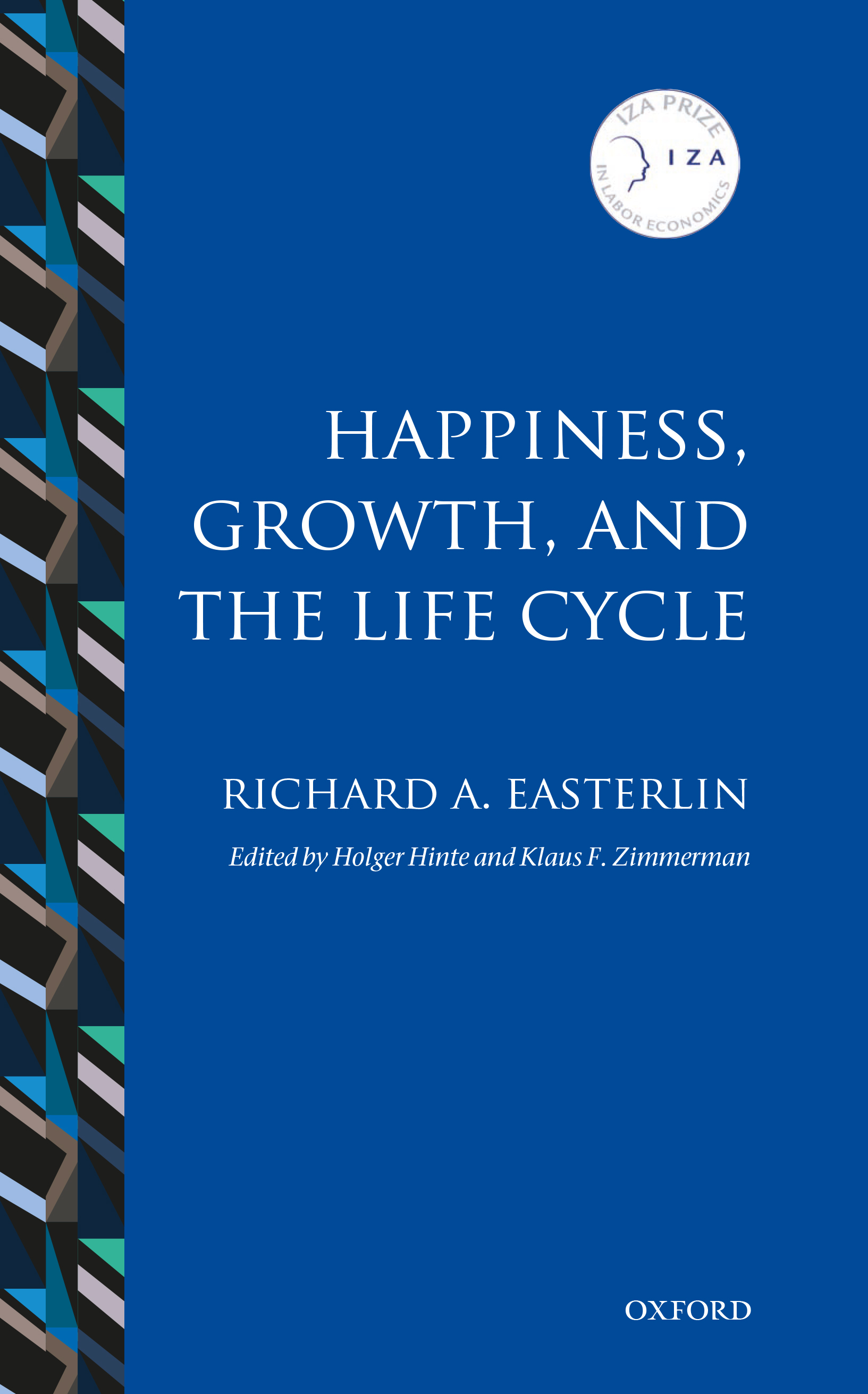
In 2009, Richard Easterlin was honored with the IZA Prize in Labor Economics, recognizing his groundbreaking work on the relationship between demographic trends, economic outcomes, and subjective well-being. To celebrate his achievements, IZA published the IZA Prize Book, “Happiness, Growth, and the Life Cycle”, which remains a landmark in happiness research.

As an IZA Fellow for 25 years, Easterlin collaborated extensively with the institute, contributing more than two dozen IZA Discussion Papers, including his most recent work in 2023 at the remarkable age of 97. His seminal Easterlin Paradox, which demonstrated that rising income does not necessarily lead to increased happiness, challenged traditional economic assumptions and continues to shape global policy debates.

Andrew Oswald, Chair of the IZA Network Advisory Panel, described him as “a hugely innovative scholar and an inspiration to generations of economists, demographers, and behavioral scientists.” Easterlin’s ability to address complex societal questions with clarity and originality set a new standard for interdisciplinary research.

Beyond his academic achievements, Easterlin was known for his kindness, generosity, and dedication to mentoring young researchers. His work with IZA and the broader academic community reflected a life devoted to fostering inquiry and inspiring future generations.

The IZA community extends its deepest sympathies to Richard Easterlin’s family, friends, and colleagues. His legacy as a groundbreaking economist and compassionate mentor will endure, influencing the study of human well-being for years to come.

Rest in peace, Richard Easterlin. Your contributions will continue to guide and inspire us.

Filed Under: IZA News Tagged With: happiness

Entry restrictions in healthcare improve equitable access but reduce service quality

December 18, 2024 by Mark Fallak

Entry restrictions in healthcare regulate where general practitioners (GPs) can establish practices, aiming to address inequities in the distribution of medical services. By preventing oversaturation in attractive urban areas, these policies encourage GPs to settle in underserved rural regions. However, such restrictions come at a cost: they limit competition, which could weaken incentives for delivering high-quality care.

A recent IZA discussion paper by Eduard Brüll, Davud Rostam-Afschar, and Oliver Schlenker examines how reducing the threat of competition—the potential for new GPs to enter a market—affects service quality and GP behavior in Germany. Their findings reveal a trade-off between equitable access and competitive pressures that drive quality.

Entry restrictions reduce the threat of competition

The study focuses on Germany’s needs-based planning system, where regions with a GP-to-population ratio exceeding 110% block new GPs from entering. This creates a natural experiment: areas just above and below the threshold have similar levels of current GP competition but differ in exposure to potential new entrants.

In entry-restricted regions, the probability of new GPs entering drops by 20 percentage points. However, the number of GPs per capita and other measures of actual competition remain unchanged. This means restrictions successfully reduce the threat of competition without altering the total supply of GPs.

Local monopolists lower service quality when competition is blocked

The study finds that GPs who face no nearby competitors—referred to as local monopolists—respond to reduced competition by lowering their service quality. In these areas, patients report lower satisfaction with GP friendliness, less time spent during consultations, and lower quality of medical advice.

In contrast, GPs in already competitive regions, where direct competition remains strong, show no significant changes in behavior when entry restrictions are imposed. The findings highlight how competition pressures GPs to maintain higher standards of care.

No impact on primary care access or regional health outcomes

Despite localized declines in service quality, entry restrictions do not affect broader access to care. GP working hours and the total volume of services provided remain unchanged, likely due to the reimbursement structure of Germany’s statutory health insurance (SHI) system.

The study also finds no significant effects on regional health outcomes, such as hospitalization or mortality rates. This is partly because only 20% of GPs operate as local monopolists, limiting the overall impact of entry restrictions on patient health.

Policymakers must balance equity and competition to improve care

The findings underscore the challenge of designing policies that improve access to healthcare without compromising service quality. Entry restrictions, while effective at addressing geographical inequities, inadvertently allow local monopolists to reduce their effort and performance.

To address these unintended consequences, policymakers could design performance-based incentives that reward high-quality care, even in low-competition areas. Providing targeted support for underserved regions, such as financial subsidies or professional development opportunities, could attract high-performing GPs without relying solely on restrictive regulations. Additionally, periodically reviewing entry thresholds and promoting internal competition—through benchmarking or collaboration—could help maintain competitive pressure and service standards.

Conclusion: Competitive pressure is essential for sustaining quality

While entry restrictions aim to ensure equitable access to care, they can unintentionally reduce service quality by weakening competition. Policymakers must navigate this trade-off carefully, ensuring that access does not come at the expense of quality. By preserving competitive incentives even in regulated markets, healthcare systems can achieve both equitable and high-quality care.

Filed Under: Research Tagged With: competition, healthcare

  • Previous Page
  • Page 1
  • Page 2
  • Page 3
  • Page 4
  • Page 5
  • …
  • Page 30
  • Next Page

Primary Sidebar

© 2013–2025 Deutsche Post STIFTUNGImprint | Privacy PolicyIZA