• Skip to primary navigation
  • Skip to content
  • Skip to primary sidebar

IZA Newsroom

IZA – Institute of Labor Economics

  • Home
  • Archive
  • Press Lounge
  • DE
  • EN

How Covid changed women’s risk aversion

April 16, 2023 by Mark Fallak

The Covid-19 shock of spring 2020 was unexpected and had severe impacts, including a decline in living standards and increased economic anxiety. In several sub-Saharan African countries, restrictive economic measures have been strictly implemented, despite the low number of sick and dead cases.

A growing body of research points out that shocks (such as economic, climate, or conflict shocks) can alter personality traits and individual preferences, thus contradicting the assumptions of standard microeconomic theory. The results of this literature vary considerably from article to article, but have identified mechanisms such as changes in attitudes to risk due to the negative consequences of shocks and emotional responses to stress and fear.

Risk and time preferences permanently affected

A recent study by Delphine Boutin, Laurene Petifour and Haris Megzari shows that the impact of the Covid-19 shock was severe, as it permanently affected people’s risk and time preferences, which are fundamental in any decision-making process. It also shows that the emotional channel overrides more concrete explanations, and that preference changes persist over time.

More specifically, this empirical study examines the impact of the Covid-19 crisis on the risk and time preferences of women working in the informal sector in Ouagadougou, Burkina Faso. The original data were first collected in January 2020, before respondents were aware of the imminent Covid crisis. Two more waves of data collection on the same respondents took place immediately after the end of the restrictive economic measures (June 2020) and 18 months later (January 2022).

The empirical identification strategy is based on a before-and-after comparison that includes individual fixed effects to isolate the variation in risk and time attitudes in response to the Covid-19 shock. Two time horizons are examined: a short-term impact on a balanced panel of 871 women interviewed twice (in January and June 2020), and a medium-term effect on a sample of 366 women interviewed three times (in January and June 2020 and in January 2022). To elicit information on risk attitudes and time preferences, hypothetical games on a series of lotteries were used.

Higher loss aversion in lotteries

The analysis reveals a short-term increase of 12% in risk aversion when lotteries are presented as monetary gains. This means that individuals become more risk-averse when presented with the possibility of winning money. Furthermore, the study showed that 18 months later, risk aversion in the domain of gains had not returned to its pre-Covid level, as there was an 11% increase between the baseline (January 2020) and the endline (January 2022), once time-varying characteristics were taken into account.

The study also shows that the instability of risk aversion is greater when lotteries are presented in terms of losses, with risk aversion decreasing by 47% in the short term. It remained at this level in the medium term, as there was also a 46% drop between the baseline and the endline. The reversal of the sign of the effect as a result of framing is consistent with Kahneman and Tversky’s (1979) reflection effect, which postulates that preferences are reference-dependent, inducing risk aversion for gains and risk-seeking when presented with the possibility of losing money. Furthermore, the present preference increased by 20% over the short-term period and by 15% over the medium-term.

Overall, the study suggests that the Covid-19 crisis significantly impacted individuals’ risk and time preferences. The medium-term analysis shows that the short-term effects persisted over time. Although the role of other determinants of preference changes cannot be completely ruled out as the time horizon widens, this analysis indicates that the Covid-19 crisis has lasting effects on risk and time preferences.

Effect driven by emotions

The researchers aim to identify the transmission channels that caused changes in risk and time preferences following the Covid-19 crisis. They compare changes in preferences based on individuals’ self-reports of their actual Covid-19 experiences (such as contamination of the individual or someone close to them, loss of a job, or difficulties in fulfilling basic household needs during the lockdown period) and their concerns about the pandemic.

The results suggest that the actual consequences of Covid-19 (such as job loss, lower wages, or poor health) do not significantly affect preference instability. In contrast, preference instability is exacerbated when the respondent expresses concerns about the Covid-19 crisis, particularly economic concerns and catastrophic scenarios such as the economy’s collapse.

Exposure to different media types reinforces emotional responses, increasing risk perception and anxiety. As a result, the most informed individuals showed greater changes in their preferences over the study period (although it is impossible to know the type of information assimilated or its veracity).

The researchers also found that social networks, as the primary source of information, exacerbate preference instability. Traditional media such as television, radio, newspapers, and discussions with family and friends do not affect preference variation. Taken together, these results suggest that the emotional channel is dominant in Covid-19-related short-term variation in risk and time preferences.

Policies should account for instability of preferences

The study has several implications, both in terms of empirical analysis and policy. The stability of preferences is a fundamental principle of economic theory, and a practical one from an empirical perspective since it implies that preferences can be considered exogenous to any outcome of interest. If preferences change in response to life shocks, any empirical analysis involving preferences is subject to potential reverse causality and simultaneity bias.

Moreover, policies based on the assumption of stable risk and time preferences cannot predict appropriate behavioral responses in a post-shock period. When individuals exhibit greater impatience and a more risk-friendly attitude toward losses following a shock, they are potentially less likely to use insurance. Given the low uptake of voluntary insurance in developing countries, the results could lead to advocacy for insurance models that encourage people to enroll, such as mandatory enrollment.

Finally, the study provides causal evidence that preferences can change rapidly in response to a shock and remain permanently at that new level. This non-return to normal is surprising, given that the emotional channel is identified as the primary driver of these changes. In contrast to previous literature, the study suggests that the emotional response to the Covid-19 crisis altered, at least in the medium run, global and/or contextual risk perception.
Filed Under: Research Tagged With: COVID-19, emotions, impatience, media exposure, risk attitudes

Better housing leads to better health

March 31, 2023 by Mark Fallak

Understanding the impact of public renovation programs in the housing sector is highly relevant for policymakers, especially given the current plans in Europe and the United States to retrofit a significant proportion of their housing stock as part of their energy transition plans. The Renovation Wave program, under the European Green Deal, aims to double the annual energy renovation rate of residential and non-residential buildings by 2030 through an injection of approximately EUR 275 billion per year. Similarly, recent legislation in the US includes substantial public funding to upgrade the energy efficiency of the US building stock.

As these investment programs are significant, it is essential for public authorities to know all the benefits associated with housing upgrades to incorporate them into cost-benefit calculations. While existing evaluations of home energy retrofit programs have focused on household energy savings, the effects on individual well-being and health are still unclear. In a recent IZA discussion paper, Steffen Künn and Juan Palacios present new findings that quantify the health effects of large-scale housing upgrades, using the renovation wave in East Germany in the aftermath of the German reunification as a case study.

Insulation and heating can save lives

Upgrading housing infrastructure through improvements in building insulation or heating systems has the potential to reduce the exposure of occupants to environmental threats associated with increased mortality and morbidity. In particular, building insulation and well-functioning heating and cooling equipment can limit household exposure to extremely cold or hot temperatures, which have been linked to an increased risk of cardiovascular disease and heat stroke. This is exacerbated by the ongoing energy poverty crisis, which limits the ability of households to defend themselves against outdoor temperatures, with many reporting being unable to keep their homes adequately warm.

In the 1990s, the reunified German government dedicated significant financial resources to bring the housing portfolio in East Germany up to western standards, providing subsidized loans and tax credits to the real estate industry to modernize existing dwellings. The KfW weatherization program, the main program, allocated a total of EUR 40 billion over a period of seven years to renovate 3.6 million dwellings in East Germany, which was roughly 50% of the existing stock. The upgrades included improving the building envelopes and heating systems. The new study analyzes the health implications of this program to enhance our understanding of ongoing weatherization programs in western countries.

Housing upgrades reduce the demand for health care

Using population-representative household data (SOEP) and administrative records of hospital admissions, the authors were able to make causal statements and investigate effect dynamics over time, as well as the underlying effect mechanisms. The results show a clear pattern that housing upgrades sustainably reduce the demand for health care among residents by reducing hospital admissions among the elderly population. An increase in subsidized loan take-up by EUR 100 per inhabitant reduced admissions of older patients (45 years and older) to the hospital with circulatory problems by about 2%. This effect resulted in total cost savings of about EUR 180 million due to reduced hospital admissions. The analysis of effect mechanisms supports the hypothesis that the renovation program led to an improved quality of buildings with better protection against outdoor conditions, resulting in fewer hospital admissions due to extreme cold or hot days.

These findings have significant implications for policymakers when evaluating and planning public renovation programs in the housing sector, particularly given recent developments regarding the implementation of large-scale renovation programs within the European Union or the US. Alongside the reduction in greenhouse emissions, the study clearly demonstrates that renovation programs also yield considerable health benefits, enriching the cost-benefit analysis of such programs.

Filed Under: Research Tagged With: health, housing quality, renovation, weather

Can more education save the planet?

March 16, 2023 by Mark Fallak

Climate change poses existential risks to the planet and generates trillions of dollars in annual costs to society. While changing pro-climate beliefs, behaviors, policy preferences, and voting is difficult, a promising approach is through more education.

A recent IZA discussion paper by Noam Angrist, Kevin Winseck, Harry A. Patrinos and Joshua Graff Zivin provides strong causal evidence that education can impact a range of pro-climate outcomes. The authors find that an additional year of education is linked with increases in pro-climate beliefs, behaviors, most policy preferences, and green voting, with voting gains equivalent to a large 35% increase – effects which are particularly consequential to promote pro-climate policies.

While education is often a footnote in climate change agendas, this paper reveals the promise of education as an additional tool to combat climate change. Europe in particular is a context where climate change is receiving substantial attention, including efforts such as the European Green New Deal, yet education remains an underutilized lever.

Moreover, while educational attainment has expanded dramatically in recent decades, the median school reform law in 2020 in Europe guaranteed only 10 years of schooling, a full two years below a complete primary and secondary education of 12 years.

These gaps are even more dramatic in the developing world; in sub-Saharan Africa educational reform laws only guarantee 8 years of schooling on average. Expanding access to education has traditionally been believed to play a transformative role in the economic and social well-being of societies – it now also appears to play a vital role in the battle against climate change.

Filed Under: Research Tagged With: climate change, compulsory schooling, education, human capital, voting

How immigration affects housing costs

March 3, 2023 by Mark Fallak

Most advanced countries experienced a strong upward trend in housing costs since the mid 20th century. In Switzerland, prices of both single-family homes and owner-occupied apartments have roughly doubled in the period 1985-2016. Rental prices (for new lettings) also show a clear upward trend from 1999 onwards. One potential cause of rising housing costs is the massive immigration wave following the Agreement on the Free Movement of Persons (AFMP) between Switzerland and the EU. As of 2002, the immigration reform completely lifted immigration restrictions for EU workers, who are often better skilled and earn more than other immigrants.

The AFMP reform lends itself ideally to recover empirically causal (short-run) effects of immigration on housing prices. A recent IZA Discussion Paper by Fabienne Helfer, Volker Grossmann and Aderonke Osikominu employs two empirical strategies that exploit the reform and the historical distribution of immigrants across regions to generate exogenous variation in immigration flows to Swiss regions.

The first approach proposes an instrumental variables (IV) strategy that employs the widely used “shift-share” instrument for immigration. This instrument uses the historical distribution of immigrants (as of year 1980) across regions in Switzerland to predict current inflows into the respective regions. It exploits the tendency of newly arriving immigrants to move to areas where other immigrants of the same nationality already live.

The IV approach assumes that historical settlement patterns have no direct effect on the growth of current housing prices. Exploiting regional variation at the level of 106 local labor markets (MS regions) for the time period 1985-2016, the analysis suggests that immigration has substantially raised prices of owner-occupied housing after the AFMP reform came into place, whereas pre-reform immigration did not have an effect on housing costs. The differential impact of immigration before and after the AFMP reform confirms the exogeneity of historical immigrant settlement patterns.

The baseline estimates imply that an annual increase in the stock of foreigners equal to 1% of the initial population leads to an increase in single-family home prices by 4.3% and in owner-occupied apartment prices by 5.9% after the reform. Estimates based on cantonal data for the years 1998-2016 suggest that immigration raises rental prices even more than prices of owner-occupied housing. Immigration effects are lower when the immigration inflow is measured by the number of foreigners entering the country minus those leaving it (net migration), but still sizable.

The second empirical approach consists of an event study of the changes in house prices before and after the AFMP reform, where MS regions are grouped according to their historical share of immigrants from EU-15 countries (in 1980). Again, it is based on the hypothesis that immigration from the EU is particularly high in those regions where those migrants already live.

The event study analysis suggests that switching from a region with a historically low or medium level of immigration from EU-15 countries to one with a high past stock of EU immigrants raises the annual growth rate of house prices by about one percentage point after the AFMP reform. To the contrary, the historical level of the stock of foreigners from EU-15 countries did not matter for house prices before the reform. The event study approach thus verifies that housing price dynamics are indeed unrelated to the historical share of immigrants before the reform, which supports the validity of the shift-share instrument in the IV approach.

The results have potentially important policy implications. Despite the undisputed positive effects of (particularly) high-skilled immigration on labor market outcomes and economic development in an advanced economy such as Switzerland, the associated increases in housing prices particularly harm low-income individuals who do not own homes.

Ignoring these effects can generate resistance to liberal migration policies, as observed in Switzerland and elsewhere. Compensatory measures through the tax-transfer system and deregulation of zoning restrictions to promote housing construction could mitigate the distributional consequences of immigration in the medium run and could help avoid political backlash against the free movement of workers in Europe.

Filed Under: Research Tagged With: EU, freedom of movement, housing, immigration, Switzerland

Do digital technologies complement or substitute employee training?

February 15, 2023 by Mark Fallak

There is much concern in policy circles about the labor market consequences of automation and digitalization. Several studies have stressed the importance of re-training and up-skilling workers whose jobs are being affected by technology. Adult learning is often seen as a useful antidote to navigate the troubled waters of modern labor markets. Since a substantial share of training is employer-provided, it is important to understand whether and how the increased use of automation and digitalization technologies affects employers’ incentives to invest in the training of their employees.

In a new IZA discussion paper, Giorgio Brunello and colleagues address this question by using rather unique firm-level data that cover the 27 EU countries, the UK and the US and include information both on the use of Advanced Digital Technologies (ADT) and on training investment. They show that employers adopting these technologies have reduced their investment in training per employee, especially in countries where employment protection legislation is less severe or where public training expenditure as share of GDP is lower. The authors argue that the observed reduction is unlikely to reflect only a decline in the cost of training but is also a reduction in the percentage of individuals undertaking job-related training.

Substitutes in production

A mechanism explaining this result is that ADT and training investment per employee are substitutes in production, which implies that a higher use of the former reduces the marginal product of the latter. This could happen because ADT not only replace unskilled labor with capital but also modify the remaining tasks filled by labor in such a way that the productivity of training declines. For example, the remaining tasks could be more focused on social interaction and communication, requiring different types of training and often informal learning, which is not captured by data on training investment.

Firms using ADT could also fill the skilled positions associated with these technologies by hiring rather than by training in-house, thereby reducing training needs. This explanation would also be in line with persistently high shortages for digital experts observed on labor markets in recent years. Although average training investment per employee has declined with automation, total firm-specific investment has increased because of the positive employment effects.

The study shows that the decline of training investment per employee with digital use and intensity is typical of countries with a relatively low public training expenditure (as a share of GDP). In countries that spend more on training policies – which include subsidies to employers – employers’ training investment per employee does not fall with digital use or intensity.

Risk of widening inequalities

On the one hand, these results are worrisome with respect to countries where there is little investment in active labor market policies and limited investment in training by employers. Here, the risk of widening inequalities linked to digitalization might be most pronounced. On the other hand, the findings point to the potential of positive complementarities between public and private sector.

Where spending on active labor market policies focusing on training is higher, firms also appear more likely to continue higher levels of training investment. This is particularly important in the current environment characterized by automation and digitalization to foster re-skilling and up-skilling, not only because they provide training opportunities for the displaced and unemployed, but also because they stimulate employers to invest more.

The combination could help to maintain high levels of employment against the background of accelerating digitalization as it facilitates adaptation to changing tasks and ways of work within firms and offering those having lost their jobs better opportunities for labor market reintegration. Finally, the combination would raise skill levels across the workforces, thereby helping to mitigate skill gaps.

Filed Under: Research Tagged With: automation, digitalization, productivity, training

Does immigration undermine social cohesion in the receiving country?

January 23, 2023 by Mark Fallak

Recently, there has been a surge in forced migration globally due to various events. In 2022, over five million people fled from Ukraine within a short period of time, and in 2021, the deteriorating situation in Afghanistan prompted approximately one million people to leave the country. The integration of such large numbers of forced migrants into receiving societies can be difficult, as there is a risk of tension between the newcomers and the native population. This tension may erode trust within society and lead to a decrease in social contributions from the native population. It is unclear, however, whether such claims are supported by the evidence or the result of isolated anecdotes or people’s gut feeling.

In a new study, Emanuele Albarosa and Benjamin Elsner examine the impact of the large influx of refugees in Germany in 2015/2016 on people’s attitudes and perceptions towards society. During this period, more than one million people sought asylum in Germany, mainly from Syria, Afghanistan, and the Western Balkans. Over the course of the influx, the public opinion about these newcomers in Germany changed dramatically. Initially, society was highly welcoming and a new German term, “Welcome Culture,” was even coined. However, after a series of violent attacks on New Year’s Eve 2015/2016, where some of the perpetrators were recently arrived migrants, attitudes towards the refugees deteriorated. This shift in public opinion makes Germany an interesting case for analyzing the effect of a mass influx of migrants on people’s attitudes and perceptions towards society.

The authors of the study analyze various indicators of people’s perceptions and attitudes towards society from the SOEP, a large, representative panel survey of the German population. These indicators include: trust in others, fairness, concerns about crime, concerns about immigrants, and charitable donations. They also used data on the occurrence of anti-immigrant violence, which represents a strong form of anti-immigrant sentiment. In their analysis, they compared individuals who had similar attitudes before the influx of refugees, but some of whom lived in areas where the number of refugees increased significantly more than others.

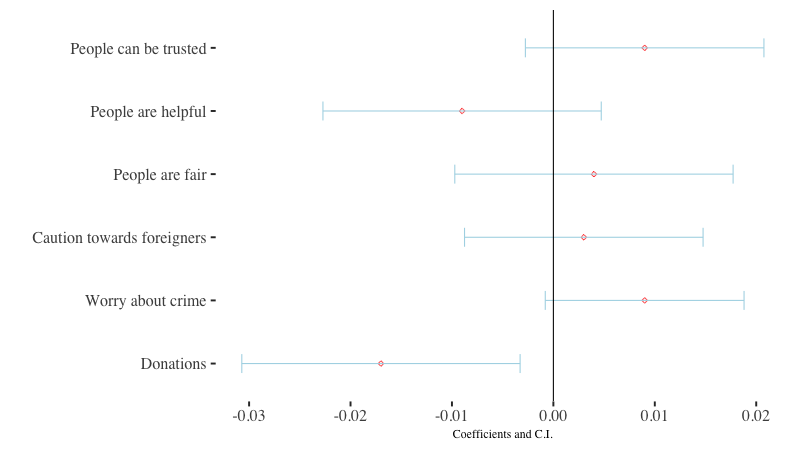
Overall, they find little evidence that the influx affected people’s attitudes and perceptions. The red dots in Figure 1 indicate the estimated effect of a doubling of the local number of refugees relative to 2014 on the likelihood that a respondent strongly agrees to a statement such as “People can be trusted” or “One should exert caution towards foreigners.” An effect of 0.01 means that the likelihood increases by one percentage point. The effects on general perceptions of society as well as concerns about crime and immigration are small and statistically insignificant. The only effect that is significant is on donations. An increase in the number of refugees reduced the likelihood that a person donates to charity.

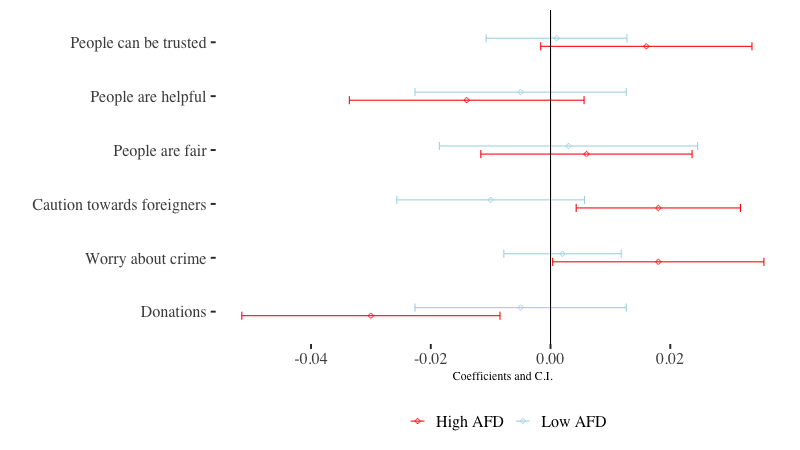
The authors also examine whether the effects of the influx of refugees differ across areas with different political leanings. Figure 2 presents separate estimates for areas with a high versus low share of votes for the populist party AfD in the federal election of 2013. In areas with a high AfD vote share, the influx led to an increase in concerns about crime and immigration. Additionally, the negative overall effect on charitable donations appears to be driven by areas with a high AfD vote share.

The analysis of anti-immigrant violence yields somewhat concerning results. The authors used data on the occurrence of anti-immigrant violence collected by the Amadeu Antonio Foundation, and compared counties with high versus low inflows of refugees before and after the influx. The main findings are shown in Figure 3. Prior to the influx, there was no difference in anti-immigrant violence between high- and low-inflow areas. However, after the influx, there was a noticeable increase in anti-immigrant violence in areas with large increases in the number of immigrants. This increase in incidents lasted for approximately two years.

Overall, the study’s findings suggest that a sudden and significant influx of refugees did not significantly alter Germans’ perceptions of their society, despite the change in public opinion during the influx. However, the impact on anti-immigrant violence indicates that this influx was not without tension.

Filed Under: Research Tagged With: anti-immigrant violence, forced migration, social attitudes

Immigration or automation?

December 19, 2022 by Mark Fallak

Many firms in advanced economies are currently facing difficulties in recruiting labor and filling their vacancies. There are several factors contributing to the tightness of the labor markets, including restrictive immigration laws, the retirement of large baby boomer cohorts and Covid-induced exits. It has been shown that firms manage to address labor shortages by investing in automation technologies, such as industrial robots. While it is reasonable to predict that labor shortages can induce firms to adopt automation technology, there is a lack of causal evidence to support this hypothesis.

In a recent IZA Discussion Paper, Katja Mann and Dario Pozzoli fill this gap by providing empirical evidence on the effect of an increase in the local supply of low-skill labor on firms’ adoption of robots with high-quality data for Denmark. Their main hypothesis is that the inflow of non-Western migrants into Denmark since the 1980s has increased the supply of low-skill labor, lowered labor costs and thereby reduced the need for firms to automatize their jobs. As a consequence, fewer robots have been adopted in municipalities with a large share of migrant workers. Vice versa, robot adoption would then be more widespread in labor markets with a shortage of low-skill workers.

The authors tease out causality in the relationship between immigration and automation by estimating firm-level regressions covering the time period 1995-2019, in which they exploit exogenous variations in the migrant share both across time and municipalities. Specifically, they instrument the share of migrant workers via a shift-share instrument which relies on the municipalities’ share of migrants by country of origin in 1993, well before robot use became widespread.

Robots and low-skill labor are substitutes

Consistent with their intuition, the authors find that a one percentage point increase in the share of non-Western migrants decreases the probability of robot adoption by 7%. Moreover, an increase in the share of non-Western immigrants is associated with a decline in the value of imported robots. If low-skilled workers and robots are substitutes, then a firm’s decision whether to adopt a robot instead of employing a human worker will depend on relative factor prices. Indeed, the analysis shows that the average value of imported robots within a municipality is positively correlated with immigrant workers’ average wages.

The findings carry important policy implications at a time when many countries have restrictive immigration policies in place and are experiencing labor shortages (especially in terms of low-skilled workers) due to the retiring of large baby boomer cohorts. The key finding that immigration and robot adoption are substitutes suggests that automation technology is expected to become more widespread over the next decades in response to labor shortages. According to the authors, it is therefore important to implement policies ensuring that young workers entering the labor force can collaborate, rather than compete with robots. Retraining measures should also be designed in order to help older workers’ transition into non-automatable tasks.

Filed Under: Research Tagged With: automation, Denmark, immigration, labor supply, robots

Skilled immigration spurs innovation

November 16, 2022 by Mark Fallak

Policy and academic discussions on immigration have focused on different types of immigration, depending on the host country being analyzed. While in the U.S. and countries with skill-points systems the literature on skilled migration is voluminous, in Europe the discussion has mostly centered around low-skilled migrants and political refugees, as they represent the largest proportion of arrivals.

Yet, Europe too receives skilled migrants and their number is increasing. For example, in France the share of tertiary educated immigrants at 23% is lower than in the U.S., Canada or the U.K., but it has strongly increased, by 11 percentage points, between 1995 and 2010.

Recent contributions point out that skilled immigration has greatly contributed to innovation and patenting activity. Yet, most papers focus on the U.S. and often use aggregate data or small samples of firm-level data. Europe has been largely overlooked by this literature, notwithstanding recent anecdotal evidence of the important role played by immigrants in innovation.

For example, BioNTech’s founder Dr. Sahin, who has developed the Pfizer Covid vaccine, is a Turkish-born scientist who lives and works in Germany. Similarly, a highly cited patent by the French company Alcatel that contributed to the improvement in the speed/cost of fiber-optic cable-based communication, was filed by a team of French and immigrant inventors.

Skilled migrants have larger effect than skilled natives

In a recent IZA Discussion Paper, Anna Maria Mayda, Gianluca Orefice and Gianluca Santoni provide evidence on the link between immigration and innovation in the European context. They use information on the universe of French firms spanning the period between 1995 and 2010 and investigate the impact of skilled migration on patenting activity and innovation.

The authors find that, between 1995 and 2010, the arrival of skilled migrants in a French district significantly raised the number of patents. Namely, a 10% increase in the district-level share of skilled immigrants led to an increase, on average, of 2.6 patents per 10,000 manufacturing workers. The study provides evidence that the effect of skilled migrants is significantly higher than the effect of skilled natives.

This implies that skilled immigrants do not just spur innovation by increasing the size of the skilled labor force. These results also hold when looking at the relation between the number of patents at the firm level and the district-level skilled immigrant share. Furthermore, the paper explores heterogeneity in the impact of skilled migration with respect to firm-level characteristics and shows that high-productivity, capital-intensive and large firms are those for which the effects are stronger.

Importantly, the wealth of data available for France allows the authors to carry out an investigation of a new channel through which skilled immigrants are likely to affect innovation and patenting. The existing literature has shown that immigrants tend to specialize in different tasks compared to similarly skilled natives. The authors combine insights from this literature with an analysis of the effect of immigration on innovation.

They point out that, given differing patterns of comparative advantages between immigrants and native workers, an inflow of skilled migrants will lead to a reallocation of workers across tasks, which in turn will increase the productivity of firms, specifically in terms of innovation activity.

Specialization leads to within-firm reorganization of tasks

The paper shows that the pro-innovation impact of skilled immigration is driven by a within-firm reorganization of tasks – by which skilled native workers specialize in communication-intensive, managerial tasks while skilled immigrant workers specialize in technical, research-intensive tasks. In other words, each group of workers moves towards the tasks in which they have a comparative advantage, which implies a higher efficiency of the innovation process driven by specialization.

The structure of task-specific comparative advantage is likely driven by the lower language abilities of skilled migrants (compared to skilled natives) or by other (institutional or de facto) constraints they face. Indeed, it may be extremely hard for foreign-born workers to access specific managerial occupations.

In the case of France, for example, the education system is set up in such a way that outsiders – both French workers who did not attend the extremely competitive Grandes Ecoles and foreign workers who studied abroad – are less likely to have access, in practice, to high-hierarchy positions within firms.

France does not have a large program explicitly targeted at attracting skilled migrants like the H-1B visas program in the U.S. Yet, French migration policy has drastically changed over time in the direction of favoring skilled migration. Recently, the Macron administration has been carrying out reforms of immigration policy aimed at discouraging asylum seekers while encouraging skilled foreign workers.

Similar situation in other European countries

Although the study is specific to the French context, the authors point at recent evidence that suggest the findings might extend to other destination countries in Europe. A recent report by the World Bank on skilled migration to Europe states that “the number of high-skilled migrants in the EU, defined as migrants with some tertiary education, more than tripled over the period 2004-18, increasing from about 4 million to 13 million”. It also shows that the occupation composition of skilled migrants in Europe is quite different from that of skilled natives.

Just like in the case of France, skilled migrants in other European countries are more likely to have jobs requiring technical and quantitative skills (for example, information and communication technology, software developers, engineers, and medical doctors) while skilled natives tend to be in communication-intensive occupations (such as sales, legal and finance professionals, teachers and administrative workers). This evidence suggests that France might not be an isolated case within Europe in terms of the innovation-migration nexus and of the task specialization channel.

The authors conclude that skilled migration represents an opportunity for policymakers in Europe to make progress in liberalizing labor markets while at the same time avoiding a political backlash – given that public opinion in many European countries is largely in favor of encouraging skilled immigration.

Filed Under: Research Tagged With: innovation, patents, skilled immigration

How firms adjust when they cannot hire foreigners for low-skill work

November 11, 2022 by Mark Fallak

Most economic research finds that the effect of the average immigrant worker on the average native worker is very small. There is much less agreement about the effect of the least-educated immigrant workers on the least-educated natives. Different studies reach conflicting conclusions, relying on a variety of strategies to separate mere correlation from true causes and effects.

This question is addressed with a nationwide policy experiment conducted by the United States government, in a new IZA Discussion Paper by Michael Clemens and Ethan Lewis.

Each year, firms in the United States apply to the federal government for permits to hire foreigners in temporary jobs that do not require a high school degree. About 100,000–130,000 such permits are given each year, across the country in industries including groundskeeping, hospitality, forestry, seafood processing, manufacturing, and construction.

Firms must enter a randomized lottery to pass a key step in the application process for these work visas. Using data on the lottery outcome and a new survey of firms, the study’s authors can observe what happens to groups of firms that can or cannot hire foreign labor for low-skill work, but otherwise start out identical.

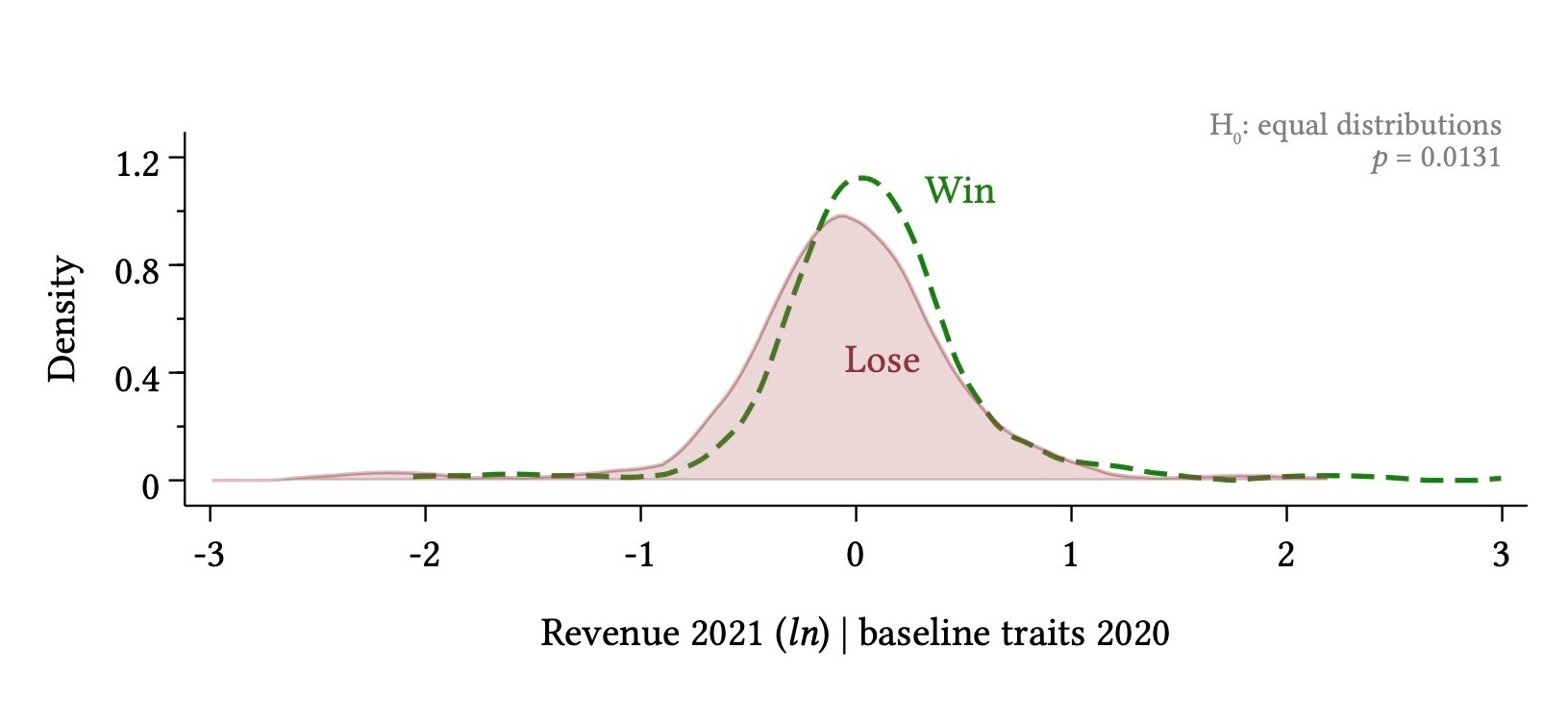
One key finding of the study is that firms contract when they are barred at random from hiring immigrants for low-skill work. When this force majeure obliges otherwise identical firms to reduce foreign hiring by 50 percent, they slash production by 9 percent. The graph below shows the distribution of output by firms that ‘win’ the lottery and can thus hire their desired number of foreign workers, as a dashed green curve. The distribution for firms that ‘lose’ the lottery, and are thus obliged to hire far fewer foreign workers, is the solid red curve.

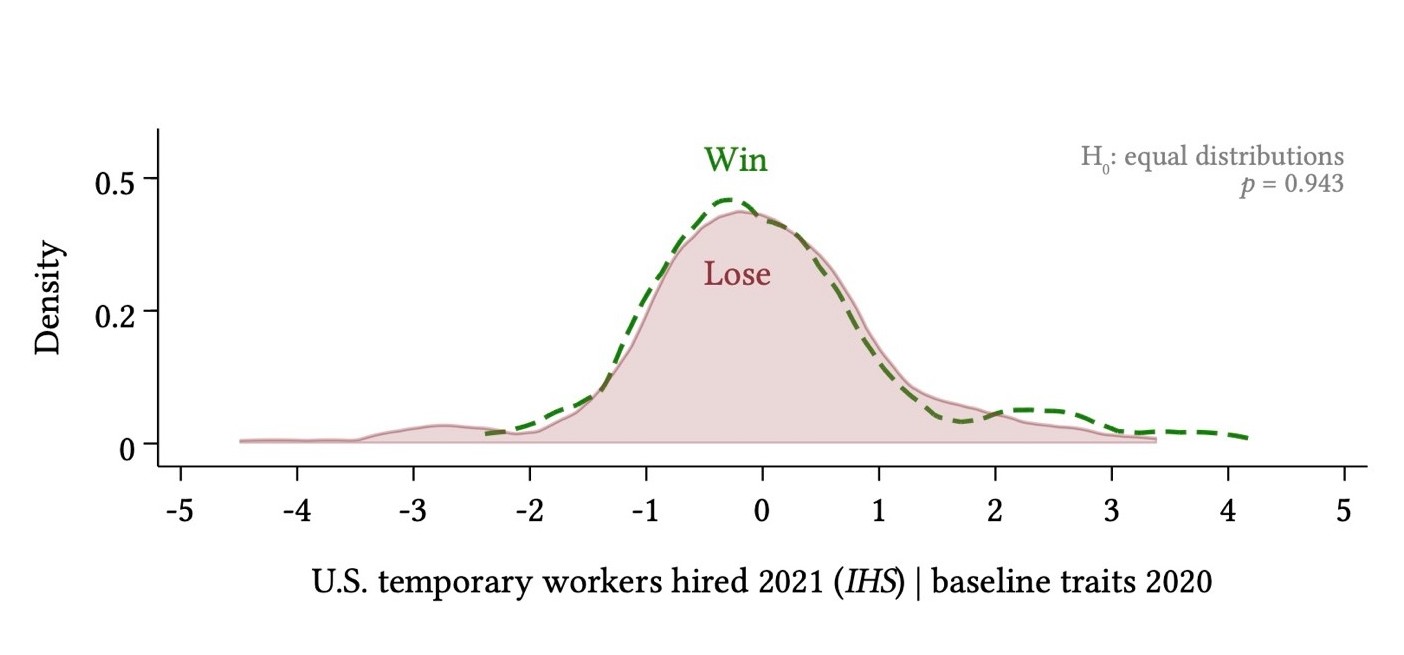
A second key finding is that firms barred at random from hiring foreigners for these jobs do not hire native workers as a replacement. The effect of losing the visa lottery on native hiring is not statistically distinguishable from zero, but if anything, losing the lottery results in fewer native hires. When otherwise identical firms are obliged to reduce foreign hiring for low-skill jobs by 50 percent, they reduce native hiring between zero and five percent.

In the graph below, the distribution of native hiring among ‘winning’ firms is the dashed green line. The distribution of native hiring among ‘losing’ firms is the solid red line. There is a high probability that any differences between these distributions arise only from chance.

These results have relevance to U.S. immigration policy because they study the impact of policy change: access to the country’s principal work visa for low-skill jobs. The results imply that for the policy-relevant occupations, native workers are extremely poor substitutes for native workers. The results cannot be interpreted as quantifying the overall effect of immigration for low-skill jobs on national GDP, however, because only effects at individual firms are directly measured.

Filed Under: Research Tagged With: labor migration, low-skilled workers, United States

Job matching in online markets

September 26, 2022 by Mark Fallak

As markets increasingly (and often exclusively) take place online, they generate both new types of data as well as new challenging research questions. The Internet as a data source for research in labor economics is therefore a focal point of IZA’s research data center, IDSC. Organized by Nikos Askitas and Peter J. Kuhn, the two-day workshop showcases innovative multidisciplinary research with data from internet job boards, one of the main modes of matching facilitation in labor markets worldwide today.

Algorithmic hiring

On the heels of both technological hype and techno-optimism, as well as aiming at more tangible benefits such as cost reduction and speed, a market emerges in which firms offer algorithmic matching services to hiring firms. In the workshop’s first keynote, Manish Raghavan presented the current state of affairs in this algorithm-driven job matching market with a focus on compliance with anti-discrimination law in the US.

Firms offering algorithmic hiring services have to consider and filter both on the quality of the training data used by the algorithms as well as the prediction targets and evaluate risks and trade-offs, a new and complex problem. Among the risks involved is the emergence of a monoculture: While in the pre-algorithmic hiring world there is a variation of (possibly error-prone) manual hiring procedures, in an algorithmic universe all hiring firms using the same algorithms commit the same errors – to the potential detriment of the labor market and society at large.

Recommender systems in two-sided markets

In the workshop’s second keynote, Thorsten Joachims, who also works on the border of computer science and economics, discussed research designed to produce fair rankings from biased data in two-sided markets. Search engines and recommender systems have become the dominant mode of matchmaking in a wide range of two-sided markets, such as retail, entertainment, employment, or even romantic partners. Consequently, such systems can shape markets. Distortion of opportunity allocation to market participants can occur either due to exogenous reasons, such as biased training data, but also due to reasons endogenous to the machine learning algorithms. Removing such distortions is therefore a new and important problem.

Defying distance? Provision of services in the digital age

In her paper, Amanda Dahlstrand-Rudin studies how digital platforms are transforming service provision in health care by making the physical distance between provider and user less relevant. Using data on 200,000 patients and 150 doctors, she first analyzes the effect of the random assignment of patients to primary care doctors that took place when Sweden moved these services online. Random assignment improved aggregate health outcomes, in part because it increased the exposure of high-risk patients to doctors who were better able to treat them.

Dahlstrand-Rudin then goes further, using the estimated causal effects derived from random assignment to project the possible health care benefits of using existing online information to actively match patients at high risk of avoidable hospitalizations to doctors skilled at triaging.  This would reduce avoidable hospitalizations by an additional 20 percent. Overall, the study dramatically shows how moving service provision to online platforms has the potential to improve service quality while reducing inequality at the same time.

RCTs on job seekers

The study presented by Jung Ho Choi measures how information about the diversity of a potential employer’s workforce affects individuals’ job-seeking behavior, and whether workers’ preferences explain corporate disclosure decisions. By embedding a field experiment into job recommendation e-mails sent from a leading U.S. career advice agency, the authors find that disclosing company diversity scores in job postings increases the click-through rate and willingness-to-pay of job seekers for firms with higher diversity scores.

Using a follow-up survey, the researchers also demonstrate that diversity information is more valuable to female job-seekers and people of color. The results provide useful new insights into how U.S. firms are likely to respond to growing pressure for firms to voluntarily disclose diversity metrics in their 10-K reports under new SEC disclosure requirements.

See the workshop program for more information.

Filed Under: IZA News, Research Tagged With: data, Internet, job platforms, matching

  • Previous Page
  • Page 1
  • …
  • Page 9
  • Page 10
  • Page 11
  • Page 12
  • Page 13
  • …
  • Page 69
  • Next Page

Primary Sidebar

© 2013–2025 Deutsche Post STIFTUNGImprint | Privacy PolicyIZA