• Skip to primary navigation
  • Skip to content
  • Skip to primary sidebar

IZA Newsroom

IZA – Institute of Labor Economics

  • Home
  • Archive
  • Press Lounge
  • DE
  • EN

Do workers’ values matter for selection into supervisory jobs?

December 13, 2023 by Mark Fallak

Individuals with supervisory roles play a crucial part in organizing and overseeing work, making pivotal decisions across various organizational levels and economic sectors. However, the question arises: are those in supervisory positions truly the right fit based on their personality traits?

A key facet of managerial and supervisory traits revolves around values, representing guiding principles in one’s life. Certain values are deemed more favorable for effective supervision. For example, values like Universalism and Benevolence are anticipated to correlate positively with supervision quality, while others, like Power, pose the risk of fostering autocratic tendencies.

In a new IZA discussion paper, Mihails Hazans, Jaan Masso and Per Botolf Maurseth delve into the connection between supervisory responsibilities and human values, specifically those influencing the quality and efficacy of supervision. Leveraging data from rounds 7-9 of the European Social Survey, the focus is on the Baltic Sea region, encompassing three Baltic countries, four Nordic countries, and Poland and Germany.

Across most considered countries, values such as Achievement and Self-Direction show a significant positive association with supervisory roles, reflecting a pursuit of professional success, creativity, critical thinking, and independent action—all desirable qualities in a supervisor. Yet, there’s a caveat: these values also carry the potential for autocratic behavior, especially pronounced in Estonia, Finland, Denmark, Norway, and Germany, where Power values contribute to adverse selection in supervisory roles.

Benevolence and Universalism are theorized to enhance supervision quality. However, Benevolence, driven by helpfulness and care for close others, positively correlates with supervision only in Norway and Sweden. Meanwhile, Universalism, rooted in understanding, tolerance, equality, and nature protection, exhibits a negative link with supervision in Finland, Norway, Estonia, and Germany, with no significant correlation elsewhere in the Baltic Sea region.

Examining the link between a supervisor’s values and the number of subordinates (as a measure of supervision intensity) reveals that values impacting the likelihood of becoming a supervisor also influence the management of larger worker groups.

In essence, this study provides robust evidence of both positive and negative selection into supervisory positions, reinforcing earlier findings that the selection of managers and supervisors poses challenges, including issues like abusive supervision. It prompts a reevaluation of promotion and selection procedures to ensure the alignment of values with effective supervisory roles.

Filed Under: Research Tagged With: adverse selection, human values, management, social trust

Who supports affirmative action?

December 5, 2023 by Mark Fallak

Affirmative action aims to address discrimination and historical disadvantages as well as to promote diversity by giving certain groups, such as women or minorities, preferential treatment in university admissions, hiring or promotions. Such policies are the subject of heated debates. Understanding which factors influence opinions on affirmative action is crucial for designing effective policies and avoiding backlash against targeted groups.

A new IZA discussion paper by Sabrina Herzog, Hannah Schildberg-Hörisch, Chi Trieu and Jana Willrodt sheds light on this important issue. The study uses population-representative data from the US and combines an experiment and a survey to understand who supports or opposes affirmative action and why.

It shows that people are more likely to support a quota if they believe they will directly benefit from it. In-group favoritism, where people favor those who are similar to themselves, plays a smaller role. Regarding personal characteristics, the study finds that it is not so much demographics like income or education but rather character traits such as altruism or a preference for efficiency that drive support for or opposition against affirmative action.

For policy makers, the study has both good and bad news. The fact that self-interest is so strongly at play means that affirmative action will always stay controversial. The belief that a policy creates equal chances for all instead of overcompensating and favoring the formerly disadvantaged group increases its acceptance, while concerns about efficiency are associated with lower support for affirmative action. Both issues can be addressed by providing correct information about the effects of affirmative action.

Filed Under: Research Tagged With: affirmative action, altruism, discrimination, efficiency, fairness, in-group favoritism

Are senior entrepreneurs happier people?

December 4, 2023 by Mark Fallak

Given the rising life expectancy and rapidly aging workforce population in many developed countries, the decision when to retire becomes an increasingly relevant issue. In response to these demographic changes, policymakers are considering the promotion of senior entrepreneurship.

A recent IZA discussion paper by Michael Fritsch, Alina Sorgner and Michael Wyrwich  reveals that transitions into self-employment among the elderly population are extremely rare. At the same time, the share of self-employed individuals among all senior employed individuals increases as people age, suggesting that senior self-employed remain active longer in the labor market.

Comparison of senior entrepreneurs, paid employees and retirees

The authors address the following questions: What keeps seniors in self-employment? How can self-employment in old age be explained? Are senior entrepreneurs happier than their paid-employed and, particularly, their retired counterparts?

The study explores whether senior self-employed in Germany lead happier lives than their retired or paid-employed counterparts. The findings indicate that senior entrepreneurs are more satisfied with their lives than senior paid-employed and retired individuals. Income appears to play a key role in the higher life satisfaction of senior self-employed individuals, influencing their preference to remain in self-employment rather than retire.

Health is an important factor

Furthermore, health, both physical and mental, emerges as a crucial factor for higher life satisfaction among senior entrepreneurs compared to senior paid employees and retirees. Controlling for health status, retirees are found to be more satisfied with their lives than employed seniors.

The results strongly suggest that policy initiatives aimed at promoting senior entrepreneurship should consider health as a key barrier to entrepreneurship in older age. In cases where poor health conditions hinder attempts to earn additional income, public support might be necessary.

In turn, younger entrepreneurs should proactively address potential health challenges that may arise later due to the mental and physical demands of their entrepreneurial activity. Educational programs should be designed to make younger entrepreneurs aware that poor health at older age may decrease life satisfaction particularly for the self-employed.

Filed Under: Research Tagged With: age, entrepreneurship, healh, life satisfaction, well-being

Promoting labor market mobility among job seekers can backfire

November 28, 2023 by Mark Fallak

Promoting labor market mobility as a strategy for job seekers can have unintended consequences, according to an IZA paper by Marco Caliendo, Steffen Künn and Robert Mahlstedt, now forthcoming in the Review of Economics and Statistics. While many countries provide financial support to unemployed individuals to encourage them to seek employment beyond their local labor market, the study suggests that offering unconditional financial support for geographical mobility may do more harm than good.

The researchers used the IZA Evaluation Dataset Survey to examine the effects of mobility programs on unemployed job seekers in Germany. These programs, which include relocation subsidies and commuting assistance, aim to eliminate financial barriers and expand the job search radius, reducing geographical mismatches in the labor market.

Key findings from the study indicate that, contrary to expectations, mobility programs lead to overall adverse labor market outcomes for unemployed job seekers. Although job seekers respond to the promotion of mobility programs by increasing their geographical search radius, this adjusted search behavior results in lower levels of average employment and earnings. The study suggests that promoting mobility programs may encourage less efficient job seekers, who are constrained in their relocation decisions, to engage in distant job searches that tie up resources better invested in local job searches.

The authors recommend addressing spatial search frictions to improve the efficiency of mobility programs. They propose enhancing the quality of distant counseling and increasing interregional collaboration between caseworkers from different employment offices or private job agents. Additionally, the study suggests focusing mobility programs on job seekers who are capable of finding and willing to accept employment in distant regions, excluding those facing strong spatial search restrictions.

Filed Under: Research Tagged With: active labor market policy, job search, labor mobility, search frictions

Who benefits and who loses from affirmative action in elite universities?

October 17, 2023 by Mark Fallak

Many elite universities face pressure to increase the diversity of their student body. A central question is whether these universities can do this without changing the benefits they offer to all their students. A recent IZA discussion paper by Cecilia Machado, Germán Reyes, and Evan Riehl, which is now forthcoming in the Journal of Labor Economics, sheds light on this question by studying the impacts of an affirmative action policy implemented by Rio de Janeiro State University (UERJ), one of Brazil’s elite universities.

UERJ was one of the first universities in the country to introduce large-scale affirmative action. It did so in the early 2000s by reserving almost half of its slots for racial minorities and students from low-income families.

The first question addressed by the study:

Did affirmative action benefit the students it was meant to help?

The answer is yes, at least initially. Students who got into UERJ because of affirmative action earned 14% more in their early jobs (see Figure 1, Panel C). This earnings benefit was partly because they got jobs at good firms associated with the alumni network of UERJ. But this benefit seemed to decrease as they moved further into their careers.

Figure 1. Regression discontinuity graphs for UERJ enrollment, earnings, and employment at alumni firms

Notes: This figure shows regression discontinuity graphs for pre-affirmative action general applicants (blue diamonds), post-affirmative action general applicants (red circles), and affirmative action applicants (black triangles). The x-axis in each panel is an applicant’s standardized admission score normalized to zero at the cutoff. The y-axis plots means of each outcome in 0.1 SD bins of the standardized score. Outcomes are measured 6–9 years after UERJ application in Panels C and E, and 10–13 years after application in Panels D and F. Lines are predicted values from local linear regressions estimated with a triangular kernel.

The second key question addressed by the study:

Did affirmative action affect other UERJ students’ outcomes?

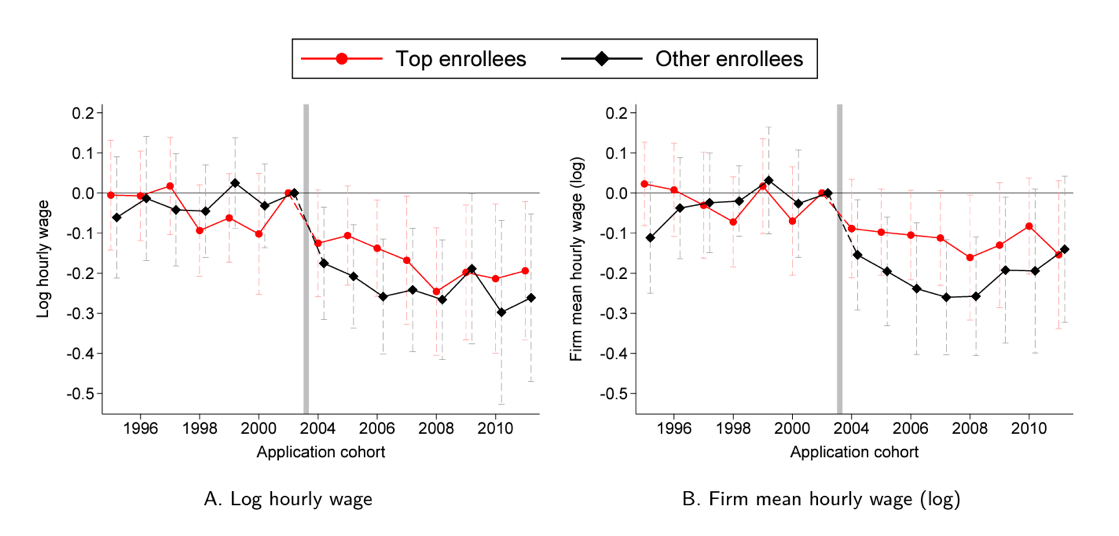
The answer here is also yes. The earnings of “top enrollees”—students who could gain admission whether or not affirmative action existed—decreased after the implementation of the policy (see Figure 2, Panel A). Two main reasons seem to explain this. First, they accumulated less human capital throughout college. Second, the value of the jobs associated with UERJ’s alumni network decreased after the introduction of the policy. This suggests that the change in student body composition from affirmative action reduced the learning and networking prospects of UERJ’s top students.

Figure 2. Event study estimates for individual and firm mean hourly wages 6–9 years applying to UERJ

Notes: This figure plots coefficients from an event study. Dashed lines are 95% confidence intervals using standard errors clustered at the program level. The dependent variables are log hourly wage (Panel A) and firm mean log hourly wage (Panel B) measured 6–9 years after application. Red markers show estimates for top enrollees. Blue markers show estimates for other enrollees. The vertical grey line indicates when the affirmative policy was introduced.

What lesson can we learn from Brazil’s experience? Elite universities face a difficult decision. While they want to help students from different backgrounds, they also want to keep offering the same value to all their students. The results of the study can explain why many top universities have historically given preference to high-income and high-achieving students and why they remain hesitant to admit a large number of students from disadvantaged backgrounds.

Filed Under: Research Tagged With: affirmative action, education, elite universities, human capital

How exposure to artificial intelligence affects worker well-being

October 2, 2023 by Mark Fallak

[Editor’s note: The following text is based on a ChatGPT-edited version of a summary provided by the authors of the study.]

Generative AI, exemplified by ChatGPT, has ignited widespread interest, casting a spotlight on its potential to redefine our daily lives and reshape cognitive and professional processes. This transformative force may extend to economic growth, healthcare, safety, and transportation, while simultaneously breaking down barriers to information access, education, and training. Amidst various studies exploring AI’s influence on labor markets and productivity, a critical gap remains in understanding its effects on workers’ well-being and mental health over time.

In response, Osea Giuntella, Johannes König, Luca Stella conducted a groundbreaking study, leveraging longitudinal data from the German Socio-Economic Panel (SOEP). Their focus? To investigate the profound implications of AI technology adoption in the workplace on workers’ well-being, economic concerns, and mental health. With a strategic analysis of occupational exposure and a meticulous study design, the authors reveal a nuanced narrative of the AI revolution’s impact on the German workforce.

The findings indicate a divergence in life satisfaction since the significant uptick in AI adoption in 2015, with exposed workers reporting lower levels. Job satisfaction among AI-exposed workers has witnessed a notable decline, coupled with heightened concerns about job security and personal economic situations. However, intriguingly, the study unveils no discernible impact on workers’ mental health, anxiety, or depression.

This study serves as an initial exploration into the evolving landscape of workers’ perceptions during the AI revolution’s transitional phase. Understanding these diverse impacts is paramount for shaping labor market policies that balance innovation with the protection of employee well-being. As we navigate this era of technological change, policies safeguarding vulnerable workers, fostering effective retraining programs, and providing support during transitions emerge as crucial measures to mitigate the potential adverse consequences of automation technologies on worker welfare.

Filed Under: Research Tagged With: artificial intelligence, mental health, well-being

Tax flight by the super-rich: Does it really happen?

September 22, 2023 by Mark Fallak

The ongoing concern regarding the increasing concentration of wealth frequently prompts calls for higher taxes on wealth. A common worry associated with such tax proposals is the potential for wealthy individuals to evade them by relocating internationally. A new IZA discussion paper by Arun Advani, David Burgherr, and Andy Summers analyzes the reform of capital taxation in the United Kingdom and provides quantitative insights into the actual magnitude of such responses.

Exploring a unique aspect of the UK tax system

The authors leverage a distinctive feature of the UK tax system dating back to the colonial era, which allows a special tax regime for individuals whose “permanent home” or “domicile” is not in the UK. Under this regime, such individuals can opt not to pay tax on returns to capital that come from wealth located outside the UK, such as dividends from foreign shareholdings and foreign bank interest. This exemption applies even if they reside and work in the UK for the entire year, a practice that many individuals seem to follow.

A reform triggering migration effects

In 2015, a reform was announced that terminated access to this special tax regime once individuals had spent 15 years in the UK, with the reform taking effect in 2017. This reform offers an excellent opportunity to examine the migration effects of capital taxes for several reasons: (1) it represented a substantial change, resulting in an 18% reduction in post-tax income; (2) it created variation in the tax rate for the same individuals over time; and (3) it did not immediately impact a group of otherwise very similar individuals who had spent slightly less time in the UK.

Understanding the impact on emigration

The study’s findings reveal relatively modest impacts on emigration. The baseline migration rate among long-term residents was approximately 4%, and the reform increased this rate by about 4.6 percentage points. While this constitutes a substantial relative change in migration rates, it translates to an implied elasticity of emigration in response to a 1% decrease in post-tax income of only 0.26. Notably, older individuals and those who paid relatively little tax before the reform, deriving most of their income from overseas capital returns, exhibited greater responsiveness. However, these groups represent a minority among the population benefiting from the reform.

Implications for capital taxation and labor market policy

These results bear significance not only for our comprehension of responses to capital taxation but also for the design of labor market policy. Many countries are increasingly introducing tax incentives for migrants. This study’s findings suggest that such tax competition is likely to incur high deadweight costs since a relatively weak migration response results in revenue costs outweighing the additional tax revenue generated by the policy.

Filed Under: Research Tagged With: capital income, inequality, migration, mobility, taxation

The long shadow of China’s one-child policy

September 20, 2023 by Mark Fallak

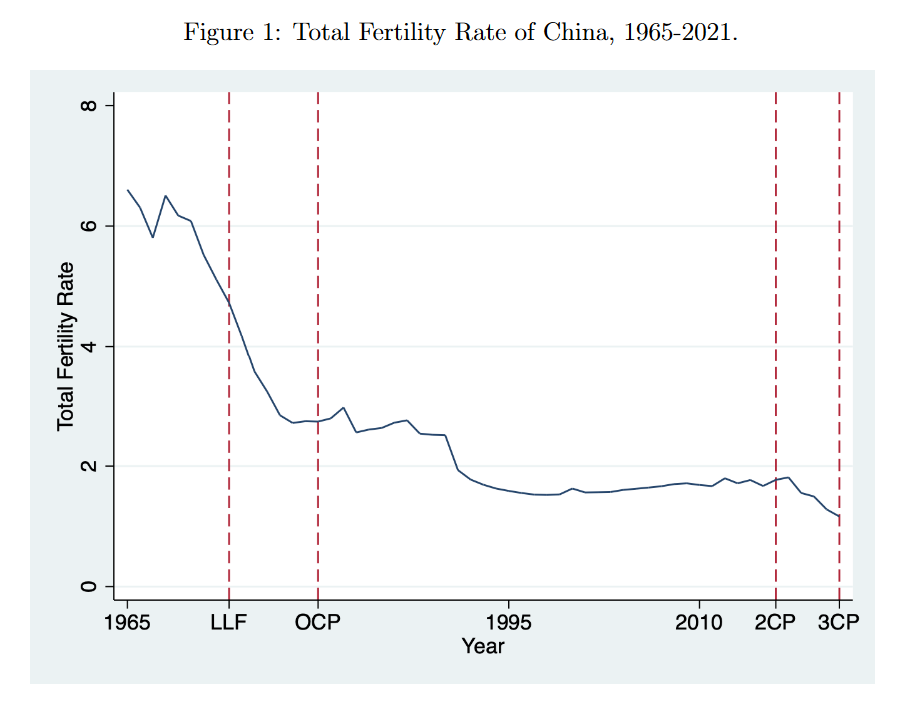
In 1980, China introduced the coercive one-child policy (OCP) which, as its name suggested, limited couples to having only one child. This was introduced by the Chinese government over concerns about overpopulation and economic growth. This policy lasted for more than three decades. The OCP was maintained through a system of fines, financial incentives, and intense propaganda.

Recent generations of Chinese women have grown up subject to this policy. Did exposure to such a restrictive policy and its influence in shaping a small-family culture permanently alter the subsequent fertility of Chinese women even after they were in an environment that did not restrict their fertility?

To answer this question, Siyuan Lin, Laura M. Argys and Susan L. Averett use data from the Census Bureau’s American Community Survey to examine the childbearing decisions of a sample of Chinese women who migrated to the US after growing up for varying lengths of time exposed to the OCP. In the US, these migrants are free to have as many children as they want.

The new IZA discussion paper finds that Chinese women who immigrated to the US and were exposed to the OCP for a longer duration have significantly fewer children compared to similar women who were less exposed to the OCP.

Fertility preferences shaped by small-family culture

This is the case even when accounting for the woman’s natal family size in an attempt to disentangle the effect of growing up in a smaller family from the impact of OCP exposure to a small-family culture in shaping fertility preferences. The results are stronger for currently-married women and hold when using a sample of only Chinese women and when introducing a control group of women from other Asian countries/regions.

The negative impact of exposure to the OCP on fertility is evident even after controlling for patterns of fertility assimilation of migrants and education levels that might have increased due to the OCP. The authors’ estimates suggest that exposure to the OCP from age 6-30 results in about 7 percent fewer children than similar women who were not exposed to the OCP.

Dramatic consequences of strong son preference

The implementation of the OCP, while reducing fertility, has also had unintended consequences. Data from the World Bank show that the old-age dependency ratio, a critical indicator of strain faced by the younger generation to support the older generation, has risen dramatically in recent years. The OCP, enacted in a country with a strong son preference, has also been shown to lead to a skewed sex ratio resulting in a large proportion of unmarried men. In addition to altering the future family prospects of these men, some evidence suggests this imbalance has also led to an increase in crime.

In response to concerns about the consequences of the low level of Chinese fertility and the recently declining population, the government enacted a two-child policy in 2016 that was quickly followed by a three-child policy in 2021.

New three-child policy unlikely to succeed

The finding that the duration of exposure to the OCP reduced subsequent fertility seems to be borne out by preliminary evidence from adopting the two-child policy in 2016. Despite eliminating penalties and encouraging families to have a second child through altered messaging, China’s TFR has continued to fall from 1.67 in 2015 to 1.28 in 2020. Clearly, fertility has not rebounded as policymakers had hoped, hence the enactment of the three-child policy in 2021.

The new research suggests that this policy has little chance of success since the vast majority of women currently of childbearing age in China were exposed to OCP messaging and penalties throughout most of their lives. It is unclear how long it will take to overcome decades of small-family cultural norms or if it is even possible, the authors write.

Filed Under: Research Tagged With: China, culture, family, fertility, immigrants, one-child policy

What we teach children about race and gender

September 12, 2023 by Mark Fallak

Children’s beliefs about their abilities or place in society are known to be shaped at a young age by race- and gender-based messages such as those implicitly conveyed in educational materials. As a result, it is vital that we understand how race and gender are portrayed in the content we present to our children.

A recent IZA discussion paper (forthcoming in the Quarterly Journal of Economics) uses AI tools that convert images into data on representation of skin colors, race, gender, and age in a century of influential children’s books. This work contributes to our knowledge of what messages are conveyed in the content we use to teach and entertain our children. It also expands the set of tools available for social scientists to measure representation in a variety of contexts.

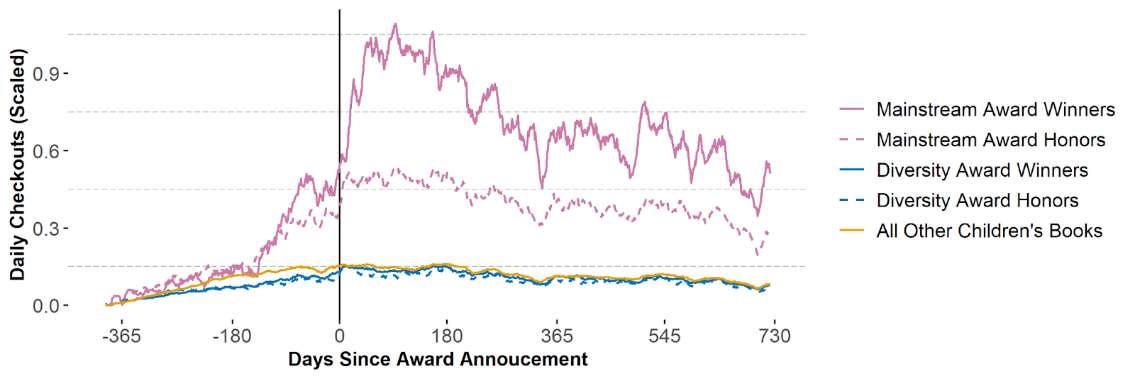
The authors of this study focus on award winning children’s books which are divided into two collections: “Mainstream” books considered to be of high literary or artistic value, and “Diversity” books selected because of how they center experiences of specific underrepresented identity groups in addition to their high literary value. They find that library checkouts for books in the Mainstream collection increase dramatically after receiving an award, implying that children are more likely to be exposed to the content of these particular stories.

The natural first step when measuring representation in images is to apply face detection to identify all depicted faces. However, off-the-shelf face detection models have a significant drawback; while off-the-shelf methods are an excellent way to detect faces in photographs, they perform poorly when applied to illustrations. Since many of the images found in content targeted towards children contain illustrations, this presented a problem. To overcome this, the authors construct a novel training dataset to build a model which can better detect faces in both photographs and illustrations. This model allowed them to detect 2.5 times more faces in their sample of children’s books than they would have using off-the-shelf face detection methods.

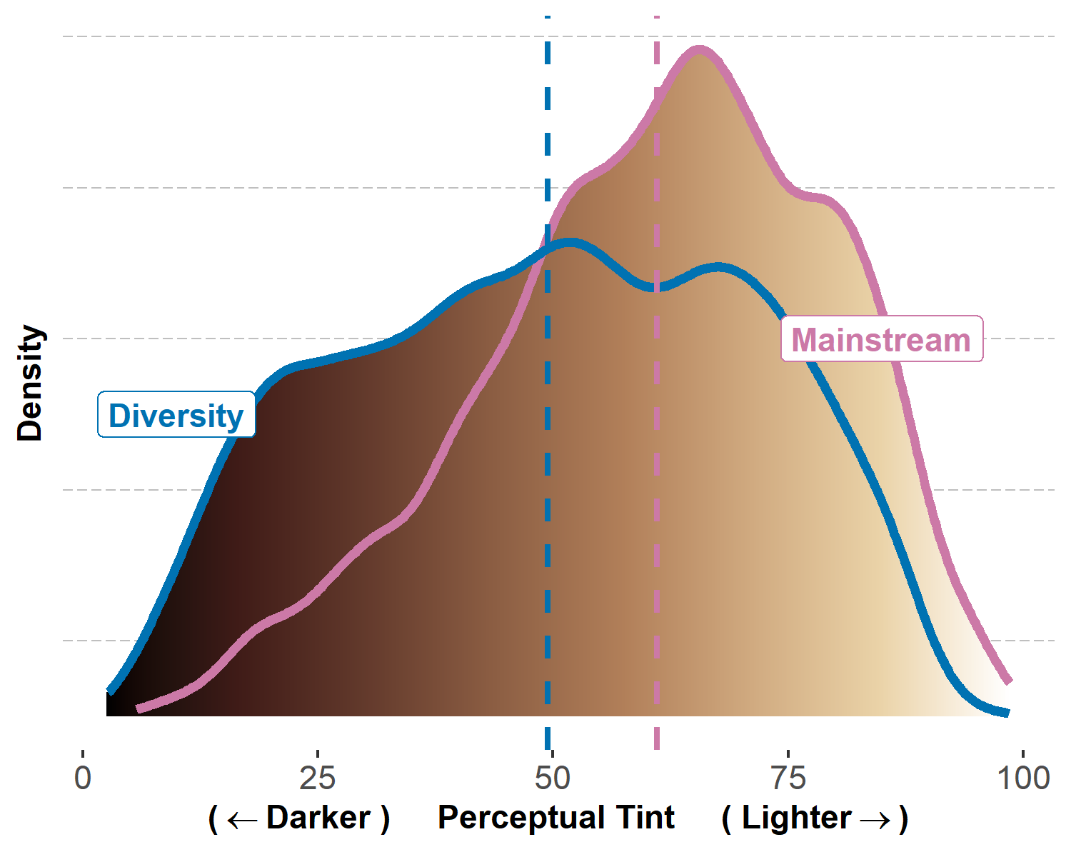
Applying their face detection model along with other computer vision tools such as skin segmentation, the authors find that faces depicted in the Mainstream collection are lighter on average than faces depicted in the Diversity collection. This is true even when conditioning on a face’s predicted race (e.g. faces predicted to be Black are lighter on average in the Mainstream collection than faces predicted to be Black in the Diversity collection). Perceptual Tint is used as a measure of how light or dark a skin color is on a scale of 0-100.

Another key finding is that relative to their growing share of the U.S. population, Black and Latinx people are underrepresented in these same books, while White males are overrepresented. Female representation in the text of these stories has grown from about 25% of all gendered terms and names to almost parity in recent years. However, even though females are increasingly present in the text of these stories, they appear less often in text than in images, suggesting greater symbolic inclusion in pictures than substantive inclusion in stories.

In an effort to understand the determinants of demand for representation in children’s books, the authors use data on children’s book purchases to understand who is purchasing books with different levels of representation. They find that people are more likely to purchase children’s books which contain representations of their own identities or the identities of their children. For example, purchasers who identify as Black or as Latinx are more likely to buy books that contain pictured characters with darker skin color, on average, than purchasers who identify as White. They also find that on average, purchasers who have a son purchase books with a lower percentage of female names, as compared to purchasers that have no children.

By merging the location of children’s book purchasers to data on local beliefs from the Cooperative Election Study, the authors show that a greater number of purchases of books from the Diversity collection is associated with a smaller proportion of individuals who believe that undocumented immigrants should be deported and a larger proportion of individuals who believe that White people in the U.S. have certain advantages because of the color of their skin.

Overall, this study uses AI tools to reveal enduring inequality in representation of skin colors, race, gender, and age within influential children’s books. It also establishes evidence that demand for representation in children’s books is related to consumers’ identities as well as their personal and political beliefs. These results suggest how the demand for representation may be a channel through which beliefs about race and gender could propagate across generations through the messages contained in the books parents purchase for their children. The findings in this study generate hypotheses that can motivate and inform subsequent research on the causes and consequences of representation in children’s books.

Filed Under: Research Tagged With: education, gender, race

Democrats do not benefit electorally from popular minimum wage increases

September 5, 2023 by Mark Fallak

Social scientists have shown that voters tend to reward politicians and governments that directly put cash in their hands. However, this kind of direct redistribution through the tax code, while explicitly involving government, is not the only means by which governments may seek to change the income distribution. Regulation of private market transactions may have a similar, if indirect, effect, implicitly redistributing via so-called “pre-distribution” policies. Wage floors, in particular, are implemented with the clear goal of redistributing pre-tax firm income to low-wage workers.

In the United States, polls consistently indicate minimum wage increases are broadly popular – and clearly associated with the Democratic party. A new IZA discussion paper by Emiliano Huet-Vaughn provides the first test of whether large minimum wage increases actually yield electoral gains for Democrats. For both federal and state races, the author finds no evidence that this is generally true using an event-study design and sub-national variation in minimum wages from the early 1990s to recent years. A null result is further confirmed when using a beneficiary-level political sentiment measure and difference-in-difference design.

Various explanations for the finding are explored and dispelled while newly collected survey evidence supports a salience, or inattention, mechanism. Specifically, voters are found to attend much less to a minimum wage increase than to an equivalently-valued direct cash transfer from the government. This suggests putting money in people’s hands may not be enough to receive political credit and that the directness of a transfer may itself matter.

Filed Under: Research Tagged With: minimum wage, Salience, voting

  • Previous Page
  • Page 1
  • …
  • Page 7
  • Page 8
  • Page 9
  • Page 10
  • Page 11
  • …
  • Page 69
  • Next Page

Primary Sidebar

© 2013–2025 Deutsche Post STIFTUNGImprint | Privacy PolicyIZA