• Skip to primary navigation
  • Skip to content
  • Skip to primary sidebar

IZA Newsroom

IZA – Institute of Labor Economics

  • Home
  • Archive
  • Press Lounge
  • DE
  • EN

Mark Fallak

Broad majority of global population supports climate action

February 10, 2024 by Mark Fallak

A recent study by Peter Andre, Teodora Boneva, Felix Chopra and Armin Falk demonstrates for the first time that a broad majority of the world’s population supports climate action and is willing to incur a personal cost to fight climate change. The findings, published in Nature Climate Change, are based on a globally representative survey conducted in 125 countries, involving approximately 130,000 individuals.

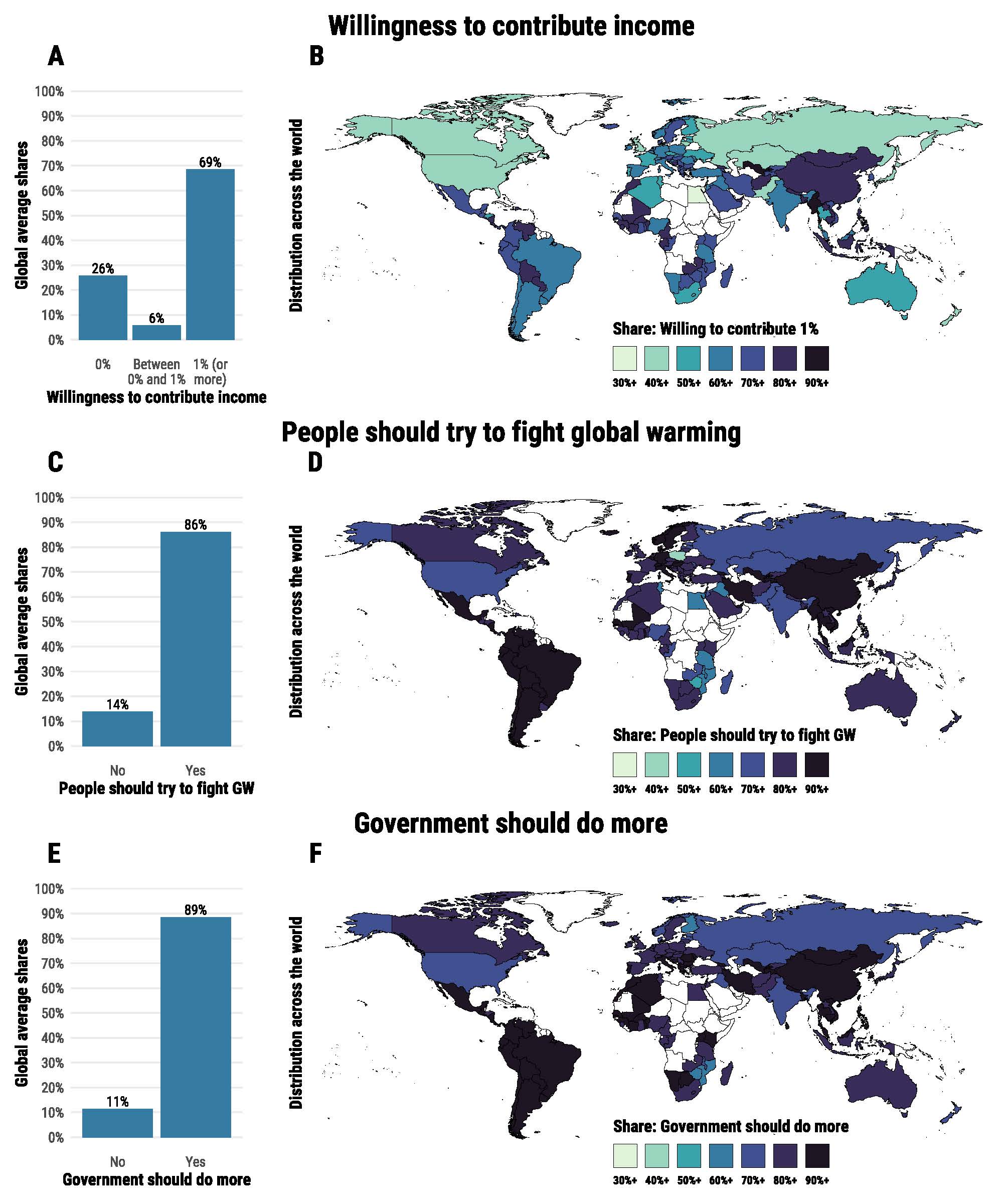
According to the study, 69 percent of the world’s population would be willing to contribute one percent of their personal income to the fight against climate change – a significant contribution to climate action. An overwhelming majority of 86 percent endorses pro-climate social norms, and 89 percent call for increased political action.

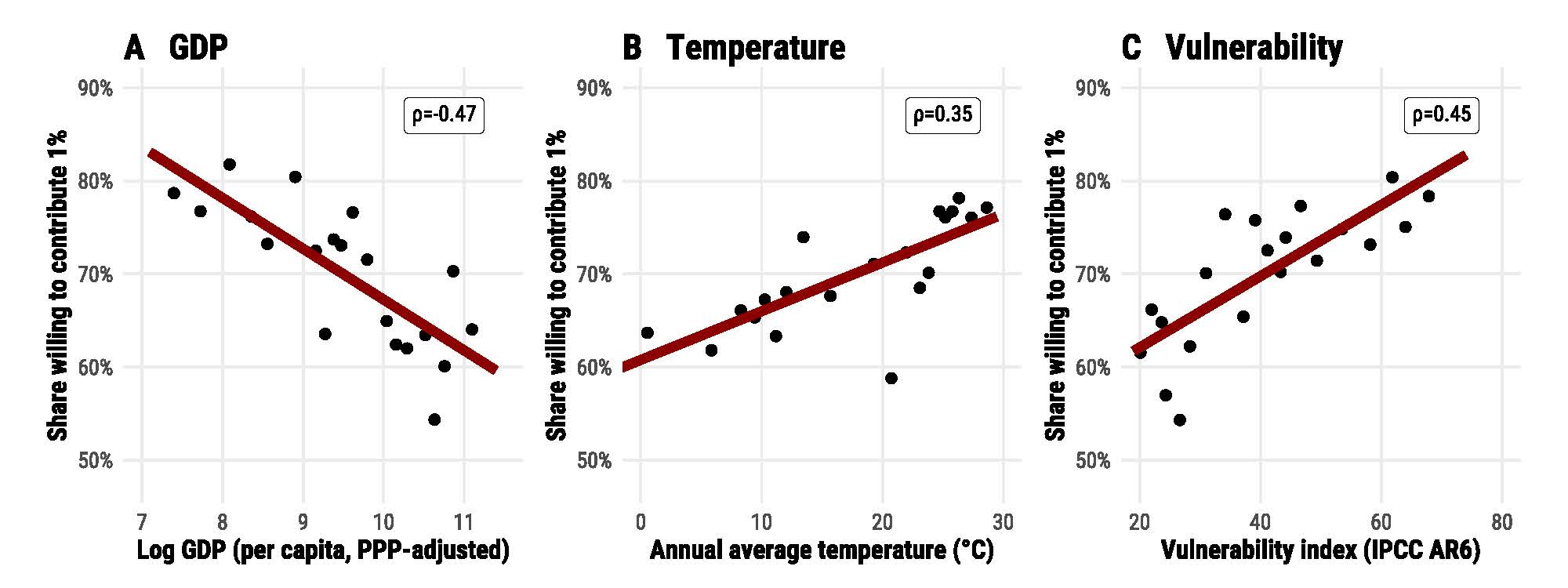
The authors view their results as “tremendously encouraging,” given that the world’s climate is a global public good, and its protection requires the cooperative effort of the world’s population. In countries particularly affected by global warming, the willingness to fight climate change is higher, while in high-income countries the willingness is lower compared to other countries:

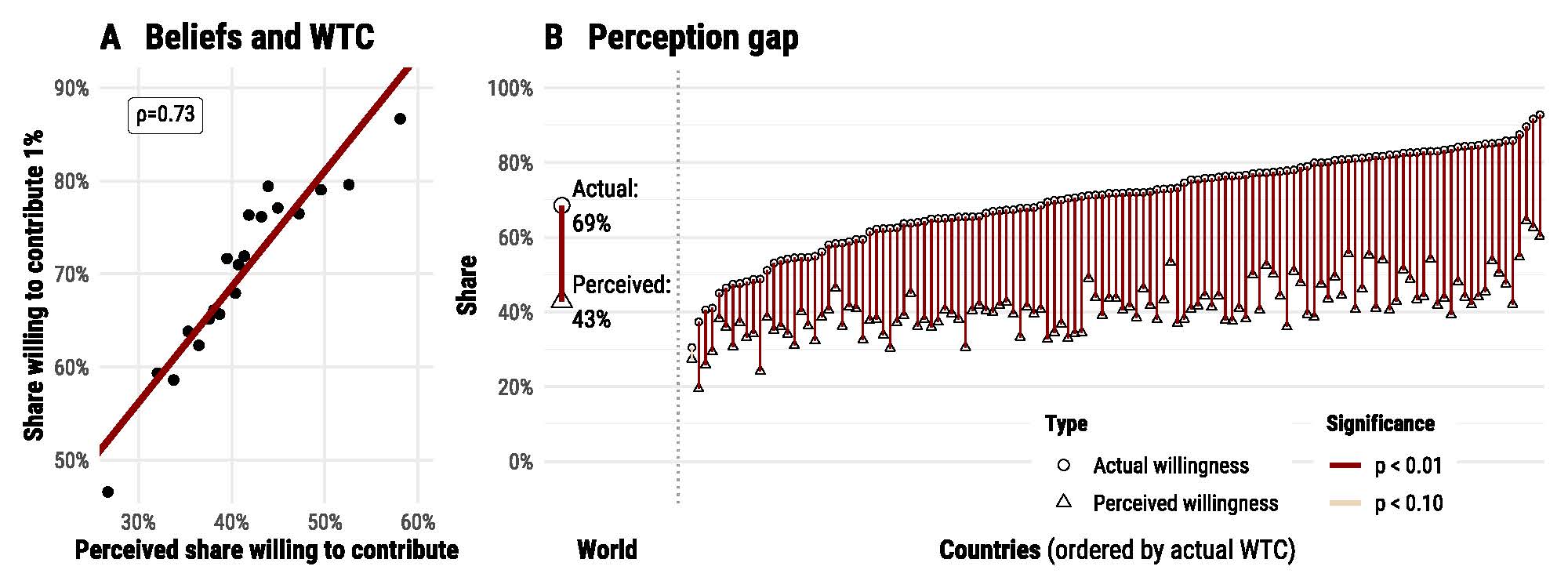
Despite these encouraging statistics, the researchers also document that the willingness of fellow citizens to fight climate change is systematically underestimated in every single country. According to the study, the actual proportion of fellow citizens willing to contribute one percent of their income to climate action (69 percent) is underestimated by 26 percentage points globally.

Systematic misperceptions about other people’s willingness to take action against climate change can be an obstacle to the successful fight against climate change. People who systematically underestimate public support for climate action are often less willing to take action themselves, the authors explain.

“Rather than echoing the concerns of a vocal minority who oppose any form of climate action, we need to effectively communicate that the vast majority of people around the world are willing to act on climate change and expect their national government to act,” the researchers write, suggesting that more optimism about climate action could unleash positive dynamics.

Methodology

The survey was conducted as part of the 2021/2022 Gallup World Poll. The countries included in the Global Climate Change Survey account for 96 percent of global greenhouse gas emissions, 96 percent of global GDP and 92 percent of the world’s population. To ensure representativeness within countries, each country sample was randomly selected from the resident population aged 15 years and older. Interviews were conducted by telephone (in high-income countries) or in person (in low-income countries). Most country samples include approximately 1,000 respondents, and the total sample includes 129,902 individuals. To ensure comparability across countries and cultures, the survey was professionally translated and extensively tested.

Data

The project website hosted by IZA contains interactive maps and country rankings: https://gccs.iza.org/

The dataset is available for scientific purposes through the IDSC of IZA.

Filed Under: Research Tagged With: climate change

What motivates climate change denial?

February 2, 2024 by Mark Fallak

Do climate change deniers bend the facts to avoid having to modify their environmentally harmful behavior? IZA Research Director Florian Zimmermann and Lasse Stötzer ran an online experiment involving 4,000 US adults. Surprisingly, they found no evidence to support this idea. Whether this is good or bad news for the fight against global warming remains to be seen. The study was published today in Nature Climate Change.

Many people still downplay the impact of climate change or deny that it is primarily a product of human activity. But why? One hypothesis is that these misconceptions are rooted in a specific form of self-deception, namely that people simply find it easier to live with their own climate failings if they do not believe that things will actually get all that bad. This “motivated reasoning” helps us justify our behavior

For instance, people who fly off on holiday several times a year can give themselves the excuse that the plane would still be taking off without them, or that just one flight will not make any difference, or—more to the point—that nobody has proven the existence of human-made climate change anyway. All these patterns of argument are examples of motivated reasoning. Bending the facts until it allows us to maintain a positive image of ourselves while maintaining our harmful behavior.

Self-deception to preserve a positive self-image

The study by Zimmermann and Stötzer is the first to examine the role that this form of self-deception plays in how people think about climate change. At the center of the online experiments was a donation worth $20. Participants were randomly allocated to one of two groups. The members of the first group were able to split the $20 between two organizations, both of which were committed to combating climate change.

By contrast, those in the second group could decide to keep the $20 for themselves instead of giving it away and would then actually receive the money at the end. Anyone keeping hold of the donation needs to justify it to themselves. One way to do that is to deny the existence of climate change.

As it happened, nearly half of those in the second group decided to hold on to the money. The researchers now wanted to know whether these individuals would justify their decision retrospectively by repudiating climate change. Without “motivated reasoning,” the randomly selected groups should essentially share a similar attitude to human-made global warming. If those who kept the money for themselves justified their actions through self-deception, however, then their group should exhibit greater doubt over climate change. Yet, the study revealed no sign of that effect.

Climate change denial: a hallmark of one’s identity?

This finding was also borne out in two further experiments. On the face of it, this is good news for policymakers, because the results could mean that it is indeed possible to correct climate change misconceptions, simply by providing comprehensive information. If people are bending reality, by contrast, then this approach is very much a non-starter.

However, the study does reveal some indication of a variant of motivated reasoning, specifically that denying the existence of human-made global heating forms part of the political identity of certain groups of people. Put another way, some people may to an extent define themselves by the very fact that they do not believe in climate change. As far as they are concerned, this way of thinking is an important trait that sets them apart from other political groups, and thus they are likely to simply not care what researchers have to say on the topic.

Filed Under: Research Tagged With: behavior, climate change, denial, excuse, motivated reasoning, self-deception

February is IZA Network Month

February 1, 2024 by Mark Fallak

With more than 2,000 scholars from over 60 countries, the global IZA research network is the largest of its kind. Our goal is to further expand our network and keep it vibrant, diverse and inclusive.

Once a year throughout the month of February, we invite our Research Fellows to propose prospective new members who would be a great fit for the IZA network. Nominations can be submitted and managed online.

The screening process will be informed by advice from the new IZA Network Advisory Panel. For more information on eligibility criteria and other requirements, see also our FAQ page.

Filed Under: IZA News

New IZA Network Advisory Panel established

January 19, 2024 by Mark Fallak

Recognizing the importance of the IZA network as a widely valued international resource for labor economists and other stakeholders, we are pleased to announce the formation of a new IZA Network Advisory Panel:

  • Joseph Altonji, Yale University
  • Oriana Bandiera, London School of Economics
  • Annabelle Krause-Pilatus, IZA (IZA local-team representative)
  • Andrew Oswald, University of Warwick (chairing)
  • Aderonke Osikominu, University of Hohenheim
  • Daphné Skandalis, University of Copenhagen

The panel members cover a broad spectrum of perspectives and constituencies. They include a mix of seniority levels within the profession. The panel will discuss ways to further improve the organization of the network and where necessary offer broad advice to the Institute.

Filed Under: IZA News

Job value inequality is considerably greater than wage inequality

January 11, 2024 by Mark Fallak

Workers searching for new jobs focus increasingly on non-wage job aspects such as workplace flexibility, telecommuting options, and overall work environment. In a new IZA discussion paper, Tobias Lehmann examines the Austrian job market from 1996 to 2011 to study how these aspects relate to wage inequality.

His analysis shows that when considering these non-wage benefits, job value inequality is notably more pronounced than what is suggested by wages alone. The study finds that over the 15-year period, there was a shift in the labor market: companies offering better non-wage benefits increasingly also provided higher salaries, leading to a greater disparity in overall job satisfaction and value.

Lehmann’s work highlights the importance of considering both monetary and non-monetary factors in understanding labor market inequality. The findings suggest a nuanced view of job satisfaction, emphasizing that non-wage aspects play a crucial role in shaping an employee’s work experience.

Filed Under: Research Tagged With: inequality, job values, wage dispersion

Do workers’ values matter for selection into supervisory jobs?

December 13, 2023 by Mark Fallak

Individuals with supervisory roles play a crucial part in organizing and overseeing work, making pivotal decisions across various organizational levels and economic sectors. However, the question arises: are those in supervisory positions truly the right fit based on their personality traits?

A key facet of managerial and supervisory traits revolves around values, representing guiding principles in one’s life. Certain values are deemed more favorable for effective supervision. For example, values like Universalism and Benevolence are anticipated to correlate positively with supervision quality, while others, like Power, pose the risk of fostering autocratic tendencies.

In a new IZA discussion paper, Mihails Hazans, Jaan Masso and Per Botolf Maurseth delve into the connection between supervisory responsibilities and human values, specifically those influencing the quality and efficacy of supervision. Leveraging data from rounds 7-9 of the European Social Survey, the focus is on the Baltic Sea region, encompassing three Baltic countries, four Nordic countries, and Poland and Germany.

Across most considered countries, values such as Achievement and Self-Direction show a significant positive association with supervisory roles, reflecting a pursuit of professional success, creativity, critical thinking, and independent action—all desirable qualities in a supervisor. Yet, there’s a caveat: these values also carry the potential for autocratic behavior, especially pronounced in Estonia, Finland, Denmark, Norway, and Germany, where Power values contribute to adverse selection in supervisory roles.

Benevolence and Universalism are theorized to enhance supervision quality. However, Benevolence, driven by helpfulness and care for close others, positively correlates with supervision only in Norway and Sweden. Meanwhile, Universalism, rooted in understanding, tolerance, equality, and nature protection, exhibits a negative link with supervision in Finland, Norway, Estonia, and Germany, with no significant correlation elsewhere in the Baltic Sea region.

Examining the link between a supervisor’s values and the number of subordinates (as a measure of supervision intensity) reveals that values impacting the likelihood of becoming a supervisor also influence the management of larger worker groups.

In essence, this study provides robust evidence of both positive and negative selection into supervisory positions, reinforcing earlier findings that the selection of managers and supervisors poses challenges, including issues like abusive supervision. It prompts a reevaluation of promotion and selection procedures to ensure the alignment of values with effective supervisory roles.

Filed Under: Research Tagged With: adverse selection, human values, management, social trust

Who supports affirmative action?

December 5, 2023 by Mark Fallak

Affirmative action aims to address discrimination and historical disadvantages as well as to promote diversity by giving certain groups, such as women or minorities, preferential treatment in university admissions, hiring or promotions. Such policies are the subject of heated debates. Understanding which factors influence opinions on affirmative action is crucial for designing effective policies and avoiding backlash against targeted groups.

A new IZA discussion paper by Sabrina Herzog, Hannah Schildberg-Hörisch, Chi Trieu and Jana Willrodt sheds light on this important issue. The study uses population-representative data from the US and combines an experiment and a survey to understand who supports or opposes affirmative action and why.

It shows that people are more likely to support a quota if they believe they will directly benefit from it. In-group favoritism, where people favor those who are similar to themselves, plays a smaller role. Regarding personal characteristics, the study finds that it is not so much demographics like income or education but rather character traits such as altruism or a preference for efficiency that drive support for or opposition against affirmative action.

For policy makers, the study has both good and bad news. The fact that self-interest is so strongly at play means that affirmative action will always stay controversial. The belief that a policy creates equal chances for all instead of overcompensating and favoring the formerly disadvantaged group increases its acceptance, while concerns about efficiency are associated with lower support for affirmative action. Both issues can be addressed by providing correct information about the effects of affirmative action.

Filed Under: Research Tagged With: affirmative action, altruism, discrimination, efficiency, fairness, in-group favoritism

Are senior entrepreneurs happier people?

December 4, 2023 by Mark Fallak

Given the rising life expectancy and rapidly aging workforce population in many developed countries, the decision when to retire becomes an increasingly relevant issue. In response to these demographic changes, policymakers are considering the promotion of senior entrepreneurship.

A recent IZA discussion paper by Michael Fritsch, Alina Sorgner and Michael Wyrwich  reveals that transitions into self-employment among the elderly population are extremely rare. At the same time, the share of self-employed individuals among all senior employed individuals increases as people age, suggesting that senior self-employed remain active longer in the labor market.

Comparison of senior entrepreneurs, paid employees and retirees

The authors address the following questions: What keeps seniors in self-employment? How can self-employment in old age be explained? Are senior entrepreneurs happier than their paid-employed and, particularly, their retired counterparts?

The study explores whether senior self-employed in Germany lead happier lives than their retired or paid-employed counterparts. The findings indicate that senior entrepreneurs are more satisfied with their lives than senior paid-employed and retired individuals. Income appears to play a key role in the higher life satisfaction of senior self-employed individuals, influencing their preference to remain in self-employment rather than retire.

Health is an important factor

Furthermore, health, both physical and mental, emerges as a crucial factor for higher life satisfaction among senior entrepreneurs compared to senior paid employees and retirees. Controlling for health status, retirees are found to be more satisfied with their lives than employed seniors.

The results strongly suggest that policy initiatives aimed at promoting senior entrepreneurship should consider health as a key barrier to entrepreneurship in older age. In cases where poor health conditions hinder attempts to earn additional income, public support might be necessary.

In turn, younger entrepreneurs should proactively address potential health challenges that may arise later due to the mental and physical demands of their entrepreneurial activity. Educational programs should be designed to make younger entrepreneurs aware that poor health at older age may decrease life satisfaction particularly for the self-employed.

Filed Under: Research Tagged With: age, entrepreneurship, healh, life satisfaction, well-being

Promoting labor market mobility among job seekers can backfire

November 28, 2023 by Mark Fallak

Promoting labor market mobility as a strategy for job seekers can have unintended consequences, according to an IZA paper by Marco Caliendo, Steffen Künn and Robert Mahlstedt, now forthcoming in the Review of Economics and Statistics. While many countries provide financial support to unemployed individuals to encourage them to seek employment beyond their local labor market, the study suggests that offering unconditional financial support for geographical mobility may do more harm than good.

The researchers used the IZA Evaluation Dataset Survey to examine the effects of mobility programs on unemployed job seekers in Germany. These programs, which include relocation subsidies and commuting assistance, aim to eliminate financial barriers and expand the job search radius, reducing geographical mismatches in the labor market.

Key findings from the study indicate that, contrary to expectations, mobility programs lead to overall adverse labor market outcomes for unemployed job seekers. Although job seekers respond to the promotion of mobility programs by increasing their geographical search radius, this adjusted search behavior results in lower levels of average employment and earnings. The study suggests that promoting mobility programs may encourage less efficient job seekers, who are constrained in their relocation decisions, to engage in distant job searches that tie up resources better invested in local job searches.

The authors recommend addressing spatial search frictions to improve the efficiency of mobility programs. They propose enhancing the quality of distant counseling and increasing interregional collaboration between caseworkers from different employment offices or private job agents. Additionally, the study suggests focusing mobility programs on job seekers who are capable of finding and willing to accept employment in distant regions, excluding those facing strong spatial search restrictions.

Filed Under: Research Tagged With: active labor market policy, job search, labor mobility, search frictions

Who benefits and who loses from affirmative action in elite universities?

October 17, 2023 by Mark Fallak

Many elite universities face pressure to increase the diversity of their student body. A central question is whether these universities can do this without changing the benefits they offer to all their students. A recent IZA discussion paper by Cecilia Machado, Germán Reyes, and Evan Riehl, which is now forthcoming in the Journal of Labor Economics, sheds light on this question by studying the impacts of an affirmative action policy implemented by Rio de Janeiro State University (UERJ), one of Brazil’s elite universities.

UERJ was one of the first universities in the country to introduce large-scale affirmative action. It did so in the early 2000s by reserving almost half of its slots for racial minorities and students from low-income families.

The first question addressed by the study:

Did affirmative action benefit the students it was meant to help?

The answer is yes, at least initially. Students who got into UERJ because of affirmative action earned 14% more in their early jobs (see Figure 1, Panel C). This earnings benefit was partly because they got jobs at good firms associated with the alumni network of UERJ. But this benefit seemed to decrease as they moved further into their careers.

Figure 1. Regression discontinuity graphs for UERJ enrollment, earnings, and employment at alumni firms

Notes: This figure shows regression discontinuity graphs for pre-affirmative action general applicants (blue diamonds), post-affirmative action general applicants (red circles), and affirmative action applicants (black triangles). The x-axis in each panel is an applicant’s standardized admission score normalized to zero at the cutoff. The y-axis plots means of each outcome in 0.1 SD bins of the standardized score. Outcomes are measured 6–9 years after UERJ application in Panels C and E, and 10–13 years after application in Panels D and F. Lines are predicted values from local linear regressions estimated with a triangular kernel.

The second key question addressed by the study:

Did affirmative action affect other UERJ students’ outcomes?

The answer here is also yes. The earnings of “top enrollees”—students who could gain admission whether or not affirmative action existed—decreased after the implementation of the policy (see Figure 2, Panel A). Two main reasons seem to explain this. First, they accumulated less human capital throughout college. Second, the value of the jobs associated with UERJ’s alumni network decreased after the introduction of the policy. This suggests that the change in student body composition from affirmative action reduced the learning and networking prospects of UERJ’s top students.

Figure 2. Event study estimates for individual and firm mean hourly wages 6–9 years applying to UERJ

Notes: This figure plots coefficients from an event study. Dashed lines are 95% confidence intervals using standard errors clustered at the program level. The dependent variables are log hourly wage (Panel A) and firm mean log hourly wage (Panel B) measured 6–9 years after application. Red markers show estimates for top enrollees. Blue markers show estimates for other enrollees. The vertical grey line indicates when the affirmative policy was introduced.

What lesson can we learn from Brazil’s experience? Elite universities face a difficult decision. While they want to help students from different backgrounds, they also want to keep offering the same value to all their students. The results of the study can explain why many top universities have historically given preference to high-income and high-achieving students and why they remain hesitant to admit a large number of students from disadvantaged backgrounds.

Filed Under: Research Tagged With: affirmative action, education, elite universities, human capital

  • Previous Page
  • Page 1
  • …
  • Page 8
  • Page 9
  • Page 10
  • Page 11
  • Page 12
  • …
  • Page 30
  • Next Page

Primary Sidebar

© 2013–2025 Deutsche Post STIFTUNGImprint | Privacy PolicyIZA