 In most OECD countries, general practitioners (GPs) play several fundamentally different roles. Clearly, on the one hand, they are responsible for their patients’ health and physical well-being. On the other hand, they also play an often unforeseen, but economically important role: acting as the arbiters of sick leave. This latter capacity is of great fiscal relevance because doctors act as “gatekeepers,” deciding which types of social insurance expenditures and medical treatments are ultimately necessary for their patients.
While the GP is probably the person best placed to objectively assess the true health condition of the patient, in a market this position is ripe with skewed incentives and moral dilemmas. For example, if some patients exaggerate or even ‘invent’ health problems to justify paid absence from work, might they, as customers, choose those doctors that are more generous in giving out sick notes?
In order to find out how this particular situation affects doctors’ behavior, Knut Røed and Simen Markussen empirically analyzed Norwegian doctors’ standards when it comes to doling out sick leave and the patients’ choices of GPs. In their new IZA Discussion Paper, the experts from the Ragnar Frisch Centre for Economic Research first identified each doctor’s degree of leniency, i.e., the physician’s readiness to give out a sick note to a patient.
To do this, they designed an indicator based on the overall certification of sick pay days for each doctor’s patients, taking into account the different characteristics of patients (age, employment, etc.) and the fact that many patients often switch doctors. In a second step, the authors were then able to use this leniency indicator to examine the extent to which workers chose family doctors which were more generous in giving out sick notes.
Lenient doctors attract more patients
The researchers show that not only do patients choose the more “free handed” doctors, but doctors actually anticipate the “leniency preference” of their customers when choosing their own level of leniency. Moreover, when the local competitive environment changes—for example, when another doctor moves to town, increasing competitive pressure—GPs tend to become more lenient to attract or keep patients.
But how much does this actually account for social welfare losses? The authors propose that if all the GPs in Norway received fixed salary contracts instead of letting them run their own businesses, the level of illness-induced absence from work would decrease by roughly 3-4%. Given that the Norwegian physician market has relatively little competition, the authors expect this effect to be much larger in more competitive markets.
The study concludes that by combining the incompatible roles of business owner and health provider, GPs are faced with highly contradictory incentives. In such a situation, GPs are forced to decide between performing their “gatekeeping” function in the most ethical manner possible or furthering their financial interests by attracting and keeping more patients as customers.
- Image source: pixabay
 “In past decades, Germany has made great strides with the integration of foreigners. Those achievements must be defended prudently and balanced with the country’s demographic challenges. Indiscriminately admitting all refugees from war, including often illiterate and unskilled youths, is bound to undermine these very impressive gains,” writes IZA’s founding director
  Despite the remarkable increase of female participation in education, the labor market and political life that has taken place over the past several decades, women are on average still paid less than men and are largely underrepresented in supervisory, managerial and executive positions. As research has shown, firms profit from establishing gender balance throughout their workforce for several reasons, for example, through promoting a more cooperative work environment.
 People have different propensities to tell the truth, particularly when there is an incentive to lie. According to an experiment conducted with soldiers and civilians in Israel, researchers found that it’s not the differences in religious, economic or social background that determines who is more willing to lie or tell the truth. Instead, the analysis by
 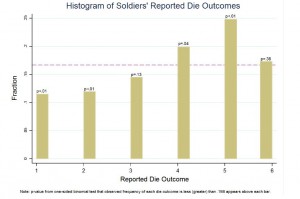 The truth-telling experiment was conducted with a group of 427 Israeli soldiers and repeated with 156 random passersby in an Israeli shopping mall. After a survey about individual characteristics, the participants were asked to roll a six-sided die in private and then state the rolled number. Higher reported numbers were rewarded with spare time for the soldiers and small monetary incentives for the civilians.
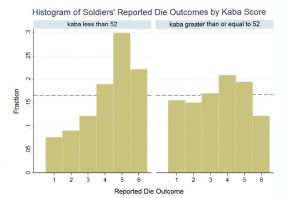 This result is somewhat surprising in that rewards for lying in this experiment are clear and straight-forward (rewards in spare time/money). Still, however, there are costs associated with lying, for example, through later detection and/or an eroded self-image of honesty. The authors suggest that higher cognitive-ability subjects are able to think through these costs and, as a result, resist the temptation to inflate their die reports.
 Anti-discrimination legislation has been largely ineffective at improving the employment prospects of the disabled. A new report, just published by
  “There is no consistent evidence that anti-discrimination legislation has improved the labor market outcomes of disabled individuals.”
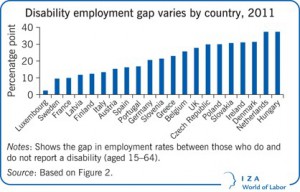 Understanding the work-related well-being of disabled workers is not only important in its own right, but also because of its likely contribution to the employment and earnings gaps via the impact on the recruitment, retention and productivity of disabled individuals. It is also important to note that differences in the type, severity and chronicity of disability are fundamental to the pattern of disadvantage experienced, and are therefore also critical to the design of effective support mechanisms.
 As the flow of asylum seekers reaching Europe’s shores is rising again with the onset of spring, the European Union is increasingly forced to address a number of challenges. Disagreements over the unequal distribution of refugees across the EU have hindered a common policy response, placing strain on existing support structures, and potentially threaten to unravel the entire international refugee protection system.
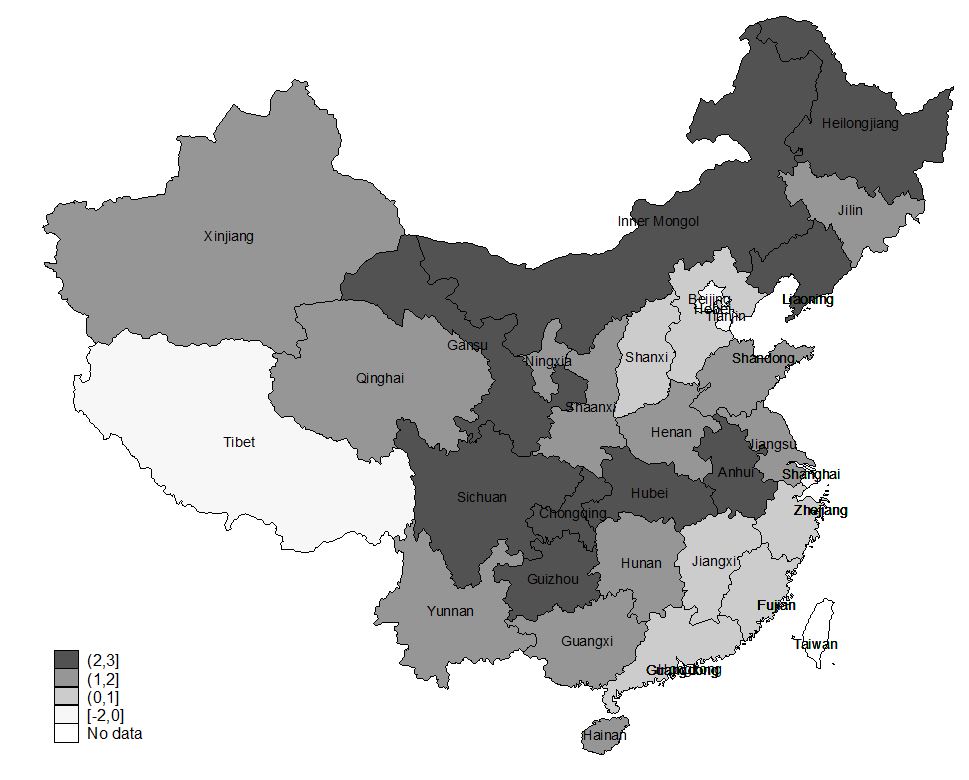
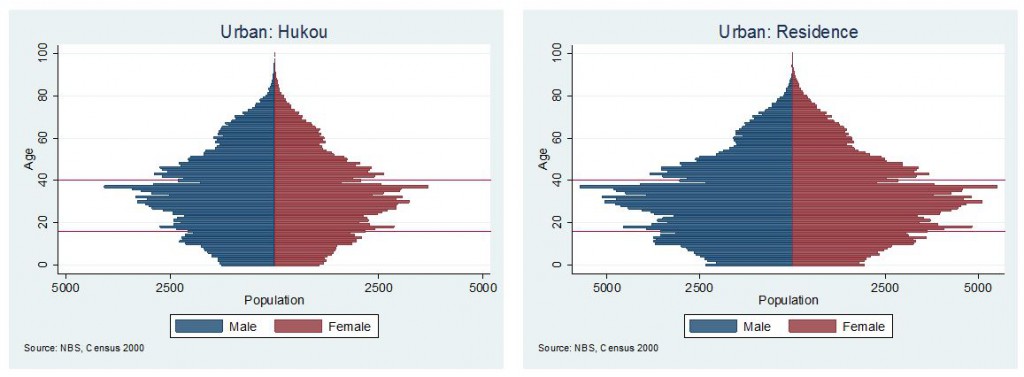
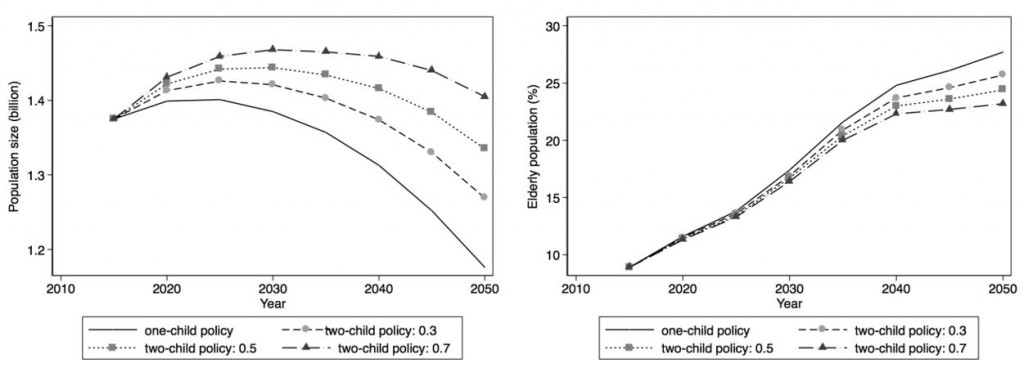
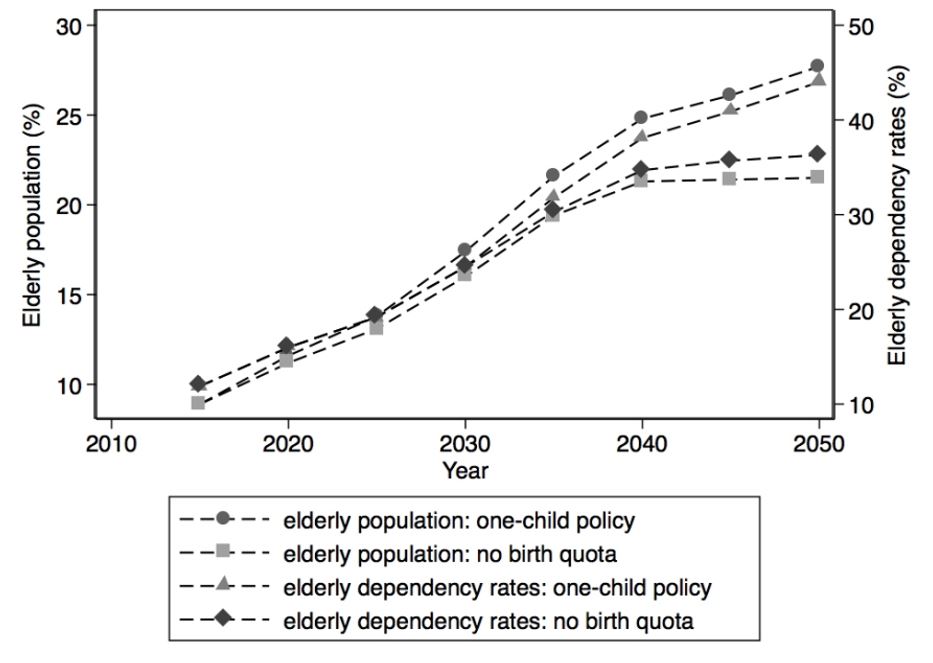
 In January 2016, China formally changed its one-child policy, now allowing all couples to have two children.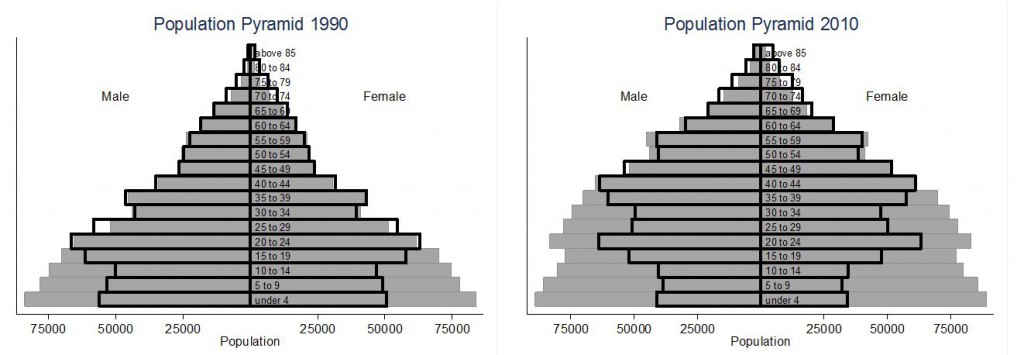

 Even though life expectancy is rising in most OECD countries, participation rates for older workers remain low. The fact that a non-negligible fraction of individuals exit the labor force well before retirement age has grave economic consequences, as it influences the economic dependency ratio of a country, that is, the ratio of retirees and unemployed over the employed.
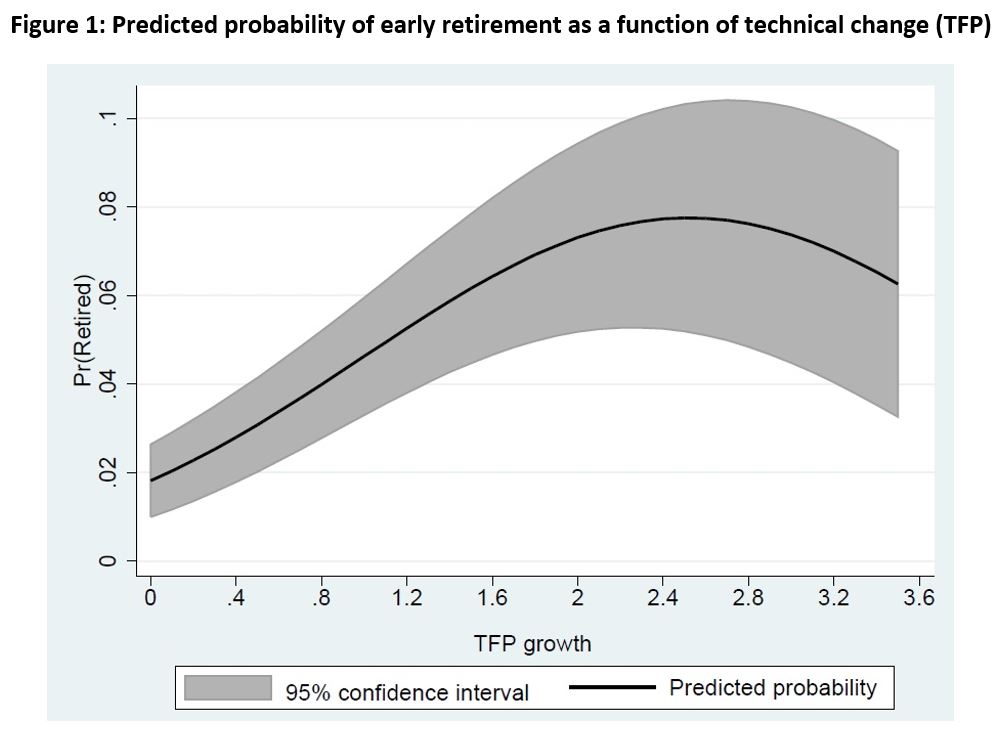 The findings by Burlon and Vilalta-Bufí suggest that the higher the technical change, the more willing the elderly are to retrain, an insight which should be taken into account by policy makers. In the context of an aging society, the authors propose that policies should aim at delaying retirement and stimulate the participation of the elderly to the labor force.
 By
By 