• Skip to primary navigation
  • Skip to content
  • Skip to primary sidebar

IZA Newsroom

IZA – Institute of Labor Economics

  • Home
  • Archive
  • Press Lounge
  • DE
  • EN

admin

IZA World Labor Conference 2018

June 25, 2018 by admin

IZA was created in 1998 with a generous endowment from the Deutsche Post Foundation. Over the 20 years of its existence, IZA has issued nearly 12,000 Discussion Papers, touching on all areas of labor economics and labor issues, but also including studies dealing with appropriate statistical measurement, macroeconomic labor issues and many other areas related to labor. The IZA network of Research Fellows and Affiliates contains over 1,500 members from more than 60 countries. It includes many labor economists, but also specialists in labor issues in sociology and labor policy more generally.

Each year IZA has held or co-sponsored around 30 conferences covering such areas as education, migration, program evaluation, environmental issues and many others. It has also held an annual meeting, its Transatlantic Conference, bringing together one dozen researchers from each side of the Atlantic to exchange ideas and present their research. At the IZA Summer School, each year around 30 advanced European Ph.D. students discuss each other’s research, hear lectures on cutting-edge topics by world-renowned scholars, and, moreover, become acquainted with each other, fostering a cadre of European scholars of the next generation.

It seemed appropriate to commemorate these achievements by holding a large conference open to researchers from around the world. From over 600 submissions, 192 papers were selected and organized into 48 sessions on June 28-29 in Berlin. The World Labor Conference was also the venue for awarding the biennial IZA Prize in Labor Economics.
[View online program]

[Download conference booklet – PDF]

Filed Under: IZA News Tagged With: 20 Years of IZA, anniversary event, IZA Prize, IZA World Labor Conference

New evidence on ‘gay glass ceilings’ in top management

June 13, 2018 by admin

Do sexual minorities face barriers in accessing jobs with supervisory and managerial workplace authority? And once on the managerial ladder, do they face glass ceilings that block them from higher-level posts? A new IZA discussion paper by Cevat Giray Aksoy (EBRD & IZA), Christopher Carpenter (Vanderbilt University & IZA), Jeff Frank (Royal Holloway) und Matthew Huffman (UC Irvine) answers these questions using confidential data from the UK.

The study provides the first large-scale systematic evidence on the relationship between a minority sexual orientation and workplace authority, which yields clear and surprising findings. They find that gay men and lesbians are significantly more likely to have objective measures of workplace authority compared to otherwise similar heterosexual men and women. However, they find strong evidence that there are glass ceilings: the managerial advantage experienced by gay men stems entirely from the fact that they are more likely than heterosexual men to be low-level managers. In other words, gay men are less likely than otherwise similar heterosexual men to attain the highest-level managerial positions that come with increased status and pay.

The researchers also find that the majority of the difference is due to differential returns to observed characteristics and skills (such as education) as opposed to differential endowments. That is, the evidence is most consistent with discrimination explaining differential access to top managerial positions. They further show that women and non-white men are disadvantaged in attaining high-level managerial posts: they too face glass ceilings.

The authors argue that access to managerial authority, and particularly high-level managerial posts, is not just about the individual. Those holding these posts are the exemplars, the mentors and the decision-makers on who will be the next generation of senior leaders. Bringing more sexual minorities, women and non-whites into managerial posts potentially increases the access for those further down the managerial/supervisory ladder – with similar characteristics – to be promoted. As with representation of women and minority groups on corporate boards, there is the potential to shift to a more representative outcome more broadly within the organization.

Filed Under: Research Tagged With: discrimination, gay, glass ceiling, homosexuality, lesbian, management, UK, workplace authority

Informal care givers pay a high price in well-being

May 30, 2018 by admin

Population ageing is putting large pressure on public health and pension systems in most Western countries, and so policymakers are increasingly searching for ways to cut costs. Some of the reforms have resulted in larger burdens especially for poorer individuals and households that cannot afford private insurance.

A prominent example is the “outsourcing” of care for elderly and disabled people, relying on informal care provided by relatives. In England and Wales, about 5.8 million people are estimated to provide some level of unpaid care, with a strong increase in “round-the-clock” informal care over the last decade.

The costs for the voluntary care givers are hard to measure, as they not only consist of financial burdens through foregone labor market opportunities, and additional expenditure on heating and medical supplies, but also include emotional burdens, deteriorating personal relationships, and adverse effects on caregivers’ physical and mental health.

To estimate the actual comprehensive “shadow price” of informal care giving, Rebecca McDonald (University of Birmingham) and Nattavudh Powdthavee (Warwick Business School and IZA) use the so-called well-being valuation method, which is used to monetize many different occurrences in life that have no obvious market values.

Applying this method to survey questions about informal care giving and life satisfaction in the UK, the authors seek to discover how much additional income would be required to generate a well-being gain that resembles the loss of well-being through the informal care giving, over and above that of the shock and empathy of having a family member going through a serious accident in the past year.

The results suggest that more than 100,000 GBP of additional income per year would be needed on average to just compensate for the well-being losses from providing informal care to a relative who suddenly required informal care through an accident. This large number should caution policymakers that “cost-saving” decisions may carry high societal costs.

Filed Under: Research Tagged With: caregiving, disability, elderly, family, informal care, shadow price, UK, valuation, well-being

The 2018 IZA Prize in Labor Economics goes to Joseph Altonji

May 17, 2018 by admin

Joseph G. Altonji (Yale University) will receive the 2018 IZA Prize in Labor Economics for his seminal contributions to the economic analysis of labor supply, family economics and discrimination. Worth 60,000 euros, the IZA Prize is regarded as the most prestigious science award in the field. It will be formally conferred during the World Labor Conference celebrating IZA’s 20th anniversary in Berlin on June 28, 2018.

According to the award statement, “Altonji’s contributions have shaped the understanding of how households decide on their labor supply under fluctuating business cycles and changing labor markets, whether the family is the relevant unit of economic decision making, and what the mechanisms behind labor market discrimination are. An overarching theme of his work is that even the most insightful and fundamental theoretical advances must be supported by rigorous empirical evidence.”

[download the full statement – PDF]

The IZA Prize Committee consists of seven distinguished economists, six of whom are previous Awardees. “Picking Joe Altonji as this year’s IZA Prize winner was an obvious choice. His profound contributions to several important areas of labor economics – his concern about taking economic theory and measurement seriously – made the selection committee’s job very easy,” said IZA Network Director Daniel Hamermesh, who chairs the committee.

[read more about the IZA Prize and previous winners]

About the Laureate

Joseph Altonji is currently the Thomas DeWitt Cuyler Professor of Economics at Yale University, a Research Associate of the National Bureau of Economic Research, and a Research Fellow of IZA (since 2001). In 2018 he will be President of the Society of Labor Economists. He is an elected fellow of the Econometric Society and the American Academy of Arts and Sciences. He has served on a number of government advisory panels, and currently is a member of the U.S. Federal Economic Statistics Advisory Committee and the National Science Foundation’s Social, Behavior and Economic Sciences Advisory Committee. Recognizing the need for supporting the public debate with economic evidence, he became a founding editor of Microeconomic Insights, a platform providing accessible summaries of economic research.

[read more on his homepage]

Filed Under: IZA News Tagged With: discrimination, family economics, IZA Prize, labor supply

The costly consequences of just failing a high-stakes exam

May 5, 2018 by admin

Education systems around the world increasingly apply standardized high school exit exams to make achievement more comparable among graduates (see the IZA World of Labor article “Central exit exams improve student outcomes“). These exams can be an important feature of success or failure in people’s lives as getting above a certain threshold may determine entry into tertiary education and selective colleges. An example of such a high-stakes public examination is the need to obtain a grade C in English and math in the age 16 school-leaving exams in England (or Grade 4 in the new system).

Narrowly failing students pay a high price

Achieving a grade C or better is considered achieving a “good pass” and has long been recognized as a key requirement for employment. In fact, this level of achievement is deemed so important that since 2015, it has become mandatory for students to repeat the exams if they fail to get a C grade in English or math and wish to continue in some form of publicly funded education thereafter.

A new study by IZA fellows Stephen Machin and Sandra McNally with Jenifer Ruiz-Valenzuela (all researchers at the London School of Economics) analyzes the benefits (or costs) for students who just pass (or fail) to meet a key threshold in these exams. More specifically, evidence is presented on the importance of just obtaining a grade C in GCSE English Language (which is the form of English exam undertaken by 72% of students in the cohort under study).

The idea behind the study is simple: For a “marginal” student on the brink of achieving a C level to end up just above or below the threshold is (in absence of manipulation) a matter of luck, and students just below and above the threshold should therefore be comparable apart from the fact that some have received a grade C and others have not. This is what economists call a “natural experiment,” which allows the researchers to isolate the effect of getting the C grade from actual performance differences in English.

Lower probability to enter higher education

Using administrative data of students taking the GCSE exam in 2013, the researchers analyze the relation of getting a C to their probability of early drop-out from education (and employment) and their probability of accessing higher-level courses, which are known to have a positive wage return in the labor market, and the effect on the probability of entering higher education.

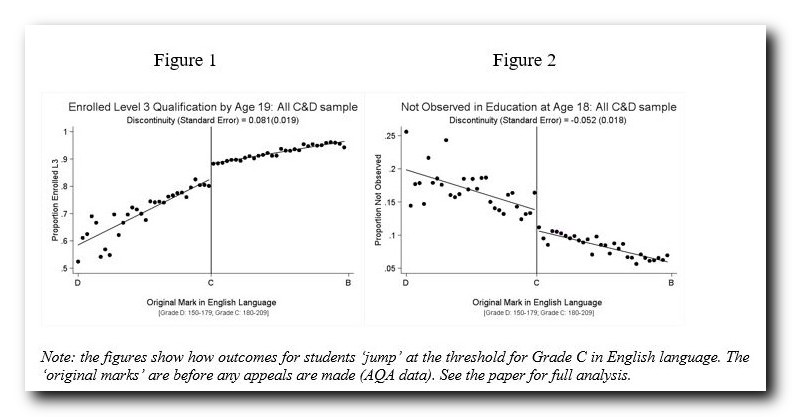
Just failing to achieve a grade C in English has a large associated cost. Narrowly missing the C grade in English language decreases the probability of enrolling in a higher-level qualification by at least 9 percentage points (illustrated in Figure 1). There is a similarly large effect on the probability of achieving a higher (‘full level 3’) academic or vocational qualification by age 19 – which is a prerequisite for university or getting a job with good wage prospects. There is also an effect on the probability of entering tertiary or higher education.

Further, narrowly missing a grade C increases the probability of dropping out of education at age 18 by about 4 percentage points (in a context where the national average is 12%) – illustrated in Figure 2. Those entering employment (and without a grade C in English) are unlikely to be in jobs with good progression possibilities.
Important source of inequality in education

In a well-functioning education system, there would be ladders for the marginal student – or at least alternative educational options with good prospects. However, the study suggests that the marginal student who is unlucky pays a high price.

The authors stress that their findings do not imply that having pass/fail thresholds would be undesirable. Achievement of a minimum level of literacy and numeracy in the population is an important social and economic objective. But the fact that there are such big consequences from narrowly missing out on a C grade suggests that there is something going wrong within the system. Young people do not seem to be getting the support they need if they fail to make the grade (even narrowly).

It also suggests that other educational options available to people who cannot immediately enter higher academic or vocational education are failing to help a significant proportion of young people make progress up the educational ladder. Thus, it is symptomatic of an important source of inequality in education, with associated negative long-term economic consequences for young people who just fail to pass such an important high-stakes national exam taken at the end of compulsory schooling.

(The summary above is based on a CVER blog post by the authors of the paper.)

Filed Under: Research Tagged With: academic achievement, career progression, education, exam, fail, high stakes, higher education, inequality

Air pollution increases crime in London

April 26, 2018 by admin

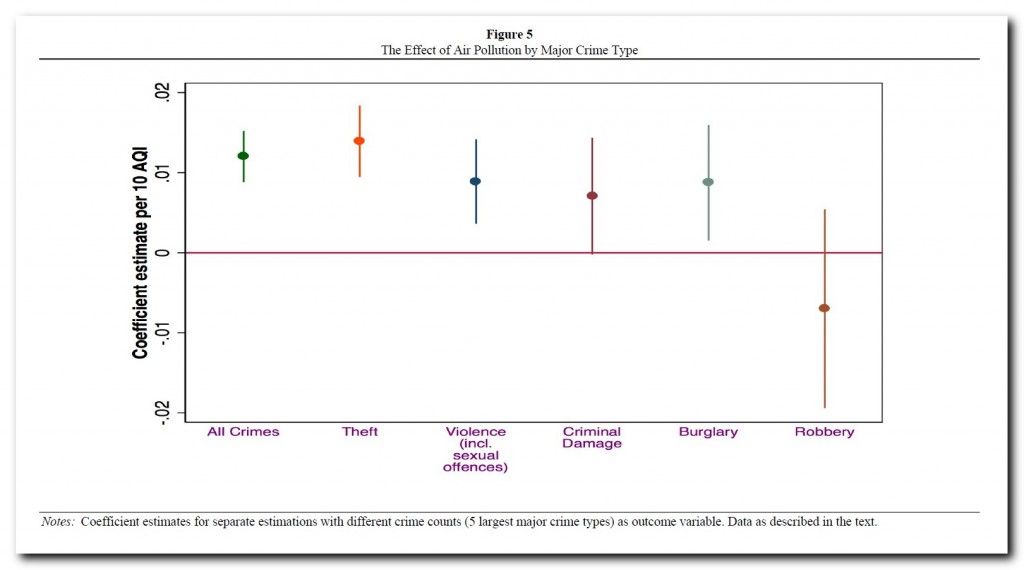
Higher levels of air pollution in London increase the rate of most types of crime in the capital and, in particular, less severe kinds such as shoplifting and pickpocketing. However, air pollution was not found to have a significant impact on the most serious crimes such as murder, assault causing severe bodily harm or rape. These findings were published in new IZA discussion paper by a research team from the London School of Economics.

The researchers found that a 10-point rise of the air pollution measure, the Air Quality Index (AQI), increases the crime rate by 0.9 percent. This means that the crime rate in London is 8.4 percent higher on the most polluted day (AQI 103.6) compared to the days with the lowest level of pollution (AQI =9.3) An AQI of over 35, which happens in 1 out of 4 days on average, leads to 2.8 percent more crimes – equivalent to the effect of a 9 percent reduction in policing.

The findings have implications for other major cities such as Chicago and New York which also suffer from high levels of pollution and crime. “Our research suggests that reducing air pollution in urban areas could be a cost effective way to reduce crime, in addition to the health benefits it would bring,” says IZA research affiliate Sefi Roth, who co-authored the study with Malvina Bondy und Lutz Sager.

While they did not find that London’s ongoing spate of knife crime would be affected by improved air quality, the authors argue that the police could potentially be freed up to allocate more resources to these types of very serious incidents if the number of less serious crimes could be reduced. Given that the effect of air pollution on crime occurs at levels which are well below current regulatory standards in the UK and the US, it could be beneficial to lower these existing guidelines, according to the study.
In particular, London’s wealthiest neighborhoods – which are the most polluted – were affected. The poorest neighborhoods, although less polluted, were also affected, which suggests that those who live in them are more sensitive to poor air quality. A similar sensitivity to poor air quality on health has already been established by other research.

The researchers looked at 1.8 million crimes over two years and compared them with pollution data within boroughs and wards over time, to ensure like was compared with like. Their findings took account of factors such as temperature, humidity and rainfall, days of the week and different seasons. The authors also used wind direction, which blows pollution in and out of areas randomly, as a ‘natural experiment’ to exclude any other factor from being the cause of the link they observed between crime and air pollution.

The study suggests the effect of air pollution on crime may be linked to the increases in the stress hormone cortisol that can occur in people exposed to higher levels of pollution.

Filed Under: Research Tagged With: Air Quality Index, crime, health, London, police, pollution, stress

The moral hazard of life-saving innovations: Naloxone access, opioid abuse, and crime

April 24, 2018 by admin

By Jennifer Doleac and Anita Mukherjee

The United States is grappling with an epidemic of opioid abuse and mortality. The U.S. Surgeon General recently called for everyone to carry naloxone — a drug that can save someone’s life if administered during an overdose. This call echoed similar advice by public health officials at the state and local levels. Over the past decade, states have gradually increased legal access to naloxone, which had previously required a prescription to obtain. The thinking is that if naloxone is in everyone’s medicine cabinet, then those suffering from opioid addiction will be more likely to survive an overdose. Surviving the overdose then allows them the opportunity to get treatment for their addiction.

We worried that increasing access to naloxone may do more than just increase the chances of surviving an overdose. When an activity becomes less risky, people are more likely to engage in it. (Economists call this moral hazard.) For instance, researchers have found that people became more likely to engage in risky sex after HIV became more treatable. It could be that when an opioid overdose is more easily treatable by naloxone, people are more likely to engage in risky opioid use. The goal of our recent study is to quantify this effect. We feel that we have achieved that goal. But we also generated an unintended side effect of a tremendous degree of outrage and opposition to our hypothesis and our results. We will first describe our results, and then discuss the controversy that followed their release.

To measure the effects of broad naloxone access, we looked at the repercussions of state laws that expanded access to naloxone. In their most generous form, these laws established a standing order that allowed anyone to walk into a pharmacy and purchase naloxone without a prescription; they also allowed community organizations to distribute naloxone widely. We measure the effects of these naloxone access laws on opioid-related ER visits, opioid-related crime, and opioid-related mortality.

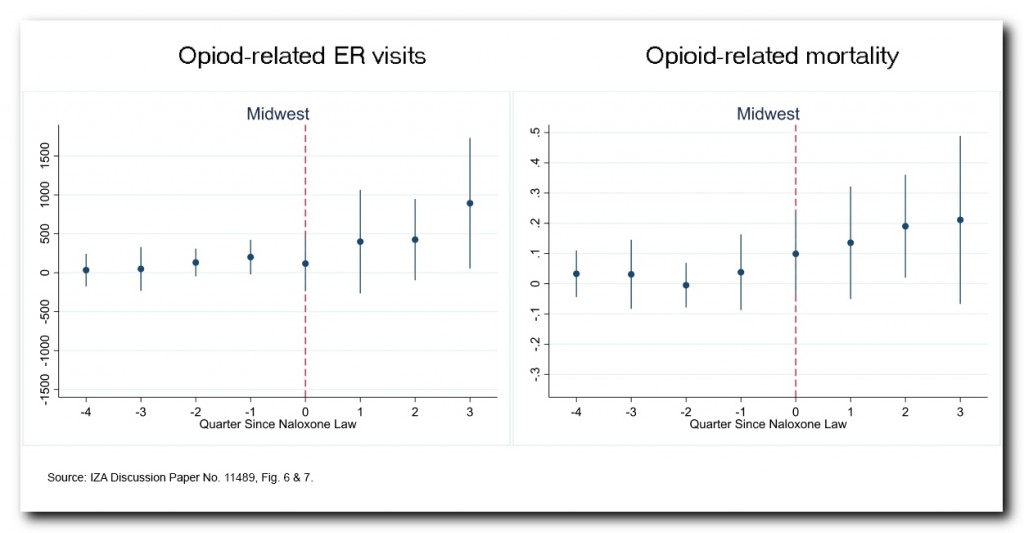
We find that, on average across the country, broadening access to naloxone led to more opioid-related ER visits and opioid-related crime, with no net reduction in opioid-related mortality. When we look specifically at the Midwest, the region hardest hit by the opioid crisis, we find that broadening naloxone access led to a 14% increase in opioid-related mortality. Our interpretation of this finding is that people are using opioids more often, and in more potent forms (e.g. fentanyl) when they have naloxone as a safety net.

Figure 1 plots the effects of broadening naloxone access on opioid-related ER visits and opioid-related mortality in the Midwest. As these graphs show, effects are flat and near-zero before the law change. This is comforting — if the trend started before the laws went into effect, this would suggest that it is not due to the laws themselves, but instead that the laws are in response to rising opioid abuse. At the effective date of the law, opioid-related ER visits and opioid-related mortality start to rise relative to states that didn’t have naloxone access laws go into effect on that date. The combination of no trend before the effective date and a trend after the effective date means that naloxone access laws are causing an increase in opioid abuse.

Figure 1 (from figures 6 & 7 in the paper)

The differences in effects across regions provide an opportunity to investigate what policies may reduce the unintended costs of naloxone access. We find suggestive evidence that greater availability of drug treatment may be important. That is, broadening naloxone access increases mortality more in places where less drug treatment is available. This makes sense if we think that the primary goal of naloxone is to give individuals a chance to get treatment for their addiction — if there is no treatment available, then perhaps it’s unsurprising if naloxone does more harm than good. This association between drug treatment availability and the effect of naloxone access laws suggests that investing in more drug treatment could help mitigate the unintended costs of broadening naloxone access.

The controversy

You can always count on economists like us to bring bad news to the policy conversation. But many policies don’t work as intended, and even effective policies involve tradeoffs. Knowing how deeply personal the opioid crisis is for many of us, we expected some pushback when we released the current paper — after all, many harm reduction efforts center on the widespread distribution of naloxone, and research documenting unintended effects would surely be unwelcome. But we also believe that our research findings contribute important information to discussions about how to address the opioid crisis. After presenting the paper at several conferences and seminars, and getting feedback from a variety of colleagues, we were confident that the results were ready to be shared more widely.

The debate around our paper was more heated than we expected. When we released the working paper in March, it was met with outrage from many people, primarily non-economists. We think that part of the negative reaction was caused by confusion over the term “moral hazard,” which is an economics term that (ironically) implies no moral judgment. But other pushback related to cross-disciplinary differences in theories about human behavior as well as empirical methods.

Some argued that moral hazard could not possibly operate in this context. Our view, shaped by theory and prior empirical research, is that such effects are plausible; we wanted to allow the data to tell us whether moral hazard was operating in this context rather than assume it. We began this project open to the possibility that moral hazard does not matter here, and we remain open to that possibility. But our analysis of the evidence leads us to believe that moral hazard is, in fact, present.

Others questioned our ethics as researchers (particularly in releasing a working paper before peer review, a common practice in economics) and our moral compasses as human beings. Our inboxes remain full of messages from people suggesting we’ve confused correlation with causation (in fact, identifying the causal effect was the key goal of this study), and even some instructing us on how to structure a research paper (as if we’re not experienced academics at major research universities).

Yet others wrung their hands about whether evidence of unintended consequences would lead policymakers to end access to life-saving medication, and suggested we should never have written a paper that could be easily “weaponized” by opponents of their preferred policy. We agree that academics have a responsibility to facilitate accurate interpretations of their research; we’ve tried to do that. But we don’t agree that academics should quash research results that don’t fit the narrative of one advocacy group or another. In subsequent conversations with policymakers and practitioners, we’ve been gratified that they recognize that even worthwhile policies involve costs as well as benefits. In our experience, decision-makers are thinking responsibly about what to do next, neither ignoring our evidence nor rashly calling for naloxone bans. Perhaps our critics should give them more credit.

Not all the reaction was negative, however. Many fellow academics took the time to read our paper and offer encouragement. Other people – including nurses, doctors, and others on the front lines of fighting the opioid epidemic – thanked us for doing this study and engaging in these uncomfortable conversations. Even those who questioned some of our findings denounced the personal attacks we received.

The reason economists disseminate working papers prior to peer review and publication is to have lots of smart people engage with the research, and we got plenty of that. The ensuing conversations — at conferences, on Twitter, in blog posts, and over email — helped us sharpen our thinking and come up with testable hypotheses related to concerns that were raised. Our study is better for it.

For instance, several people pointed out that, while we control for a variety of other opioid-related policies, our analysis did not control for state-level Medicaid expansions; these might have independently increased or decreased opioid abuse. We now show that controlling for Medicaid expansions has no impact on our results (and if anything, makes them stronger). Some questioned whether the effective dates of the laws we use are accurate. We reviewed the relevant legislation, clarified our definitions, and noted that in five states one could make a reasonable case that we should have used earlier dates (due to pilot policies at the county level, or related legislation that broadening naloxone access to at-risk populations). We show that when we use those alternate dates, the results are nearly identical to before.

Others wondered whether naloxone access laws are a good treatment variable in the first place — perhaps they did not have any meaningful effect on naloxone distribution. We emphasized that our study identifies an intent to treat effect: that is, we’re measuring the impact of the laws, which intended to increase access to naloxone, rather than the impact of naloxone itself. Our estimates will be biased toward zero if the laws had no effect on naloxone access — so the fact that we’re finding effects suggests the laws are indeed having an impact. Local data on naloxone distribution are typically unavailable, but we added some anecdotal evidence that the laws increased naloxone distribution in at least some places. Finally, discussions about the best way to present graphical evidence pushed us to switch from residual plots to coefficient plots. The graphs now show the effects of the access laws more clearly.

These new analyses, along with our previous robustness checks and placebo tests, make us confident that our study identifies the causal impact of naloxone access laws. We believe we have documented that broadening naloxone access increases opioid abuse. Our policy recommendations are (1) to consider these moral hazard effects when making naloxone more easily available, and (2) to implement policies that can help mitigate any unintended costs. For instance, invest more resources in drug treatment, and find ways to encourage those who have overdosed to get help. There won’t be a quick fix to this epidemic, but we hope that a better understanding of the effects of naloxone access will lead to better and more effective policies, and ultimately save lives.

Filed Under: Research Tagged With: crime, drugs, health, moral hazard, mortality, risk, substance abuse, United States

Is dependency on disability insurance benefits transmitted from parents to children?

April 12, 2018 by admin

Disability benefits provide an essential safety net for many people of working age whose health prevents them from engaging in paid work. But many countries are increasingly concerned about the fiscal sustainability of high and growing disability insurance (DI) dependency rates. One of the reasons is that disability benefits may themselves contribute to low participation and employment rates among people with disability. There is also a perception that few people flow off disability benefits until either death or state pension age is reached.

An important question in this context that policymakers and academics have been trying to answer for decades is whether DI dependency is transmitted from a parent to their children. A simple inspection of the raw data displays a clear pattern that children whose parents were benefit recipients are also more likely to receive a benefit later in life. However, it is not clear whether these children become benefit recipients because their parents were, or because children and parents simply share some characteristics that make them more likely to claim a DI benefit. If the former is true, parental participation in social assistance programs could severely impact a child’s future economic situation and opportunities.

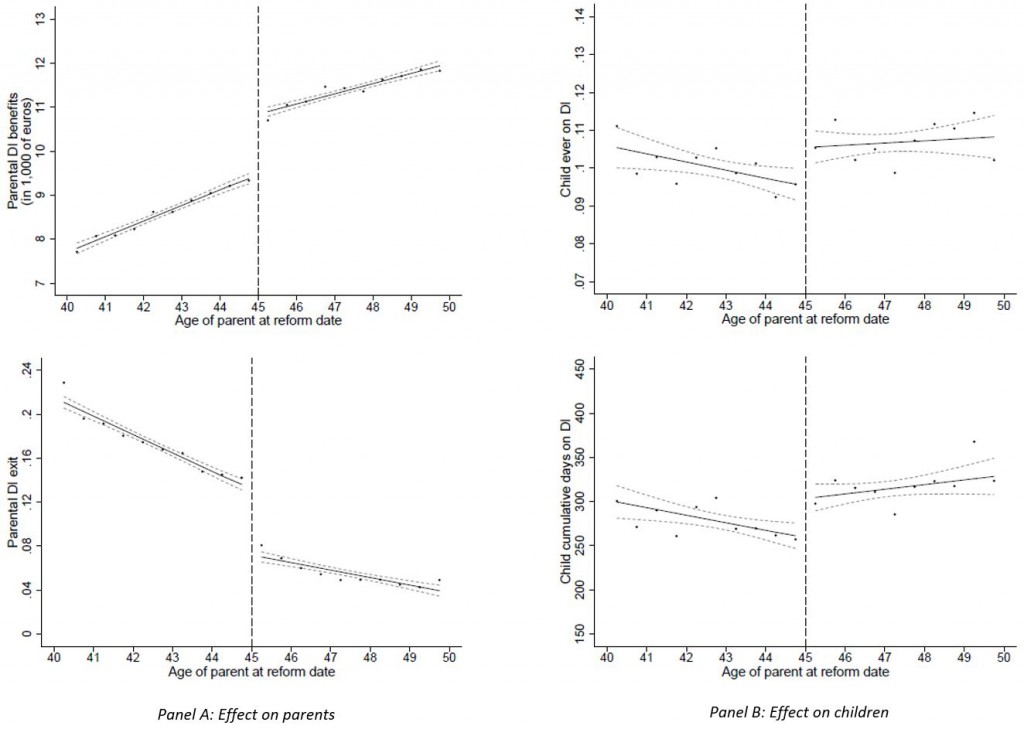
In a new IZA Discussion Paper, Gordon B. Dahl (University of California San Diego & IZA) and Anne C. Gielen (Erasmus University Rotterdam & IZA) investigate this by studying a reform in Dutch DI that dates back to the mid-1990s. Following this reform all DI recipients under the age of 45 were re-assessed under stricter eligibility criteria, leading to lower DI benefits and to increased exit from DI (see Figure 1, Panel A). For those aged 45 and above, a re-examination took place but according to the old – and more generous – criteria. This sharp differential treatment in re-examinations can be exploited to learn how the reform affected the children of these individuals.

The findings show that more than 20 years after the reform, reduced parental DI dependency led to a lower DI dependency among children. Both the probability that a child is on DI as well as the benefits received from DI are substantially lower for those children whose parent’s DI use was reduced due to the reform (see Figure 1, Panel B). In addition, there are positive effects on future labor market outcomes for these children, with a higher employment rate and a higher level of labor market earnings. Consistent with an anticipated future with less reliance on DI, children of parents exposed to the reform invest in additional schooling while young.

All in all, these results illustrate a strong link going from parental social assistance participation to a child’s dependence on social assistance benefits. These intergenerational effects have important implications for fiscal policy. Ignoring any parent-to-child spillover effects understates the long-run cost savings of the Dutch DI reform by as much as 40% in the long run. Hence, when developing social policies it would be a mistake for governments to only consider current participants in a program, without accounting for the long-run effects within families.

See also an earlier IZA Newsroom article on family welfare cultures in Norway.

Further reading:

  • IZA DP No. 11186 by Melanie K. Jones and Duncan McVicar: The Dynamics of Disability and Benefit Receipt in Britain
    Disability onset increases receipt of disability insurance, a wider measure of sickness and disability benefits, and receipt of non-sickness benefits by six, eight and six percentage points, respectively, in the first year. Disability exit has an almost symmetrical impact on receipt of disability insurance and on wider sickness benefits in the first year, contrary to the perception of disability benefits being an absorbing state.
  • IZA DP No. 11410 by Silvia Garcia Mandico, Pilar Garcia-Gomez, Anne C. Gielen, and Owen O’Donnell: Earnings responses to disability benefit cuts
    Using the Dutch DI reform that affected recipients aged 30-44, the paper finds that reassessment of entitlement under more stringent rules reduced benefits by around 20 percent, on average, and reduced dependency on the program by 14.4 percentage points. These cuts produced a 6.7 percentage points increase in employment and a 8.5 point increase in the probability of working and not claiming DI.
  • IZA DP No. 11409 by Tomi Kyyrä and Tuuli Paukkeri: Using a Kinked Policy Rule to Estimate the Effect of Experience Rating on Disability Inflow
    Unlike in most other countries, in Finland employers’ disability insurance premiums are partially experience rated. The paper shows that experience rating has reduced the disability inflow among men under age 50. For other groups the authors find no significant effects.

Filed Under: Research Tagged With: benefit recipiency, children, disability insurance, family, insurance, intergenerational, labor market policy, Netherlands, parents, social assistance, social policy

The impact of self-selection on performance

March 15, 2018 by admin

Our behavior is strongly influenced by comparisons with others. These “others” are not usually assigned to us, but we choose who we interact and compare ourselves with. Or, as economists put it, individuals self-select into certain environments and into specific peer groups within given environments. However, little is known about the consequences of these self-determined choices.
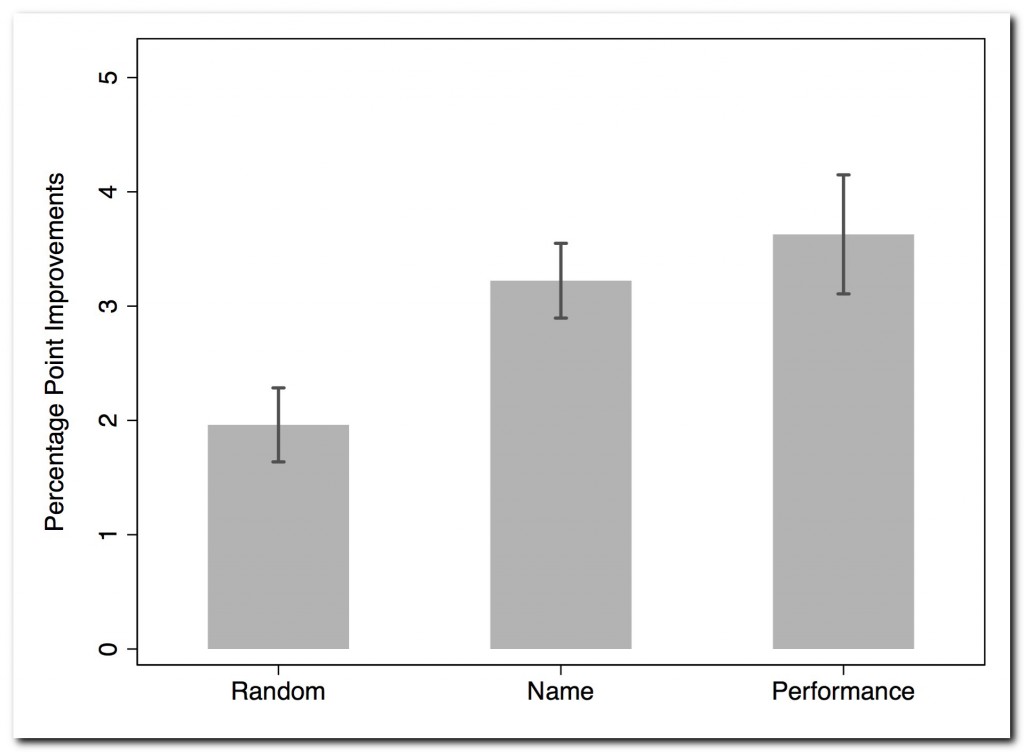
In a recent discussion paper, Lukas Kiessling, IZA Resident Research Affiliate Jonas Radbruch and Sebastian Schaube (all University of Bonn) study how different peer assignment rules – self-selection or random assignment of peers – affect individual performance, and how self-selection itself alters interactions between peers.

The research team conducted a field experiment with over 600 students (aged 12 to 16) in physical education classes of German secondary schools. The students took part in two running tasks (“suicide” runs) – first alone, then with a peer. After the first run they filled out a survey that elicited preferences for peers, personal characteristics, and the social network within each class. Across treatments the researchers exogenously varied the peer assignment in the second run using three different matching rules.

In a first treatment, the authors implemented a random matching of pairs. This was contrasted with two matching rules using the elicited preferences to implement self-selected peers. The specific setup of their experiment allowed for the implementation of two notions of self-selection, based on either the identity or the relative ability of one’s classmates:

  • Conducting the experiment in classroom environments makes it possible for students to state preferences for known peers (name-based preferences).
  • A running task yields direct measures of performance than can be used to select peers based on their relative ability in the first run (performance-based preferences).

The results show that the two peer-assignment mechanisms with self-selected peers improve average performance by 1.27–1.67 percentage points or .14–.15SD relative to randomly assigned peers.

A natural explanation would be that students interact with different peers and react differently to them, which mediates the effects. While self-selection indeed changes the peer composition in a way that students interact predominantly with friends (name-based) or students with a similar ability (performance-based), this cannot explain the observed improvements.

Rather, when accounting for these changes in the peer composition, the effects remain constant or even become more pronounced. Combined with additional evidence on how students perceive the task in the different conditions, these findings provide evidence that the opportunity to self-select peers has a direct effect on performance. The authors argue that the process of self-selection seems to provide an additional motivation to students leading to performance improvements.

While the impact of a peer and the resulting quantitative effect might be specific to the setting analyzed in their study, the underlying mechanisms are valid in more general settings. The results show that the direct effects of self-selecting peers may be even more important than those induced by exogenous group assignment. Additionally, these effects take place even within exogenously formed groups.

Filed Under: Research Tagged With: choice, experiment, field experiment, motivation, peer effects, performance, preferences, self-selection

Neue Arbeitswelt: Arbeitszeitgesetz verliert an Bedeutung

March 6, 2018 by admin

Filed Under: Research

  • Previous Page
  • Page 1
  • Page 2
  • Page 3
  • Page 4
  • Page 5
  • …
  • Page 45
  • Next Page

Primary Sidebar

© 2013–2025 Deutsche Post STIFTUNGImprint | Privacy PolicyIZA