• Skip to primary navigation
  • Skip to content
  • Skip to primary sidebar

IZA Newsroom

IZA – Institute of Labor Economics

  • Home
  • Archive
  • Press Lounge
  • DE
  • EN

Mark Fallak

Shorter compulsory schooling can increase the overall time spent in education

July 14, 2020 by Mark Fallak

Investment in human capital is essential for economic growth and escaping poverty, especially in developing countries. Yet, decisions on putting kids in school are often constrained by the high cost that schooling entails for families.

These household constraints are exacerbated by governments’ lack of fiscal resources to increase the supply of schools. In the 1970s and 80s, Egypt witnessed unprecedented population growth. The rapid increase in student enrollment put enormous pressure on the school system, which struggled to accommodate all eligible students. Classes were increasingly run on a daily two- or even three-shift basis. The Ministry of Education reacted with a radical policy change: Beginning in the 1989-1990 school year, the duration of compulsory education was reduced from nine to eight years.

Staggered roll-out

A new IZA discussion paper by Ahmed Elsayed and Olivier Marie evaluates the impact of this policy on educational attainment, as well as on longer-term labor market and marriage outcomes. Given the very sudden announcement of this nationwide policy, very few schools managed to implement it as early as September 1988, while the rest delayed the start for one year or longer. Exploiting this unintended staggered roll-out across schools by comparing children of the same cohort whose schools were affected in different years, the authors were able to control for unobserved factors in order to estimate the causal effect of the policy.

Surprisingly, the study finds that the policy reduced dropout in the compulsory education stage and increased the share of those who stayed in school for three additional years of secondary education. This effect was almost entirely driven by girls, especially from disadvantaged households. Thus, reducing the number of compulsory schooling led to an overall rise in the number of actually completed years of schooling for an especially vulnerable group of students.

Son preference

While this effect may seem counterintuitive at first, it can be easily rationalized with the strong preference for sons, which Egypt shares with many other countries in the Middle East and Asia. As girls bear a disproportional part of household production, child care and household chores, additional years of schooling are perceived as more costly for girls than for boys. Accordingly, the possibility of finishing secondary education by the age of 17  rather than 18 would have had a stronger impact on a family’s investment decision for the average daughter compared with a son, especially for financially constrained households.

The long-term analysis shows that girls from disadvantaged households benefited strongly from the increase in total years of education in terms of better labor market outcomes and higher marriage quality. They were more likely to be employed, had better jobs, and earned higher wages. At the same time, they were less likely to be married as a minor, obtained a higher “bride price” (jewelry received at marriage), and had more intra-household decision-making power as wives.

Thus, the reduction in compulsory schooling unintendedly spurred higher levels of investment in human capital and reduced gender inequalities. The authors emphasize that these positive implications for economic and social empowerment of women are specific to the setting of a developing country with a strong son preference. Previous studies had found for Western countries that more years of compulsory schooling are associated with lower inequality.
Filed Under: Research Tagged With: Developing Countries, education, girls, household, human capital, schooling

Poor air quality increases COVID-19 deaths

July 3, 2020 by Mark Fallak

With already over half a million deaths globally, the COVID-19 crisis has distracted public attention from pressing environmental issues such as climate change and pollution. Yet, there is a striking connection between the health effects of the pandemic and air pollution, according to a new IZA discussion paper by Ingo E. Isphording and Nico Pestel.

The study shows that higher levels of local air pollution increase the number of deaths related to COVID-19. One of the reasons is that air pollution leads to inflammatory reactions and lower immune responses to new infections, which exacerbates the course of the illness. In addition, some studies have argued that higher levels of air pollution prolong the time the virus remains in open air, thus increasing the number of infections.

The authors link pollution patterns, measured by particulate matter (PM10), surrounding the day of onset of illnesses to the numbers of deaths and newly confirmed cases of COVID-19 in German counties between early February and late May. By focusing on changes in air pollution within counties rather than cross-sectional correlation between countries in death numbers and pollution, the estimated relationship can be interpreted as a causal effect of air pollution levels on the number of deaths.

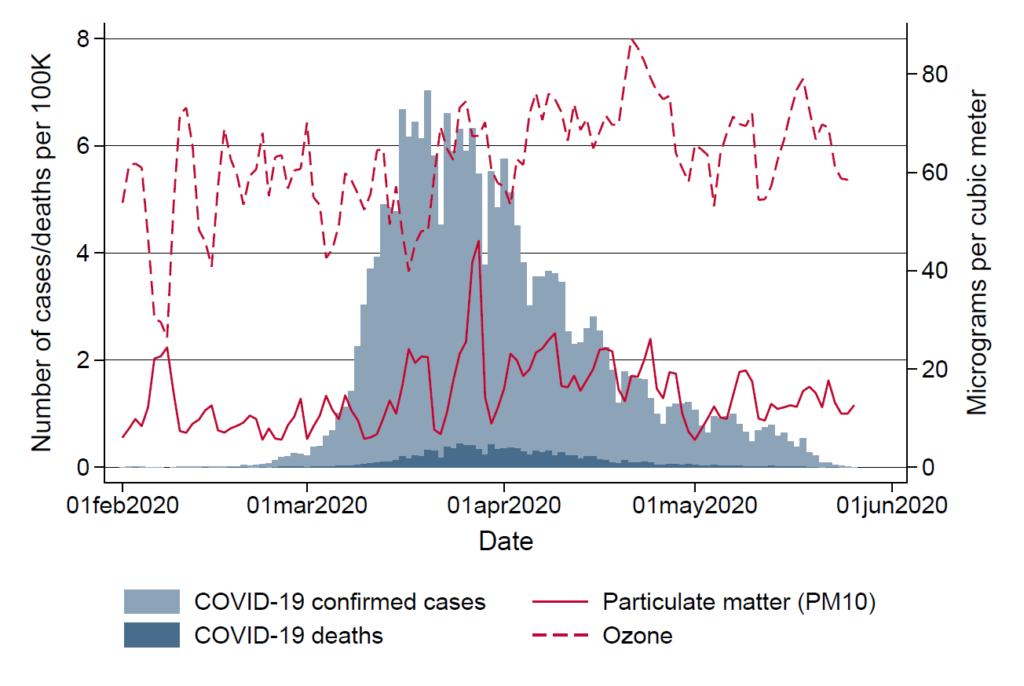
Figure 1: Daily variation in new con firmed cases and deaths and mean air pollution

Figure 1 describes the level of pollution across the course of the pandemic in Germany. In contrast to the common perception that air pollution decreased during the lockdown due to lower traffic and economic output, the data shows that air pollution levels actually remained high and even peaked in late March. This can mainly be attributed to weather conditions as the lockdown in Germany happened to coincide with a sudden drop in precipitation and wind speed, which made particulate matter stay in the air longer.

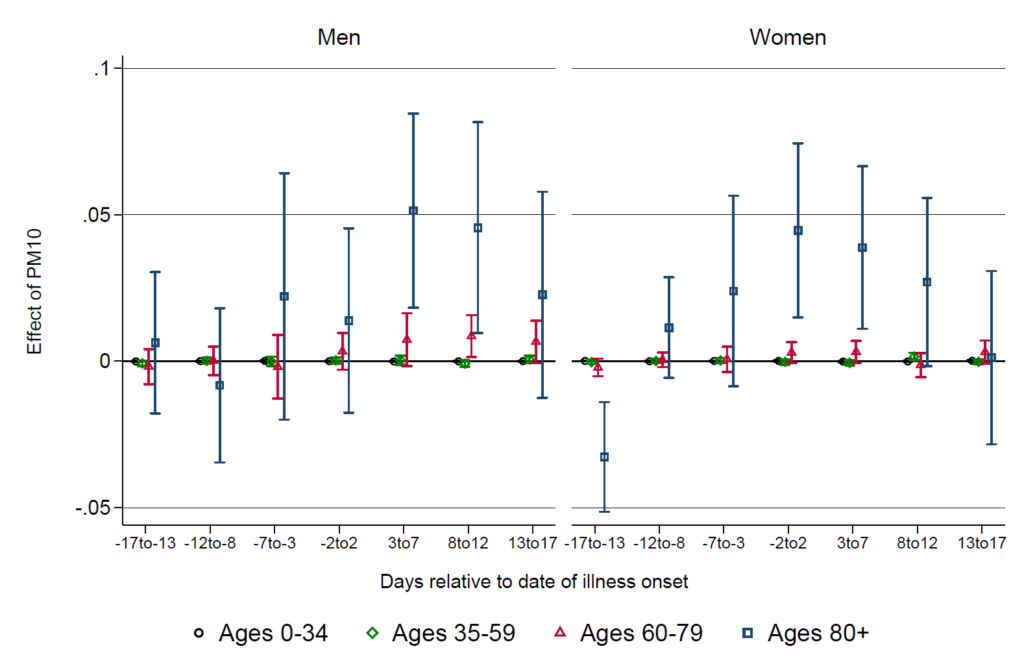
The regression results show significant effects of higher air pollution on the number of deaths by day and county (Figure 2).  Effects are specifically pronounced for patients aged 80 and above. In this age group, a one standard deviation increase in PM10 (6.3 microgram/m3) three to seven days after the onset of illness increases the number of deaths among male patients by 30 percent of the baseline mean, with comparable effects for female patients.

Figure 2: E ffect of PM10 on new deaths from COVID-19

These results imply that moving older patients, who are at higher risk of dying of COVID-19 when being exposed to higher levels of air pollution, to less polluted areas might be a way to reduce the case fatality rate of COVID-19. This could be of particular relevance when the pandemic unfolds in less-developed world regions where air pollution and associated health risks are stronger, e.g., through the more widespread (indoor) use of fossil fuels for cooking and heating, and where supply of high-quality medical care is constrained.

Filed Under: Research Tagged With: COVID-19, death, environment, health, particulate matter, pollution

High-skilled workers expected to suffer less from the COVID-19 crisis

June 25, 2020 by Mark Fallak

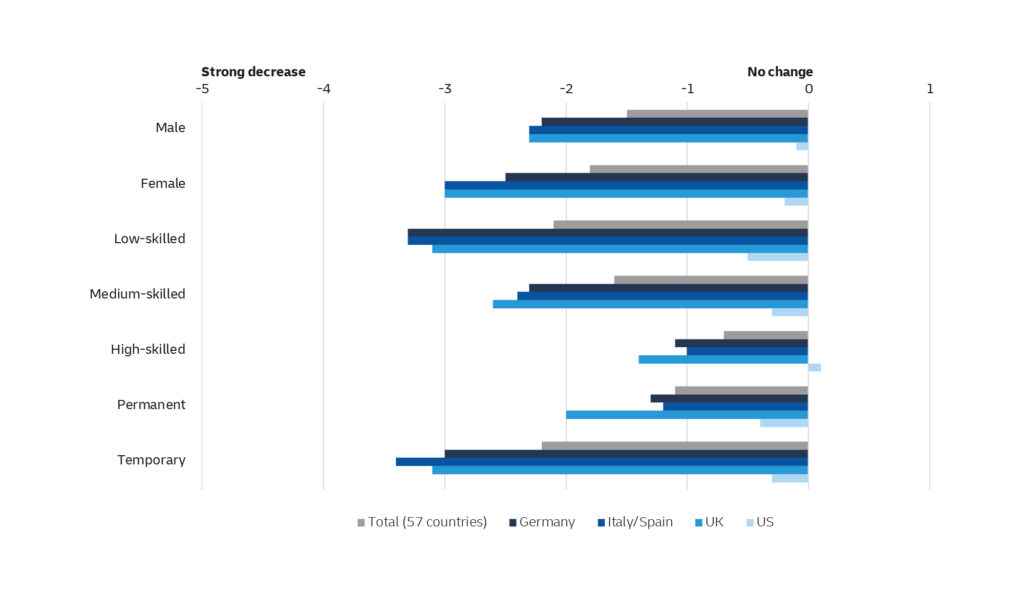
International labor economists are more optimistic about the short-term employment changes for high-skilled and permanent employees than for other groups of workers, according to the “IZA Expert Panel” survey conducted in mid-May. Respondents were asked to rate the expected employment changes in their country over the next four months on a scale from -5 (strong decrease) to +5 (strong increase).

Although declining employment is expected for virtually all groups of workers, the negative impact is more pronounced for low-skilled workers and employees on fixed-term contracts. On average across all countries, this is reflected in a 1.4-point difference in favor of high-skilled workers. A similar pattern holds for the difference between permanent employees and those on a fixed-term contract. In continental Europe these differences are even more pronounced, while they seem to be much smaller for the United States.

Figure 1: Expected employment change until mid-September by groups of workers

Source: IZA Expert Panel 2020. Notes: The number of observations ranges between 47 (UK, permanent/temporary workers) and 494 (total, high-skilled workers). Respondents were asked, “Compared to today, how do you expect total employment in your country to change over the next 4 months, for the following groups of workers? (If the concept of temporary and permanent contracts does not exist as such in  your country, just skip these items.) Please indicate the strength of the expected change in employment on a scale from -5 (“strong decrease”) to 5 (“strong increase”).“

Education and gender

As in previous economic crises, these findings underscore the protective effect of good educational qualifications. In the current crisis, low-skilled workers are more severely affected by job and income losses, also because their job tasks are less easily transferrable to working from home. Moreover, temporary employees are naturally more at risk of job loss because their employers do not incur any firing costs when the fixed-term contract expires.

Although there is currently an intense debate on gender inequality in the COVID-19 crisis, the experts expect rather small differences between employment trends for men (-1.5 points) and women (-1.8 points). For Spain and Italy, the differences are somewhat larger than average, which could be due to a different gender distribution across occupations and tasks in these countries.

Transatlantic differences

It may seem surprising that the differences across all dimensions are significantly smaller in the U.S. than in Europe. However, since U.S. firms reacted fast to the demand shock by laying off workers early in the crisis, unemployment had already risen to record levels at the time of the survey in mid-May. Unfortunately, the survey data thus does not shed light on the role that qualification and gender may have played in these early layoffs.

In Europe, in contrast, many firms have been able to take advantage of government support programs to safeguard employment such as short-time work. The expectations for Europe are thus likely to take into account delayed employment effects of the pandemic, whereas expectations in the U.S. are already somewhat geared towards a labor market recovery.

About the IZA Expert Panel

The panel measures the opinions, beliefs and attitudes of IZA network members about the impact of the COVID-19 pandemic on labor market outcomes in their respective countries. More than 500 labor market economists from over 50 countries participated in the first survey wave, conducted in mid-May 2020.

Filed Under: IZA News, Research Tagged With: COVID-19, IZA Expert Panel

Does social capital help contain COVID-19?

June 15, 2020 by Mark Fallak

Since the beginning of this year, the novel coronavirus has rapidly spread throughout the world, affecting the lives, health, and livelihoods of people all around the globe. With no medical solution available yet, the key margin to contain the spread of the pandemic is human behavior.

Policymakers and health experts around the world summon the population to limit social contacts and follow strict hygiene and distance recommendations, appealing to the social responsibility of their citizens. For instance, German Chancellor Angela Merkel said on March 18, 2020: “This is the greatest challenge for our country since WWII, in which taking action collectively as a society is key.” In social sciences, the willingness of an individual to act collectively and pursue socially valuable activities is called social capital.

Relationship between social capital and early spread of the virus

While almost all governments around the world ask their citizens to act socially responsible, there is no systematic evidence on whether it is indeed an important factor in containing COVID-19. A recent IZA discussion paper by Alina Kristin Bartscher, Sebastian Seitz, Sebastian Siegloch, Michaela Slotwinski, Nils Wehrhöfer adds empirical evidence to this timely question by studying the relationship between social capital and the early spread of the virus.

The paper independently investigates the relationship in seven European countries – Austria, Germany, Italy, the Netherlands, Sweden, Switzerland, and the UK – exploiting within-country regional variation in the spread of COVID-19 and social capital. Following the literature, the authors use election turnout to measure social capital.  The results are sustained when using well-established alternative measures such as blood donations and historical literacy rates.

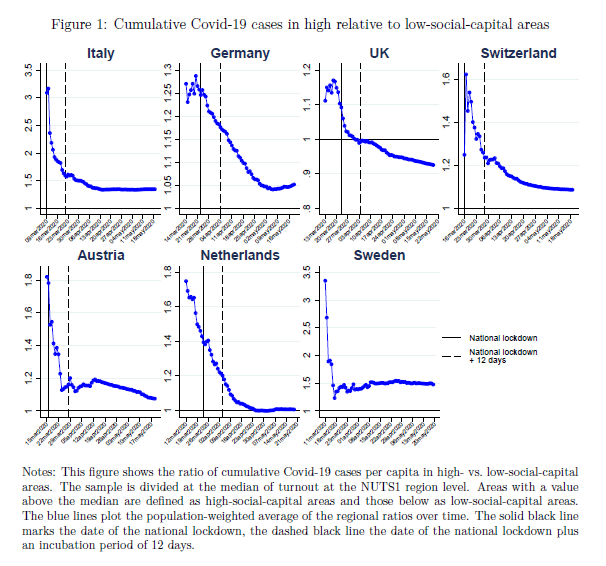
Figure 1 plots the cumulative per-capita Covid-19 cases in high-social-capital areas relative to low-social-capital areas over time. Across all countries, it can be seen that the virus initially is more prevalent in high-social-capital areas. This reflects the well-established fact that high-social-capital areas are known to be more vibrant and better connected. As more information about the virus and its severity spreads, there is a sharp decline in the number of cases in high social capital areas. Over time, the differential drops until high- and low-social-capital areas have almost equally many cases per inhabitant.

Slower growth in cumulative cases

A similar pattern also emerges when using a more rigorous econometric model. Across all countries, the study shows a consistent pattern: high-social-capital areas exhibit a slower growth in cumulative cases than low-social-capital areas. This reduces the cases they accumulate over the considered periods by between 12% (Germany) and 32% (Italy).

In terms of dynamics, the effect of social capital is strongest before the lockdown could have had an effect, as responsible individual behavior such as reducing mobility and practicing voluntary distancing was the only means to flatten the curve. After national lockdowns take effect, the growth differential between low- and high-social capital areas stabilizes and remains constant thereafter.

Looking at the Italy is interesting as it is the first European country to be massively affected by the virus, meeting both government and citizens unprepared. The paper shows that excess mortality is lower in high-social capital areas in Italy. By mid-April, a one standard deviation increase in turnout is significantly associated with 7% fewer accumulated excess deaths.

Impact on mobility

Moreover, the authors look at mobility, one of the main mechanisms through which social capital is expected to affect the spread of the virus. Using the number of weekly journeys per capita, as captured by data on cell phone locations in Italy, the paper shows that individuals’ mobility in high-social-capital areas is significantly lower between the time of the first community case and the national lockdown. A one-standard-deviation increase in turnout decreases mobility by 0.16 journeys per capita in the first week of March, a 15% reduction relative to the average pre-Covid mobility.

The study demonstrates the potential value of social capital regarding the successful containment during a public health crisis. High-social-capital areas seem to be managing the containment of the virus better than low-social-capital regions even absent any lockdown policy. While this immediately translates into better health and fewer pandemic related deaths, it also possibly reduces the size of the economic downturn and facilitates recovery in the longer term. The findings suggest that efforts to strengthen social capital may play a role in mitigating the impact of future crises.

Filed Under: Research Tagged With: COVID-19, social capital

Face masks substantially reduce COVID-19 cases in Germany

June 9, 2020 by Mark Fallak

To what extent face masks actually mitigate the spread of the coronavirus is a strongly debated issue in many countries, and the WHO only recently updated their recommendations. After some reluctance, Germany made wearing face masks mandatory in places where physical distancing is difficult, including public transport and stores. Some cities and regions introduced face masks several weeks before the nationwide implementation.

A new IZA discussion paper by Timo Mitze, Reinhold Kosfeld, Johannes Rode and Klaus Wälde exploits this regional variation using the synthetic control method to estimate the face mask effect. Depending on the region analyzed, the study finds that face masks reduced the cumulative number of registered COVID-19 cases between 2.3% and 13% over a period of 10 days after they became compulsory.

In Jena, the first German city that made face masks mandatory, the number of COVID-19 cases fell by 25% over the first 20 days, with a drop of more than 50% among older people aged 60 and over. Estimating the effects for other regions and assessing the credibility of the various estimates, the authors conclude that face masks reduce the daily growth rate of reported infections by around 40%. Based on their findings, they suggest that wearing face masks may be a comparatively cost-effective measure to keep infections low.

Read more in German or download the full paper.

Filed Under: Research Tagged With: COVID-19, face masks

Flattening the COVID-19 curve: What works

June 8, 2020 by Mark Fallak

In an attempt to mitigate the spread of COVID-19, countries around the world have implemented a number of lockdown policies, which varied in timing and intensity. A recent IZA paper by Nikos Askitas, Konstantinos Tatsiramos and Bertrand Verheyden evaluates the effects of these policies on the daily incidence of COVID-19 and on various population mobility patterns across 135 countries.

The authors use data on non-pharmaceutical interventions collected by the Oxford COVID-19 Government Response Tracker, daily number of infections from the European Centre for Disease Prevention and Control (ECDC), and population mobility data from the Google Community Mobility Reports.

Interventions differ in intensity and timing

They consider eight interventions, which vary in their intensity and timing. The policy responses in focus are: (i) international travel controls, (ii) public transport closures, (iii) cancellation of public events, (iv) restrictions on private gatherings, (v) school closures, (vi) workplace closures, (vii) stay-at-home requirements, and (viii) internal mobility restrictions (across cities and regions).

For each of these policies, the researchers exploit information on the date of introduction as well as qualitative time-varying information on their intensity. Intensity is measured on a scale from one to six, which reflects whether the intervention is (i) recommended, (ii) mandatory with some flexibility, and (iii) mandatory with no flexibility, and whether it is geographically targeted or applied to the entire country.

Mobility patterns show compliance

Policy interventions are also linked to mobility patterns across several types of places such as: (i) retail and recreation, (ii) grocery and pharmacy, (iii) parks, (iv) transit stations, (v) the workplace, and (vi) residential areas. Each of these is characterized by different epidemiological features (e.g. numerosity, density, behavioral norms, epidemiological range, back tracing ability etc.) and, therefore, has a different contagion potential. The mobility data can then be viewed as a measure of compliance to the policies introduced as well as a mediator between policies and the spread of the disease.

The authors develop a multiple-event model to estimate the dynamic effects of each intervention, while taking into account the presence of concurrent interventions. They estimate the net effect of each policy, in the presence of other policies, by exploiting the variation in their intensity over time, and across policies and countries. Accounting for confounding policies is important because it prevents attributing the effect of other interventions to the policy of interest. In addition, it allows to establish that these policies mitigate the spread of the virus by affecting mobility patterns.

Event cancellations and school closures had largest effects

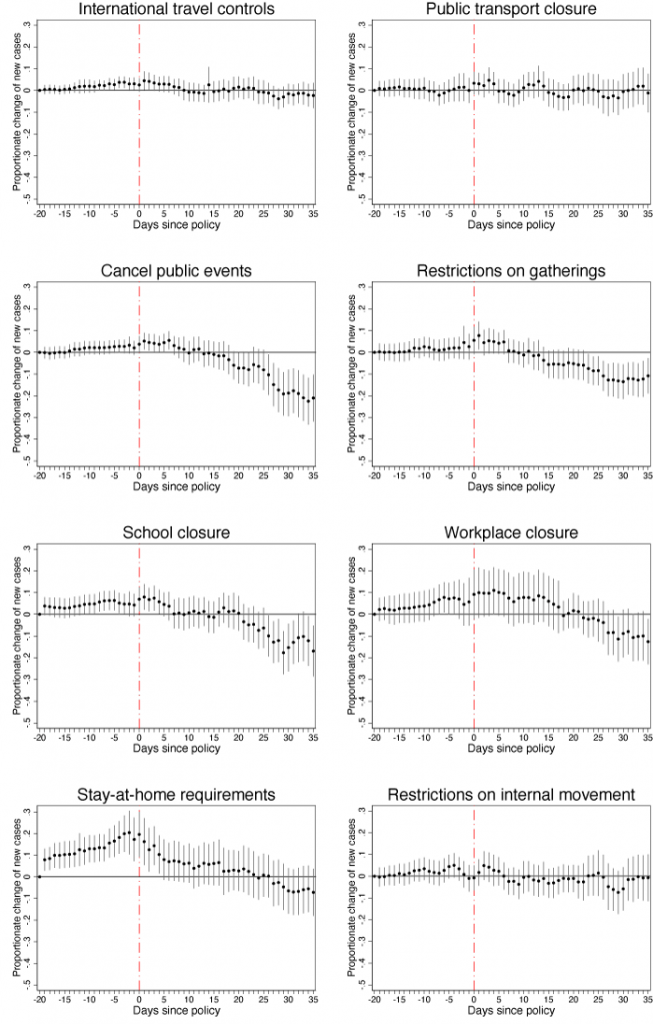
As Figure 1 shows, canceling public events, imposing restrictions on private gatherings, and closing schools have the quantitatively most pronounced effects in reducing the incidence of COVID-19. They are followed by workplace closure and stay-at-home requirements, whose effects are not as pronounced. No effects are found for international travel controls, public transport closures, and restrictions on movements across cities and regions.

Figure 1: Effects of lockdown policies on COVID-19 confirmed new cases with controls for concurrent policies

Data sources: Oxford COVID-19 Government Response Tracker, European CDC and own calculations.

Canceling public events and imposing restrictions on private gatherings start to lower the incidence of COVID-19 about one week after implementation, becoming statistically significant within two weeks. Around the end of the event window (35 days after implementation), a unit increase in the intensity of the policy of interest leads to a 20% decrease in the number of new infections in the case of public events cancellation, and a decrease of about 12% in the case of restrictions on private gatherings.

For school closures, the study finds that new infections start declining a few days after they are closed, with the effect becoming negative and significant about 25 days after implementation. Around the end of the event window, a unit increase in the intensity of school closures leads to about a 15% drop of new infections.

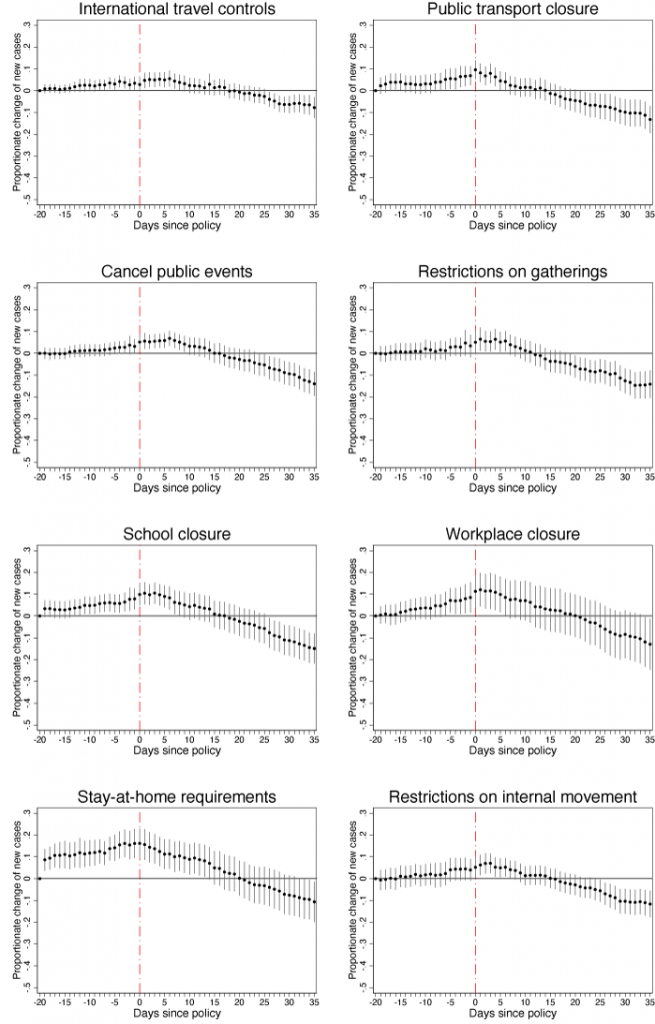
It is worth noting that estimating the effect of each policy while ignoring the contemporaneous influence of multiple interventions would have led to the erroneous conclusion that all policies are effective in reducing new infections. This is shown in Figure 2, which demonstrates the importance of accounting for confounding policies.

Figure 2: Effects of lockdown policies on COVID-19 confirmed new cases without controls for concurrent policies

Data sources: Oxford COVID-19 Government Response Tracker, European CDC and own calculations.

The second part of the analysis links lockdown policies to mobility patterns in order to shed light on the mechanisms through which they help flatten the curve. The study finds that lockdown policies tend to increase time spent at home, and their impact on the incidence of COVID-19 is determined by a number of factors. For instance, canceling public events, and to a lesser extent restricting private gatherings, lower new infections by reducing exposure to numerous and dense locations, where contact tracing is difficult, and can have a large epidemiological range within and across countries (e.g. football games, concerts etc.). Workplace closures, instead, restrict activities away from home but have a lower impact on lowering new infections possibly because of the differences in numerosity, density, behavioral norms, and ability to trace new infections in these environments.

In sum, policies preventing close contacts in large groups, such as public events, private gatherings, and schools are the most effective in reducing new infections. These effects are mediated by changes in population mobility patterns, which are consistent with time-use and epidemiological factors. That travel controls had no impact, although imposed relatively early in many countries, is likely explained by their lack of stringency, allowing the virus to cross borders.

+++

Note: This is a slightly edited version of a VoxEU column written by the authors.

Filed Under: Research Tagged With: COVID-19, social distancing

U.S. experts regard income support for the unemployed as the most useful policy to mitigate the COVID-19 labor market crisis

June 4, 2020 by Mark Fallak

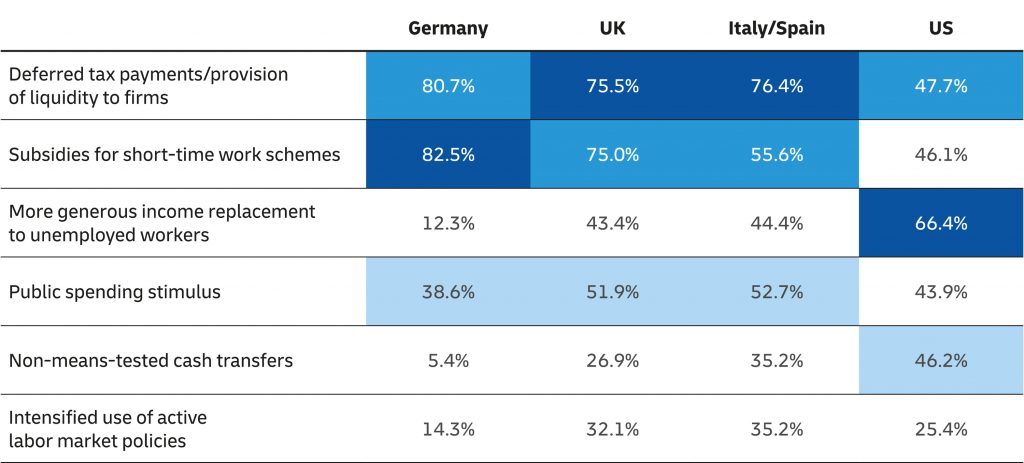
Two-thirds (66.4%) of U.S. labor economists surveyed as part of the “IZA Expert Panel” regard more generous income replacement to unemployed workers as “very useful” or “extremely useful” to mitigate the negative labor market consequences in the current phase of the COVID-19 pandemic. Almost half (46.2%) of respondents consider non-means-tested cash transfers, such as “helicopter money,” very useful.

This is in stark contrast to respondents from European countries, who on average attribute the greatest usefulness to policy measures aimed at preventing unemployment, e.g. by providing liquidity to firms and subsidizing short-time work. Less than half of U.S. respondents find these measures particularly useful in their country. This striking difference can be attributed to the fact that firing costs are much lower and the social safety net is much weaker in the U.S. than in most European countries. As a consequence, U.S. unemployment had already skyrocketed at the time of the survey.

As Table 1 shows, the largest differences can be seen between the U.S. and Germany. The top two measures in the U.S. receive the least support among German experts – with more generous unemployment assistance and non-means-tested cash transfers considered very useful by only 12.3% and 5.4% of respondents, respectively. In Germany, where short-time work has been particularly successful at safeguarding employment in previous crises, this policy receives the strongest support, also among European countries.

Table 1: Country differences in expert opinions on COVID-19 policy responses

Source: IZA Expert Panel 2020. Notes: Number of observations: 57 (Germany), 53 (UK), 55 (Italy/Spain), 132 (US). Percentages are the share of respondents who consider the respective policy response as “very useful” or “extremely useful”. Colored fields show the top-3 policies considered most useful in the respective country context.

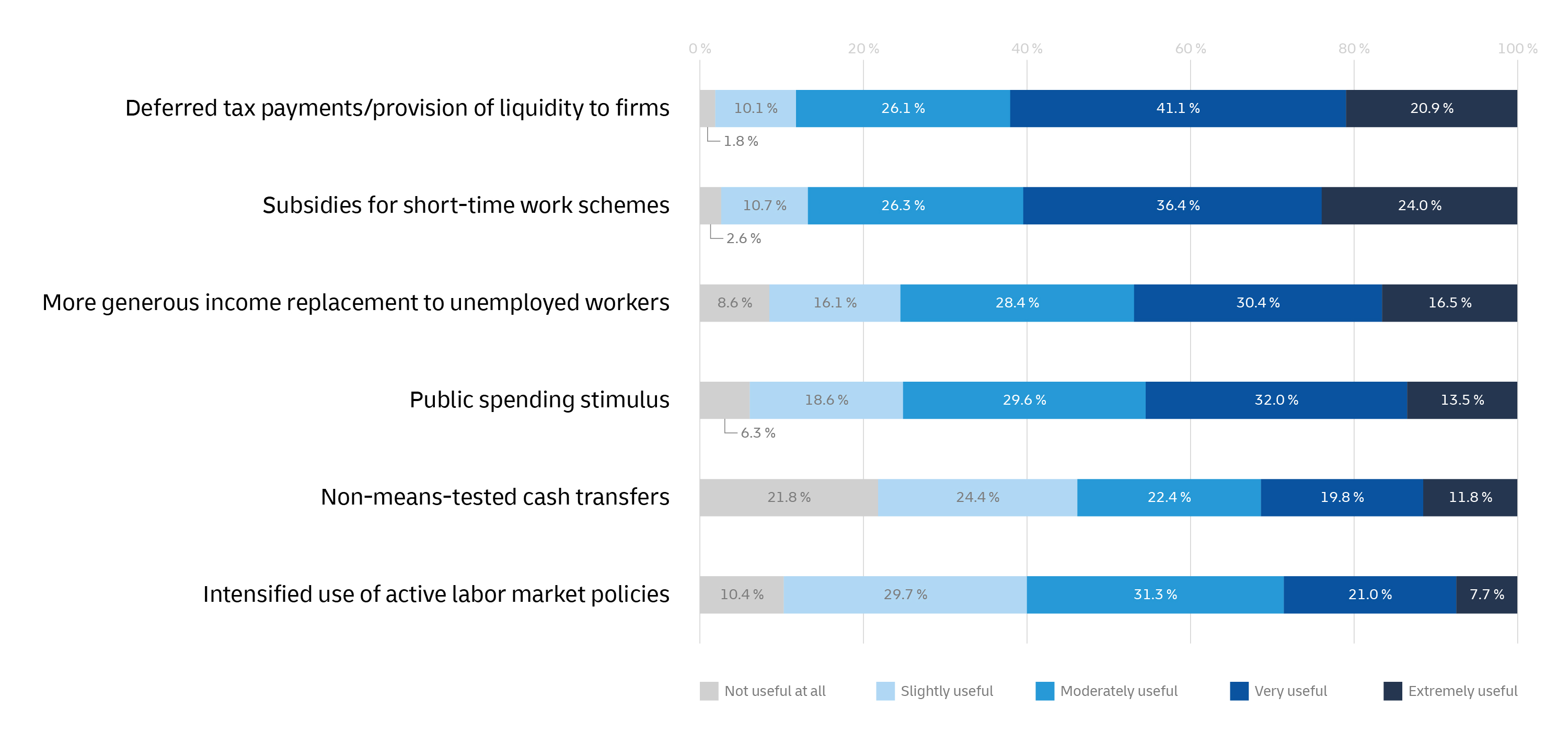
Across all respondents worldwide, deferred tax payments and other forms of liquidity support to firms were most often seen as “extremely useful” or “very useful” (62.0%), followed by short-time work (60.4%). The experts’ focus is clearly on acute crisis relief measures at this point, while an intensified use of active labor market policies (28.7%) may become more important in the recovery period. Among all measures, non-means-tested cash transfers were most often found “not useful at all” (see Figure 1).

Figure 1: Global expert opinions on COVID-19 labor market policy responses

Source: IZA Expert Panel 2020. Notes: The number of observations ranges between 492 (Intensified use of active labor market policies) and 513 (Deferred tax payments/provision of liquidity to firms). Exact wording of the question: “In view of the expected negative impact of the COVID-19 pandemic on the economy, many governments have implemented a range of aid measures to support firms and workers. What do you think, how useful are the following policies, if applied in your country, with regard to mitigating negative labor market consequences of the pandemic?” The respondents were asked to answer this question regardless of whether their country had adopted such a policy.


About the IZA Expert Panel

The panel measures the opinions, beliefs and attitudes of IZA network members about the impact of the COVID-19 pandemic on labor market outcomes in their respective countries. More than 500 labor market economists from 50 countries participated in the first survey wave, conducted in mid-May 2020. Further results will be published shortly.

Filed Under: IZA News, Research Tagged With: COVID-19, IZA Expert Panel

Occupational exposure to contagion and the spread of COVID-19 in Europe

May 22, 2020 by Mark Fallak

During February and March 2020, the COVID-19 pandemic spread rapidly across Europe and around the world. By 28 April 2020, more than three million people had been infected, and 213,000 people had died. Between 21 February (Italy) and 18 March (Latvia), all European countries recorded at least 100 cases of COVID-19.

Social contacts are a key transmission channel of infectious diseases spread by the respiratory or close-contact route, such as COVID-19. It is important to recognize that workplace interactions constitute the majority of social contacts among people of working ages. The patterns of social contacts at work may be particularly relevant for the spread of COVID-19 because of its potential for asymptomatic and presymptomatic transmission, and because of the high basic reproduction number of SARS-CoV-2. There is no evidence, however, on the question of whether the nature and the organization of work affect the spread of COVID-19 in different countries.

In a recent IZA discussion paper, Piotr Lewandowski (IBS & IZA) studies the occupational exposure to contagion at work and assesses the contribution of this exposure to the spread of COVID-19 in European countries. He develops a methodology to measure country-specific levels of occupational exposure to contagion spread by social contacts, combining occupational indicators based on Occupation Information Network (O*NET) and European Working Condition Survey (EWCS) data.

The author uses two O*NET variables that measure levels of occupational (1) exposure to disease or infections and (2) physical proximity at work; and four EWCS variables that measure the incidence of (3) dealing with clients, pupils, or patients; (4) working in public spaces; (5) working at the clients’ premises; and (6) not being able to work from home. Importantly, the EWCS data allow to capture the cross-country differences, including within comparable occupations.

Central Eastern European countries face the lowest levels of exposure

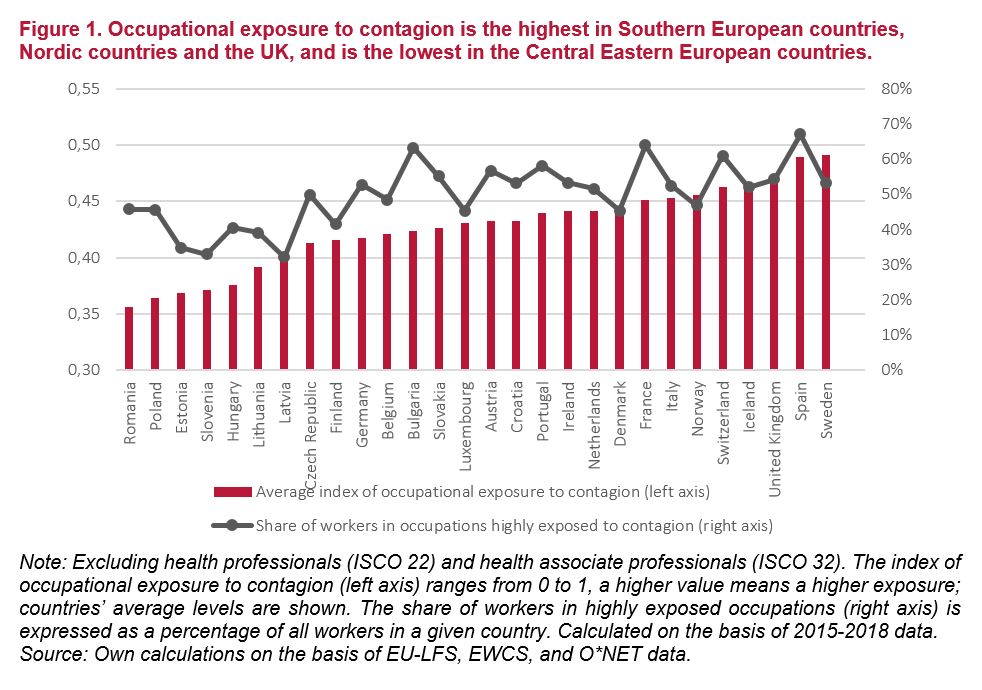
The study finds substantial differences in levels of exposure to contagion of workers in comparable occupations in different countries. Specifically, the results show that workers in Southern European countries, France, Switzerland, Sweden, and the UK face the highest levels of exposure to contagion; while workers in Central Eastern European countries face the lowest levels of exposure (see Figure 1). There are also noticeable differences between occupations, with health professionals and personal service workers facing the highest levels of exposure to contagion; and agricultural workers, plant and machine operators, as well as information and communications technology, business, and administration professionals facing the lowest levels of exposure.

To quantify the role of occupational exposure to contagion in the spread of COVID-19 in Europe, Lewandowski estimates a range of cross-country regressions that relate the growth in COVID-19 cases and the number of deaths from COVID-19 to levels of occupational exposure to contagion, and to the share of highly exposed workers in particular countries. Excluding health professions ensures that the indicators are plausibly exogenous to the spread of COVID-19, as well as to the containment policies introduced in various countries.

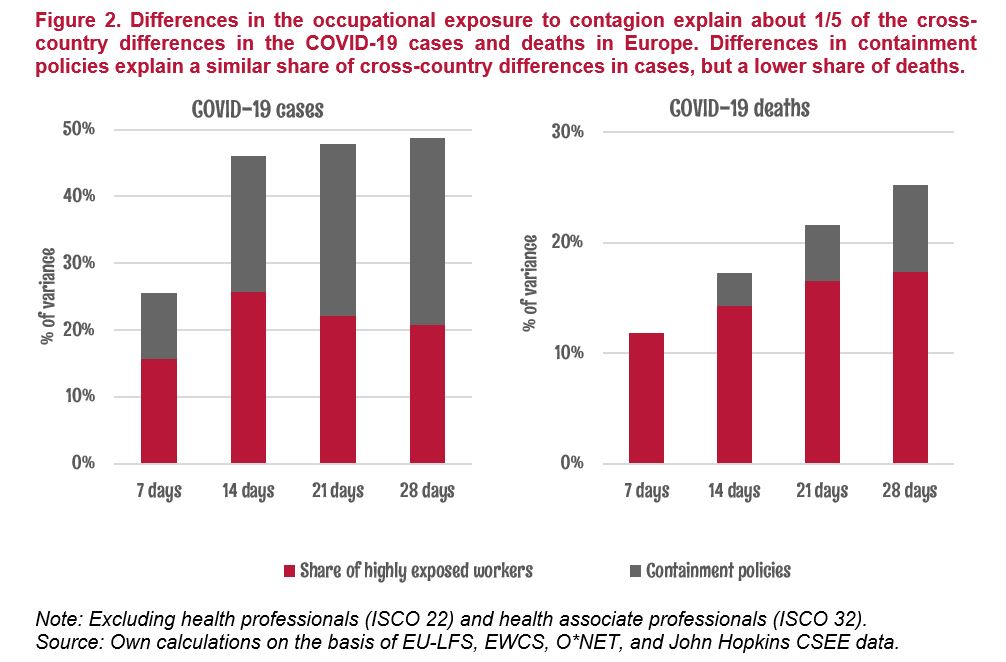
A key finding is that higher levels of occupational exposure to contagion were associated with faster growth in COVID-19 cases and larger numbers of deaths. The results are robust to controlling for the stringency of containment policies, such as lockdowns and school closures. The relationship between countries’ levels of occupational exposure to contagion and the growth in COVID-19 cases is shown to be particularly strong in the first two weeks after the 100th case in each country, and to wane over time. However, the relationship with the number of deaths is found to be the strongest in the third and fourth weeks after the 100th case.

The effect of occupational exposure to contagion is quantitatively relevant. About 20-25% of the cross-country variance in the growth of cases or in the number of deaths from COVID-19 can be attributed to cross-country differences in levels of occupational exposure to contagion. Importantly, the effects associated with occupational exposure are driven by country-specific patterns of social contacts at work rather than by occupational structures. The contribution of differences in the containment policies implemented in various countries is of a comparable size.

The results are consistent with the clinical and epidemiological evidence on COVID-19. As the median incubation period of SARS-CoV-2 is about five days, and the median time delay from the onset of the illness to death is about 13-17 days, the growth in cases and in the number of deaths in the early stage of the epidemic are likely to be determined by infections that happened when the number of cases was still low and social distancing was not implemented.

The paper shows that cross-country differences in the patterns of social contacts at work could have contributed substantially to differences in the severity of the COVID-19 epidemic across European countries. They also help to explain why some of the richer European countries, such as France, Italy, the UK, and Sweden – where the economic networks are more complex and the level of social contacts of workers is higher – have recorded more serious outbreaks than the less developed European countries, especially those in Central Eastern Europe, where the networks are less complex and the level of social contacts is lower.

Filed Under: Research Tagged With: COVID-19, occupations, social contacts

How firms in Germany react to the COVID-19 crisis

May 14, 2020 by Mark Fallak

The COVID-19 pandemic that spread globally in early 2020 forced governments to implement drastic measures to mitigate the exponential rise of infections and deaths. In Germany, like in many other countries, these measures resulted in a shutdown of a significant share of economic activity, without a clear perspective of when the situation would be back to normal. This forced firms to take a wide range of important business decisions to cope with the crisis.

In a new IZA discussion paper, Lukas Buchheim, Jonas Dovern, Carla Krolage, and Sebastian Link study those decisions. In particular, they analyze how firm characteristics, pre-crisis firm health, and, most notably, firms’ expectations regarding the duration of the crisis explain heterogeneity in the mitigation strategies of firms.

Representative survey on German firms’ reaction to the COVID-19 crisis

The paper builds on data from the ifo Business Survey (IBS), a monthly survey among a representative sample of German firms from all relevant sectors. The April survey contained a number of special questions on managerial decisions and expectations in the wake of the COVID-19 crisis.

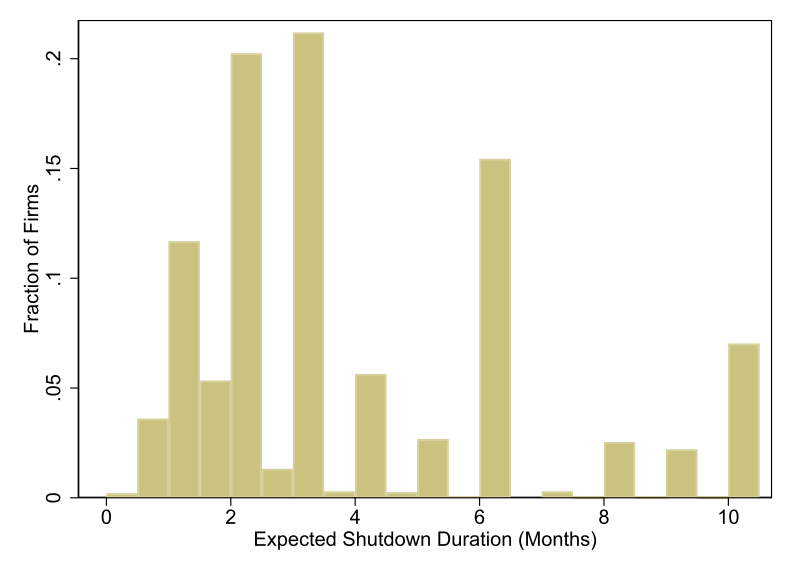
The study shows that there is considerable heterogeneity in firms’ expectations of the likely duration of restrictions to public life. These expectations range from 0.5 months to 36 months with a median of 3 months (see Figure 1).

Figure 1: Distribution of Expected Shutdown Duration
This figure shows the distribution of firms’ expectations for the duration of restrictions of public life in response to the COVID-19 pandemic. The last category contains all responses that indicate an expected shutdown duration of at least 10 months.

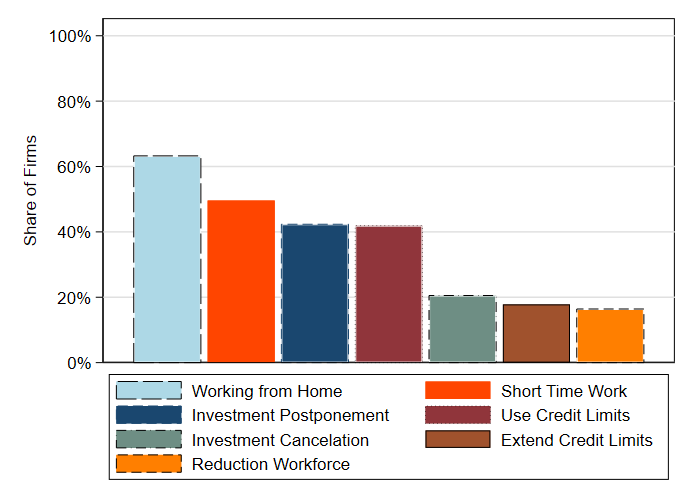
The study also shows heterogeneity in the business decisions that firms implemented by April to mitigate the effects of the COVID-19 crisis. The most frequently mentioned response is having employees work from home (63% of firms, see Figure 2). Half of the firms report to use the short-time work scheme, which is an employment subsidy paid by the German employment agency (Bundesagentur für Arbeit). In addition, 16% of firms report that they have already reduced their workforce. Many firms are also reluctant to invest and have either postponed investment projects (42%) and/or canceled them altogether (21%).

Figure 1: Frequency of Managerial Mitigation Responses
This figure shows the fraction of firms that stated to have implemented a respective mitigation strategy due to the COVID-19 crisis by the time of the April wave of the IBS.

Interestingly, the authors find a close relation between the expected duration of the crisis and the choice of mitigation strategies: Firms that expect restrictions to public life to last longer are more likely to implement measures that are hard to reverse, such as laying off employees or canceling investment projects. For instance, firms with duration expectations of more than four months are four percentage points more likely to lay off (parts of) their workforce than firms that expect a shorter shutdown. Likewise, they are about five percentage points more likely to postpone or cancel investment projects compared to firms that expect the shutdown to last for two months at most.

The study also finds that:

  • Firms with lower pre-crisis health (measured by the reported business conditions during the last quarter of 2019) are more likely to have implemented strong mitigation responses, such as laying off employees or canceling investment projects.
  • The expected duration of the crisis at best weakly affects the initial impact of the COVID-19 pandemic on firms.
  • The expected duration of the crisis has substantial effects on the expected effect of the COVID-19 crisis on revenues, business expectations, and business uncertainty.
  • Firms with bad conditions before the crisis report to be hit harder relative to firms with neutral conditions, whereas firms with good prior conditions are, ceteris paribus, less affected.

Implications for policy responses to the COVID-19 pandemic

Based on their results, the authors conclude that the (expected) length of the shutdown and, in extension, the time path for reopening the economy are key statistics for how firms choose to deal with the crisis. Clearly communicating these plans thus helps to prevent potentially costly planning mistakes. Moreover, the results suggest that the crisis amplifies pre-crisis vulnerabilities, suggesting that already weak firms may need more public assistance to survive the crisis if this is in the public interest.

Note: This project received funding under the IZA COVID-19 Emergency Research Thrust.

Filed Under: Research Tagged With: business conditions, COVID-19, expectations, Germany, mitigation, shutdown

How role models influence prosocial behavior during COVID-19

May 6, 2020 by Mark Fallak

We take cues about how to behave from other people, especially in times of great uncertainty like the current COVID-19 pandemic. Home-bound, many currently turn to the media to learn about the actions of fellow citizens and political leaders.

Imagine you are watching the evening news and you see coverage of people defying social distancing guidelines, partying on the beach or congregating in restaurants. Would you give up on flattening the curve or increase your efforts to make up for failings of others? What if, instead, you saw reporting of thousands of people volunteering as health workers in their communities? Would you be inspired and join in or sit back knowing that others will fill in the void?

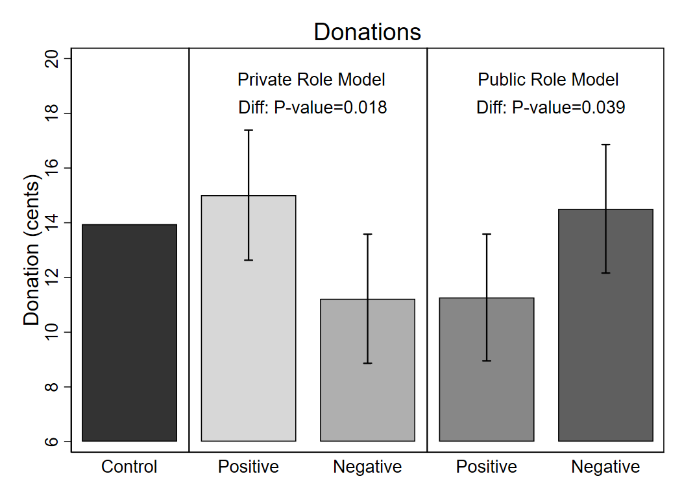
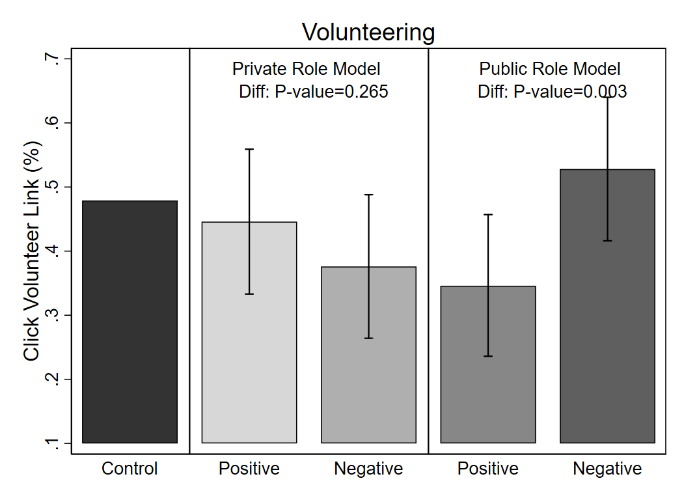
A new IZA discussion paper by Martin Abel and Willa Brown provides some answers to these questions, based on an experiment with people recruited online in the United States.  The researchers randomly assigned participants to watch a video showing either private citizens or politicians behaving in ways that have either a negative or a positive effect on preventing the spread of the coronavirus. They measure effects on two forms of prosocial behavior: how much of their participation bonus they donate to the CDC Emergency Fund, and whether they spend time learning about local volunteering opportunities related to COVID-19.

Inspired by citizens, compensating for politicians

Participants who watch positive citizen role models donate 34% more of their bonus and express more interest in volunteering than those watching people disobey social distancing guidelines.

Results look very different for public role models. Participants who watch elected officials acting prosocially (leading the public health response) donate 29% less and are 53% less likely to take steps to learn about volunteering opportunities compared to people who watch politicians mismanaging the crisis, while engaging in insider trading.

In sum, the findings suggest that the actions of government officials are seen as substitutes, those of fellow citizens as complements to the participants’ own actions.

Trust norms vs. feeling responsible

These results can be reconciled by the Norm Activation Model (NAM), which posits that prosocial behavior depends on both the adoption of prosocial norms and a sense of responsibility among  individuals for taking actions that satisfy those norms.

Trust is one of the key norms among groups that succeeded in acting prosocially and avoiding prisoner’s dilemmas. Studies find that the majority of people are “strategic cooperators”: they are willing to contribute to a public good if they believe that others will do the same. The paper by Abel and Brown finds that trust is influenced by the actions of private role models: people who watched positive examples are 21% more likely to agree with the statement “Most people can be trusted” than those who watched the negative examples of private role models.

By contrast, public role models do not affect trust norms. They do, however, influence whether people feel responsible to contribute to a collective action problem. Watching the video of failing political leaders leads to a 70% increase in the share of participants who report that personal responsibility to take action was an important factor in their decision how much to donate. This increase in responsibility and prosocial behavior when exposed to negative public role models was particularly strong among women.

Overall, positive private role models are effective because they increase norms of trust. Negative public role models increase prosocial behavior because they increase people’s responsibility to “step up” and take action.

Filed Under: Research Tagged With: COVID-19, donations, norms, prosocial behavior, role models, Trust, volunteering

  • Previous Page
  • Page 1
  • …
  • Page 21
  • Page 22
  • Page 23
  • Page 24
  • Page 25
  • …
  • Page 30
  • Next Page

Primary Sidebar

© 2013–2025 Deutsche Post STIFTUNGImprint | Privacy PolicyIZA