• Skip to primary navigation
  • Skip to content
  • Skip to primary sidebar

IZA Newsroom

IZA – Institute of Labor Economics

  • Home
  • Archive
  • Press Lounge
  • DE
  • EN

How personality is affected by birth order and birth spacing

May 9, 2017 by admin

The family environment is among the most important factors in the development of a child’s personality. It is evident that parental strategies and the amount of time and resources that parents are able to put towards their children would have a strong impact. Nonetheless, there are several popular anecdotes and stereotypes about the vastly different characteristics of siblings based on which order they were born and the age gap between them.

But does it really matter if a child is the first born, a middle child, or the last? Is it also relevant for the development of the child how many years parents wait to have another baby? According to two recent IZA Discussion Papers, both factors – birth order and spacing – play a role in shaping adult personality traits.

Psychologists have long hypothesized that birth order could be related to differences in personality. First-borns are believed to be more responsible and focused on pleasing the parents, thus acting as a role-model for their younger siblings, while later-born children are thought to be more easy-going and sociable.

Personality traits related to success seem to decline with birth order

An IZA Discussion Paper by Sandra E. Black (University of Texas at Austin and IZA), Erik Grönqvist (IFAU), and Björn Öckert (IFAU) studies this relationship between birth order and personality traits among Swedish men whose personality was assessed when enlisting in the military. The researchers find evidence that the types of personality traits which are positively related to success in life decline with birth order. First-born children show higher emotional stability, greater persistence, more social outgoingness, and higher willingness to assume responsibility and take initiative.

Given the importance of such personality traits in the labor market, the authors analyze whether occupational choices display a similar pattern as well. Indeed, first-born children are almost 30 percent more likely than third-borns to be top managers, an occupation which tends to require higher non-cognitive abilities.

But what can explain such a consistent pattern of stark differences between siblings? The authors scrutinize a number of mechanisms that might be driving these results. While they eliminate biological factors as a potential culprit, the authors point to parents’ behavior as the primary influence. They find that parents invest less in children that are born later, especially in terms of how strictly they enforce rules and how much time they put into discussing and helping with school work. The researchers also note that sibling rivalry and parents’ adaptation to it play a role in shaping children’s personality.

Larger age gaps associated with negative personality traits

Similar to birth order, birth spacing, i.e., the difference in age between siblings, also affects personality traits. The IZA Discussion Paper by Bart H. H. Golsteyn (Maastricht University and IZA) and Cécile A. J. Magnée (Maastricht University) follows a large British cohort from birth until age 42, studying the effect of age gaps between siblings on personality traits of the youngest child in a two-child household.

Larger birth gaps indeed appear to be related to more disorganized behavior, more neuroticism, and more introversion. While the authors do not investigate the underlying elements responsible for these outcomes in detail, the results suggest that small birth gaps make it easier for parents to devote adequate time and resources to both children simultaneously. In addition to more attention provided by parents, siblings closer to each other may be more able to play and learn from one another.

Adverse childhood circumstances matter too

While these studies show that the order and timing of births clearly matter for personality development, the effect of events later in childhood should not be neglected. The IZA Discussion Paper by Jason M. Fletcher (University of Wisconsin-Madison and IZA) and Stefanie Schurer (University of Sydney and IZA) reveals that adverse childhood experiences are significantly and robustly associated with neuroticism, conscientiousness, and openness to experience, but not with agreeableness and extraversion.

Each of these papers reinforces the importance of the conditions and context of early childhood development in shaping an individual’s personality, which in turn affects long-term success in life.


Image source: Pixabay

Filed Under: Research Tagged With: birth order, birth spacing, career, child development, competition, education, family, parents, personality, siblings

Do longer working hours decrease performance?

May 5, 2017 by admin

Working hours vary substantially, both between and within countries, due to differences in the regulation of the standard workweek and in the prevalence of part-time work.

Relatively little, however, is known about how the length of the working day affects workers’ performance. From a theoretical point of view, two contrasting effects are possible. On the one hand, if part of the working time has to be used to prepare for work before one can actually become productive (e.g. exposing goods one wants to sell, or getting back to where one left in a complex cognitive task), then short working hours are not worth the trouble and longer working hours are better for performance. On the other hand, longer working hours can result in fatigue, which is likely to cause lower performance as the number of hours worked increase.

Although scholars have started to analyze the relation between working hours and worker performance already in the early 20th century, there is still not much conclusive evidence about how exactly and how much working hours affect performance. Existing studies have either relied on historical data, e.g. from munition workers during WW1 or from the Hawthorne experiments, or on data from the health sector, in which fatigue can result in human errors with crucial consequences.

Fatigue plays an important role

In a recent IZA Discussion Paper, Marion Collewet and Jan Sauermann use data on working hours and performance of a sample of call agents from a call center located in the Netherlands. Although call agents in this call center predominantly have part-time contracts, their job is demanding due to the constant inflow of calls generating constant pressure to perform. The authors find that agents have lower performance per hour on days on which they work longer hours. If one increases the length of a shift by 1 percent, the call agent’s output, measured by the total number of calls handled, increases by only 0.9 percent. This result suggests that fatigue plays an important role. Interestingly, the quality of the service provided seems to slightly increase with hours worked.

Since these results are found for workers who are employed in part-time contracts, fatigue effects might be stronger in other service jobs with longer average working hours.

Read also these IZA World of Labor articles on related topics:

  • Employment effects of longer working hours
  • The importance and challenges of measuring work hours
  • Longer working hours lead to weight gain
Image source: pixabay

Filed Under: Research Tagged With: fatigue, part-time, performance, productivity, service jobs, working hours

IZA/XING-Studie: Verbreiteter Optimismus in der Rentenfrage

April 27, 2017 by admin

Filed Under: Research

The migration of talent – global inequality or global benefits?

April 20, 2017 by admin

Much of the public debate on migration centers on the skill level of migrants. While receiving countries are concerned about low-skilled labor immigration and refugee flows, emigration countries fear that high-skilled workers will increasingly leave the country. Global migration flows indeed show a significant skill bias leading to a highly unequal distribution of global talent. Two IZA Discussion Papers analyze this development and contrast the problems of individual countries with the global benefits of migration.

Contrary to public perception, the migrant share of the world population has not changed substantially since the 1960s, with roughly 3 percent currently living in a country different from their country of birth. Global migration patterns, however, have become increasingly asymmetric as high-skilled migration has become a greater force globally. The international distribution of talent thus is highly skewed, and the resources available to countries to develop and utilize their best and brightest vary substantially.

High-skilled workers four times more likely to emigrate

The migration of skilled workers across countries tilts the deck even further, as Sari Pekkala Kerr, William Kerr, Çağlar Özden and Christopher Parsons conclude in an IZA Discussion Paper. High-skilled migration has increased at a larger rate than low-skilled migration. The approximately 28 million high-skilled migrants that were residing in OECD countries in 2010 represent an increase of nearly 130 percent since 1990, while low-skilled migrants increased by only 40 percent during that time. From the average sending country, tertiary-educated people are four times more likely to emigrate than less-skilled people.

The distribution of high-skilled migration is also heavily skewed. Four Anglo-Saxon countries (US, UK, Canada and Australia) account for nearly 70 percent of high-skilled migrants to OECD countries in 2010. The United States alone has historically hosted close to half of all high-skilled migrants to the OECD and one-third of high-skilled migrants worldwide. The globalization of economic ties is also leading to a rise in shorter-term and circular migration patterns for skilled labor. For example, executives of global corporations are often required to spend part of their careers abroad.

Simulating a world without skill-biased migration

So far, most studies on the economic effects of migration have considered single countries in isolation, for example analyzing the impact of immigration on the wages of U.S. or British workers, or the impact of emigration on growth in African countries. The IZA Discussion Paper by Costanza Biavaschi, Michal Burzynski, Benjamin Elsner and Joel Machado takes a global perspective by quantifying the welfare effects of the skill bias in worldwide migration in order to determine how much the world as a whole has gained or suffered from migration flows.

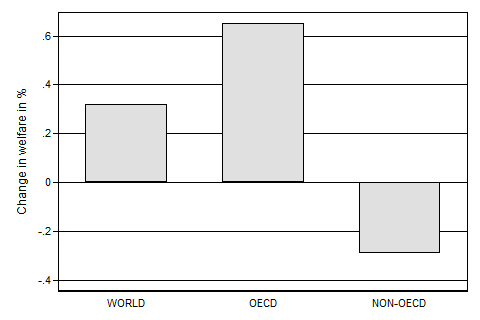
To assess how the skill bias affects non-migrants across the globe, the authors build a stylized model of the world economy that allows them to simulate what the world would look like with the same number of migrants but no skill bias in migration. As shown in the figure below, the skill bias in migration makes non-migrants in OECD countries better off.

Global welfare effects of migration

In the current world, a larger number of high-skilled migrants live and work in the OECD, which leads to a higher per-capita income compared to a world in which all migrants have the average skills of their countries of origin. In the main sending countries (i.e. non-OECD countries), the average non-migrant loses from the skill bias in migration. Overall, however, the positive effect per person in the receiving countries exceeds the negative effects in the sending countries such that the global effect is positive.

Skilled migration improves the global allocation of talent

This analysis shows that, from a global perspective, skill-biased migration is a good thing. More high-skilled migration means that talent is allocated more efficiently across the globe. A higher number of productive people are working in countries where they can be most productive, which increases global welfare.

Some observers may be worried about the negative effects in the sending countries. But the effects displayed here represent a worst-case scenario. They are based on the authors’ most conservative model. But there are additional channels at work, through which sending countries might benefit from skilled out-migration. Migrants contribute to their home countries’ development through money (remittances) or technology transfers. Once the authors account for these channels, most sending countries benefit as well, and the global effect becomes even larger.

  • Also find related research in IZA World of Labor:
  • How does migration policy affect the labor market?
Image source: pixabay

Filed Under: Research Tagged With: brain drain, global welfare, high-skilled migration, migration, refugees, skilled workers, talent, welfare, welfare effects

Mental health affects employment outcomes – and vice versa

April 7, 2017 by admin

Depression, which is the focus of this year’s World Health Day, is also an important topic for labor economists as mental health and employment outcomes are inherently intertwined. People with poor mental health have lower levels of economic activity, lower earnings, and less stable employment. On the other hand, employment difficulties can undermine mental health; many who struggle to find meaningful work or who lose their jobs will experience poorer mental well-being as a result.

Mental health issues: cause or consequence of poor labor market outcomes?

A new IZA Discussion Paper by Melisa Bubonya, Deborah A. Cobb-Clark and David Ribar uses nationally representative data to estimate how transitions into and out of depressive episodes affect subsequent employment outcomes, including participation, employment and unemployment. Further, the authors address the potential for the reverse relationship to exist by estimating how changes in employment status affect the chances developing severe depressive symptoms. Their aim is to shed light on the interplay between depression and the labor market, which is particularly important because the appropriate policy responses depend on whether depressive issues are a consequence or a determinant of poor labor market outcomes.

Men’s mental health more closely tied to employment outcomes

The findings show that severe depressive symptoms lead to economic inactivity by reducing labor force participation and employment, and increasing the likelihood of unemployment. Severe depressive symptoms are also partially a consequence of economic inactivity. Interestingly, the results show larger effects for men than women, indicating that men’s mental health is more closely tied to their employment outcomes than is women’s. Further, men seem to be more responsive to the shock of a bad event — either the onset of a depressive episode or the onset of unemployment. In contrast, women appear to be more affected by prolonged depressive symptoms.

The results imply that reducing the economic costs of mental illness is a challenge that is best tackled from both sides: improving mental health by promoting economic activity, minimizing employment disruptions and shortening unemployment spells, and reducing the barriers to employment and providing positive work environments for those with mental health issues. The results also call for a gendered approach to these policies.

The economics of mental health

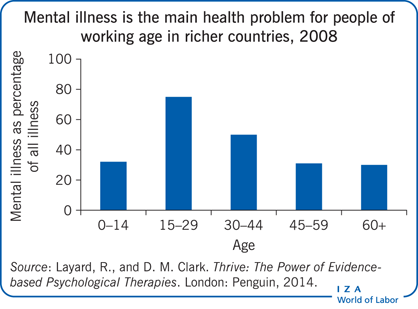
A recent IZA World of Labor article by Richard Layard stresses that mental illness accounts for half of all illness up to age 45 in rich countries, making it the most prevalent disease among working-age people (see figure). Since mental illness costs billions in welfare payments and lost taxes, Layard argues that better treatment would more than pay for itself.

Download more IZA Discussion Papers on the topic

  • Personality and Mental Health: Teenagers with low emotional stability and low conscientiousness are more likely to experience mental health problems as adults.
  • Youth Depression and Future Criminal Behavior: Mental illness during childhood is related to a higher probability of engaging in criminal behavior later in life.
  • Getting Stuck in the Blues: Depression proneness tends to persist. One of the risk factors is low income, which might cause individuals to get trapped in a vicious cycle.
  • First Depressed, Then Discriminated Against? Revealing former depression as a reason for unemployment is rewarded by female (but not by male) recruiters. Discrimination is more pronounced in low-skill occupations.
  • Religion and Depression in Adolescence: Religiosity can reduce depression as it buffers against stressors, possibly through improved social and psychological resources.
  • Does Money Relieve Depression? Social pension eligibility in China has a similar impact on mental health than a medium size lottery win in Britain.
Image source: pixabay

Filed Under: Research Tagged With: depression, employment outcomes, gender, mental health, unemployment, well-being

Revitalizing the EU requires new reforms that build on past successes

March 29, 2017 by admin

Sixty years after the Treaties of Rome, the European Union faces several contemporary challenges on both the political and economic front. With the staggering blow of the 2008-2009 recession, followed by the sovereign debt crisis in the Eurozone, and recent political developments which have seen the growth of anti-EU sentiments and extreme right-wing parties, even culminating in one Member State leaving with the Brexit referendum, the EU must come to terms with these phenomena by not only evaluating areas in need of potential reform, but also by effectively highlighting its successes.
Five recent IZA policy papers seek to examine various policy dimensions and propose reforms to not only enhance the perception of the EU, but also find ways to encourage the development of an EU identity as means of creating an economic and culturally vibrant Europe.

A New Deal for the EU is needed to confront economic challenges

During the sovereign debt crisis, Europe experienced several asymmetric shocks. Capital flight, a contraction in domestic demand, and a deterioration in public finances radically changed the landscape of the euro area and reversed much of the convergence in income per capita that had been achieved during the first decade of the common currency.

In a recent IZA Policy Paper on “Sustainable Euro Area with Exit Options,” Jo Ritzen and Jasmina Haas criticize the Five Presidents’ Report for relying too heavily on high international economic growth and assuming the permanence of such a trend would continually smooth the convergence in labor productivity between EU Member States. Furthermore, the high debt levels of many EU countries have placed a strong drag on economic growth. In spite of this varied success across the economic zone, support for a further transfer of sovereignty on financial policy and for debt mutualization to the EU level remains low. Thus, the authors propose a New Deal for the EU, which, in exchange for debt-mutualization for highly indebted countries, would establish an automatic exit from the Euro area in cases of non-compliance with the agreed rules.

Besides the problem of debt overhang, Ritzen and Haas see the economic convergence and cohesion in the EU threatened by a stagnation and even a decrease in the rule of law and in control of corruption in several EU countries. In order to counter the centrifugal forces reinforced by Brexit, in their IZA Policy Paper “In Europe We Trust?” Ritzen and Haas propose new treaty revisions, in particular creating the possibility of individuals to appeal to European courts, to counter negative developments in governance in EU Member States. Also a strengthening of the European Court of Human Rights and tracking funds on the level of the Member States are proposed.

Upgrading policies on mobility will strengthen the EU

The importance of a free movement of people and workers, one of the core principles of the EU, is highlighted in the IZA Policy Paper on “EU Mobility,” authored by Ritzen, Haas, and Martin Kahanec. The paper emphasizes that earlier apprehensions about the possible negative consequences of free mobility, particularly the risk of immigrants crowding out less educated workers and the potential of welfare migration, by and large turned out to be refuted. In contrast, there were overwhelming benefits for EU citizens in both the countries of origin and the countries of work. But despite this success, fears and issues remain, and there is still a need for a significant deepening and upgrading of EU mobility policies, especially with respect to fighting fraud, cutting red tape and managing the integration of circular mobile migrants.

In addition to upgrades in intra-EU migration, Ritzen and Kahanec argue in “A Sustainable Immigration Policy for the EU” that many improvements can be made to create a more sustainable policy for immigration coming from outside the EU. A selectively managed immigration policy based on the employability of potential immigrants, putting more attention on integration alongside stricter measures to fight discrimination, and screening asylum-seekers in refugee camps near conflict areas will create a more effective system while at the same time help to quell growing fears.

One of the key benefits and successes of a borderless EU, explained in an IZA Policy Paper on “European Identity and the Learning Union,” are student exchanges within the EU. By enriching inter-European understanding, these programs are one of the most important contributors to a European identity. The authors (Jo Ritzen, Jasmina Haas, Annemarie Neeleman, Pedro N. Teixeira) propose two policy measures to improve the already fruitful endeavor: Firstly, European student mobility should be increased by enhancing the transparency of the actual value added in undertaking studies in higher education in different EU countries. Secondly, if education policies across Europe follow strong principles to promote effective schools, increase school autonomy and allocate sufficient funding, basic education could increasingly be a source of intra-European social cohesion, equality of opportunity and of economic growth.

In addition to benefits in creating social cohesion across Member States, intra-EU migration may also play a key role on the economic front. While traditional macroeconomic policy tools have appeared to be toothless in addressing the dire need for more convergence within the euro area, politicians and researchers alike have turned their focus back to European labor mobility, an issue that received substantial attention in the early days of European monetary integration but has since been largely absent from public debate.

Labor mobility can help cope with asymmetric shocks across the EU

As an alternative to macroeconomic policy tools, labor mobility can act as a crucial adjustment channel. In “Labour Mobility and Labour Market Adjustment in the EU,” Alfonso Arpaia, Aron Kiss, Balazs Palvolgyi and Alessandro Turrini (European Commission and IZA) assess the extent to which mobility flows have been influenced by the EU integration process and evaluate its interaction with labor market developments.

The findings reveal that asymmetric labor demand shocks in Europe are mostly felt by impacts on unemployment, labor market participation and real wage adjustments. Over the period 1970-2013, only about one quarter of asymmetric labor demand shocks were absorbed by labor mobility over the following year.

However, the authors argue that there might be some scope for improvement for a bigger role of labor mobility. Cross-country mobility flows in the EU are still much lower than those recorded in other highly integrated economic areas and well below mobility within countries, notably with respect to the United States. Nevertheless, an upward trend in mobility is visible in the EU, and this is not only as a result of enlargement.

Euro area membership does not seem to increase mobility per se, but it is estimated to make mobility more sensitive to different unemployment levels across Europe. Workers appear more ready to move from countries where unemployment is high to those where it is lower. The evidence also reveals that labor mobility flows among the fifteen countries that were EU members before 2004 have increased since the mid-2000s, on top of what is explained by the normal development of “fundamentals”.

Filed Under: Research Tagged With: debt mutualization, economic policy, EU integration, euro, European Union, labor mobility, reform, student exchange

The gender pay gap: Discrimination or structural differences?

March 17, 2017 by admin

Women earn less than men. In the US the gap is approximately 22%. Among OECD countries the gap averages 15%. One might argue this indicates rampant discrimination. But the story is far more complicated.

Many women earn more than men, and for those that earn less, the gap is not uniform. For 55–64 year olds in the US the gap is close to 25%, yet for 16–24 year olds the gap is just 5%. For single-never-marrieds the gender gap is about 5%, but for married men and women the pay gap is almost 23%. Children exacerbate the gap between 2% and 10% per child, and the gap is even bigger when children are spaced widely apart. In contrast, the median salary for full-time young single women in a number of metropolitan areas exceeds men’s by over 8%.

These same patterns persist across most countries. The gender wage gap for marrieds is between 3 and 30 times greater compared to singles. Similarly children widen the gap.

If discrimination were the reason, then one would need a theory about why employers discriminate less against young childless women employees, but so much more against older and married women.

Perhaps the explanation isn’t gender discrimination, but lifetime work commitment. Work patterns also differ by gender, marital, and child status. In 1970 US married men’s labor force participation rate was 86%; married women’s was 40%. In 2010 it was 76% for married men and 61% for married women. For singles these gender differences are much smaller. In 1970 the labor force participation rate was 66% for single men and 57% for single women, and in 2010 they were 67% for single men versus 63% for single women. Even today, many women still drop out to raise children. Studies indicate many are hesitant to work long hours. In short, single men and women accumulate experience at roughly similar rates, but married women accumulate far less labor market experience than married men.

One cannot overemphasize the importance of work continuity. Dropping out is costly. Earnings power depreciates up to 5% for each non-work year. Those who expect to drop out tend to enroll in less job-related schooling and to take jobs with less training and lower earnings growth. The same is true for those who seek shorter work hours and smaller commutes.

Over the last century female lifetime work increased dramatically, while male lifetime work has declined moderately. Concomitant with this gender work convergence is a decline in the gender earnings gap from approximately 70% in the early 1800s to the current 22% in the US. Similar patterns hold in other countries.

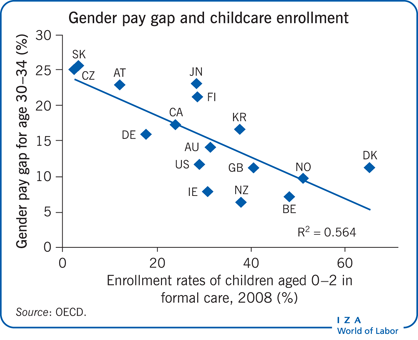
Policies consistent with promoting greater female lifetime work effort have reduced the gender wage gap. One such policy is making day care more available. An analysis by the OECD finds smaller gender wage gaps in countries with greater day care enrollment. Lower marginal tax rates that encourage greater participation of women in the labor force would work in the same direction.

Related IZA World of Labor article:
Equal pay legislation and the gender wage gap, by Solomon W. Polachek

***

Women’s lower wage sensitivity

Another IZA World of Labor article by Boris Hirsch (Leuphana University of Lüneburg and IZA) points to recent studies finding that imperfect competition in the labor market can account for a large part of the unexplained wage gap. The gap thus reflects “monopsonistic” wage discrimination—that is, employers exploiting their wage-setting power over women—rather than any sort of prejudice.

Hirsch argues that many women, due to domestic responsibilities, tend to care more about commuting times or working hours than salary offered. While equal pay legislation may help prevent employers from exploiting their wage-setting power, Hirsch recommends addressing the sources of women’s limited wage sensitivity by investing in additional and better childcare or enforcing more flexible working time arrangements.

Gender gap in leadership positions

Gender wage gaps are most pronounced in leadership positions. As Mario Macis (Johns Hopkins University and IZA) explains in his article, this is due to a combination of economic forces, cultural and social norms, discrimination, and unequal legal rights. Apart from social justice concerns, these gender disparities are economically inefficient because they imply a sub-optimal allocation of female talent.

Gender differences in competitiveness

A common explanation of the gender pay gap is that attitudes towards competition differ between genders. Mario Lackner‘s (Johannes Kepler University Linz) article references laboratory and field experiments finding that women are more reluctant and less aggressive when it comes to initiating negotiations or applying for jobs with negotiable salaries.

According to the article, such differences in competitiveness are formed at young ages and are relatively persistent, exerting a profound influence on an individual’s future career. Consequently, policy measures should be targeted at early childhood education and education systems in general. The driving forces of this ‘competitiveness gap’ are, however, still under debate. Moreover, closing the gender gap in competitiveness might not be desirable under all circumstances, as men are often found to be overconfident and over-competitive.

Read more on the IZA World of Labor “key topic” page:

  • What is the gender divide?

Filed Under: Opinion, Research Tagged With: competitiveness, equal pay, female leadership, gender, gender differences, gender gap, gender inequality, gender pay gap, gender wage gap, labor market, labor market policy, leadership, wages, women

How the origins of language structures may help explain current economic outcomes

March 15, 2017 by admin

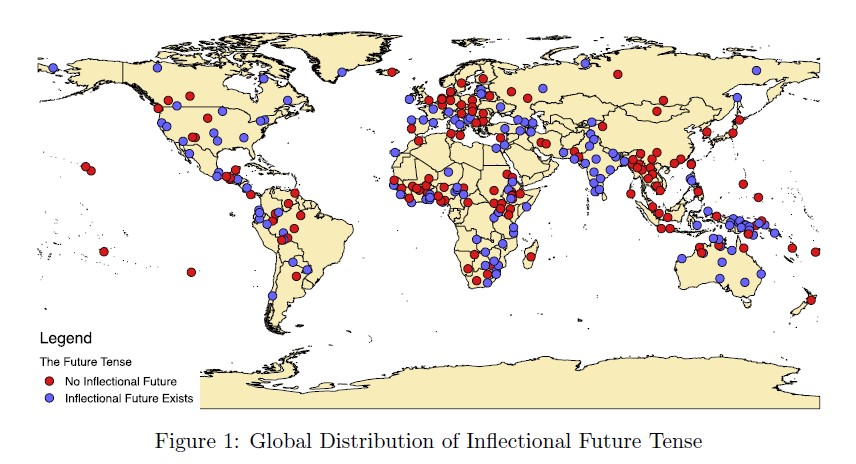
A growing literature in economics has demonstrated that grammatical features of languages influence our economic decisions. For example, whether or not a language makes a clear-cut distinction between present and future (while an English speaker uses a future marker as in “it will rain tomorrow,” a German speaker can simply rely on present tense as in “it rains tomorrow”) may affect intertemporal choices with regard to savings or retirement.

But why do languages differ in grammatical features such as tense, gender or politeness distinctions in the first place? New research by Oded Galor (Brown University and IZA), Omer Ozak (Southern Methodist University), and Assaf Sarid (University of Haifa) published in a recent IZA Discussion Paper argues that these differences can to a significant degree be explained by differences in historical economic and geographic circumstances – crop return, variation in agricultural productivity across genders, and ecological diversity – several hundred years in the past.

Crop return predicts the existence of a future tense

Languages differ in the structure of when and how they mark future events by whether speakers have to adjust a verb when talking about the future. For example, French speakers are required to change the form of the verb when changing a statement from the present (“Il fait froid aujour d’hui” (It is cold today)) to the future (“Il fera froid demain.” (It will be cold tomorrow)). Languages like this, which grammatically distinguish between present and future, have what is known as an inflectional future tense. By comparison, in Finnish, the present tense is used in reference to both the present (“Tänään on kylmää” (Today is cold)) and the future (“Huomenna on kylmää” (Tomorrow is cold)).

In an economic sense, possessing an inflectional future tense is believed to indicate an on average lower long-term orientation. The researchers argue that a long-term orientation is a cultural trait that should be inversely correlated to crop returns. In regions with high historical crop returns, people were able to rely on contemporary food production and thus would have had to care less about the future.

Results relating pre-1500CE potential crop returns to the existence of a distinct future tense confirm this hypothesis: The higher the historical crop return in a geographical area, the less likely languages in this area developed a future tense.

Historic language development affects current economic outcomes

But do language structures indeed transmit pre-industrial crop returns into economic behavior today? Results focusing on second-generation immigrants in the US suggest there is such a long-term effect. Immigrants speaking a mother tongue with inflectional future tense display lower probabilities of attending college by 4 percentage points, indicating indeed a lower long-term orientation. Thus, the study by Galor and his colleagues sheds light on very long-run interlinkages between pre-industrial variation in geographical features, language structures and (current) economic outcomes.

Filed Under: Research Tagged With: economic behavior, economic outcomes, future tense, grammar, language, language structures, pre-industrial crop returns

Decoding attitudes towards migrants

March 3, 2017 by admin

The recent political success of right-wing populists in the US and in many European countries is often attributed to a surge in anti-immigrant sentiments among broad parts of voter populations. Researchers, however, have struggled to understand the development of these hostile attitudes. What are key drivers and determinants? Can misperceptions be tackled? These questions are addressed in several recently published IZA Discussion Papers.

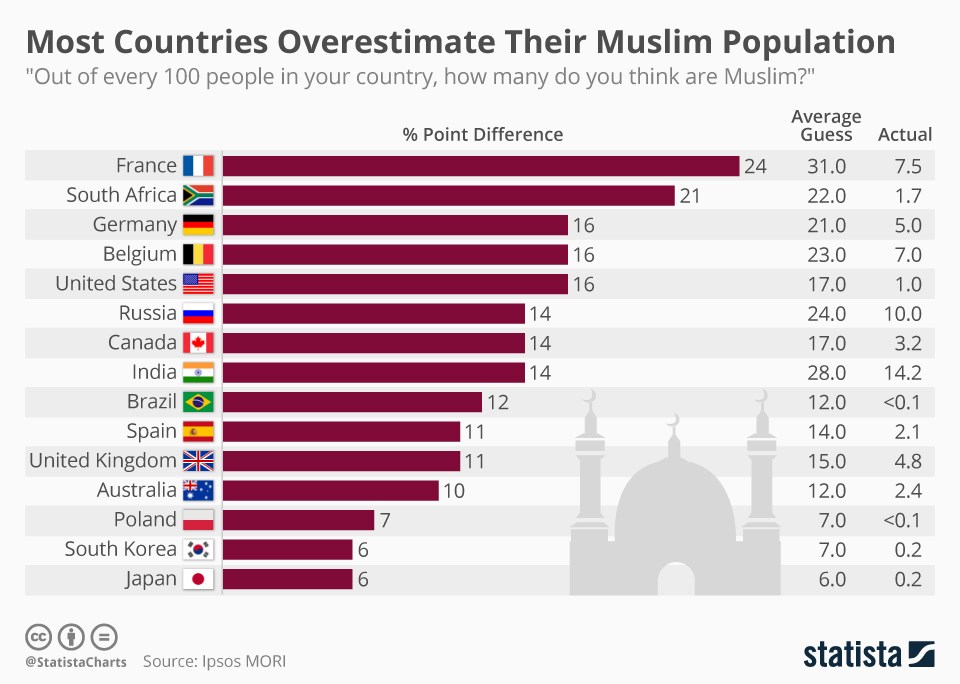
Empirical data suggest that voters are often blatantly misinformed about the facts of immigration. As an example, the chart above shows a high degree of misperception among people worldwide about the share of Muslims living in their country. Similar figures have been found for over-estimations of immigrant proportions in general.

The good news is, people are willing to update their perceptions in response to newly provided factual information. This is the finding of an IZA Discussion Paper by Oxford economists Alexis Grigorieff and Christopher Roth with Diego Ubfal (Bocconi University, IGIER and IZA), who have studied whether providing official statistics about immigrants affects people’s attitude towards them.

The researchers designed an online survey for the US in which all 800 respondents were asked to estimate a range of figures regarding immigrants, which they wildly overestimated: share of immigrants (estimated 22% vs. correct 13%), of illegal immigrants (14% vs. 3%), of unemployed immigrants (22% vs. 6%), of incarcerated immigrants (13% vs. 2%) and of non-English speaking immigrants (33% vs. 8%).

Information about immigration positively affects attitudes

Half the sample was then provided with the correct figures followed by a continuation of the survey and further questions about attitudes and policy preferences. The information turned out to have a strong effect on self-reported attitudes: Respondents provided with factual information were 30% more willing to donate to a pro-immigrant charity. However, the effect does not extend to political behavior, as no difference was reported with regard to signing a petition asking for more Green Cards (permanent residence permits).

Those most affected by the new information were those most worried about immigration. Providing information displays a larger effect on Republicans than on Democrats. A follow-up survey a month later showed that the information effect persists.

Public information campaigns have a powerful impact

A second recent IZA Discussion Paper similarly demonstrates the power of information to counter misperceptions about immigration. Giovanni Facchini (University of Nottingham and IZA), Yotam Margalit (Tel Aviv University) and Hiroyuki Nakata (University of Leicester and RIETI) look at how broad information campaigns can decrease public opposition to immigration. They analyzed results from a large-scale experiment conducted in Japan, a country with widespread anti-immigrant sentiment. The researchers randomly exposed a large national sample of citizens to information pertaining to potential social and economic benefits from immigration.

The findings reveal that the campaign led to a substantial increase in support for a more open immigration policy and motivated citizens to take political action in support of this cause. Notably, while smaller in magnitude, many effects also persisted 10-12 days after the information was distributed, which highlights the potential value of public information campaigns to combat negative attitudes towards foreigners.

Minority salience influences extremism

Attitudes towards immigrants, however, do not form on externally provided information alone. People also become more aware of immigrants by being exposed to their cultural and religious practices in public life. The IZA Discussion Paper by Tommaso Colussi, Ingo E. Isphording and Nico Pestel investigates how a change in “salience” of Muslim communities in German municipalities influences voter behavior, potentially increasing the level of political extremism. The researchers use unique data on the construction of mosques and election results in municipalities over the period of 1980-2013.

The results indicate that the presence of a mosque increases residents’ political divergence from the political center. The negative effect of the presence of a mosque increases strongly if an election is scheduled right after the holy month of Ramadan, a period in which mosques happen to be much more visible to the general public due to extensive festivities and openly displayed religious practices. The findings show that vote shares for both far right- and left-wing parties become larger when the election date is closer to Ramadan. In addition, the change in visibility of the minority population increases the likelihood of politically motivated crimes against Muslims.

Filed Under: Research Tagged With: anti-immigration movement, attitudes, extremism, immigration, immigration polices, migration, public information campaigns, Salience

On World Day of Social Justice: Insights on economic inequality from IZA World of Labor

February 20, 2017 by admin

The UN has proclaimed February 20 the “World Day of Social Justice” to support efforts of the international community in poverty eradication, the promotion of full employment and decent work, gender equity and access to social well-being and justice for all. Despite substantial progress in the fight against poverty across the globe, the unequal distribution of income and opportunity between different groups in society features prominently in current political debates.

IZA World of Labor provides evidence-based insights from international research into various aspects of economic inequality. Here is an overview of related articles.

If you are born poor you will always be poor?

Income inequality and social origins
Promoting intergenerational mobility may make societies both more egalitarian and more efficient. The expectation that people, whatever their social origin, can raise their standard of living is a powerful incentive to human capital accumulation and personal effort. Policies to counteract disparities in family background, such as education interventions for poor children, may foster intergenerational mobility (Lorenzo Cappellari).

Does inequality persist across generations?
A strong association between incomes across generations—with children from poor families likely to be poor as adults—is frequently considered an indicator of insufficient equality of opportunity. Studies of such “intergenerational persistence,” or lack of intergenerational mobility, are concerned with measuring the strength of the relationship between parents’ socio-economic status and that of their children as adults. However, reliable measurement requires overcoming important data and methodological difficulties (Jo Blanden).

Not all people who are poor are persistently poor
Evidence suggests that unemployment, retirement, and single parenthood are closely associated with persistent poverty and that higher education tends to protect against it. There is also evidence of a poverty trap, meaning that policy should aim to prevent people from falling into poverty because once poor, the probability of being poor in the future increases (Martin Biewen).

What can be done to counteract inequality?

Do skills matter for wage inequality?
Differences in wage inequality across countries are driven primarily by differences in the return to skills, which is determined in part by labor market institutions, but also by how well the supply of skills meets the demand. A comprehensive policy package to tackle wage inequality should include a focus on skills, reforms of labor market institutions that influence how skills are rewarded, and alignment of skill supply and demand (Stijn Broecke).

Can social security programs reduce wealth inequality?
How well social security programs reduce inequality depends on program design and implementation and labor market and population characteristics. To reduce inequality and avoid labor market disincentives, the best design appears to be a mostly proportional contributory program complemented by a well-designed non-contributory component (Alvaro Forteza).

The integration of productive inclusion programs into social assistance systems can reduce poverty
However, productive inclusion will not work for everybody, and even when it shows impacts some households—especially the poorest and most marginalized—will still need assistance. To maximize impacts, it is important to tailor productive inclusion programs to match the beneficiaries’ profiles. Furthermore, the right monetary and design incentives must be provided so that social and productive inclusion programs can effectively coordinate activities, exchange information, and refer beneficiaries (Jamele Rigolini).

Can education reduce inequality?

What role does preschool play in reducing inequality?
Good-quality preschool programs more than pay for themselves by boosting achievement and reducing inequality of achievement. That is good news, especially for countries with persistent and high levels of inequality—and a good reason to expand preschool programs in countries where enrollment is far from universal (Jane Waldfogel).

Can higher education reduce inequality in developing countries?
Projections indicate that the global labor market will face continued disequilibrium. Excess labor supply is expected from less developed regions, while excess demand is expected from developed and emerging economies. At the same time, the global economy is becoming increasingly knowledge-driven. Hence, investment in vocational and higher education is important for developing countries to remain competitive; further, expanding the skill-base of the labor force may lead to lower levels of wealth inequality (Abebe Shimeles).

Slavery, racial inequality, and education
Evidence suggests that in some countries historical slavery has influenced the racial distribution of human capital and income inequality. A regional comparison of the influence of slavery on education, racial education inequality, and income distribution shows that policies aimed at addressing inequality can account for differential effects of past slavery on current outcomes. Policies designed to remove racial education inequalities in schools can favor income equalization, though given the resilience of the effect of past slavery they are by no means an immediate solution. Nevertheless, education policy clearly has a strong influence over time (Graziella Bertocchi).

Economic inequality in the news…

  • German children from low-educated families less likely to succeed academically
  • Americans received a pay rise in 2015
  • Barclays to consider living wage for all staff
  • UK government announces plans to allow workers to keep tips
  • Ikea to pay UK staff living wage
  • Is unequal schooling to blame for US racial wage gap?

Filed Under: Research Tagged With: Developing Countries, economic inequality, education, inclusion, inequality, poverty, preschool, racial inequality, skills, wealth inequality, World Day of Social Justice

  • Previous Page
  • Page 1
  • …
  • Page 33
  • Page 34
  • Page 35
  • Page 36
  • Page 37
  • …
  • Page 69
  • Next Page

Primary Sidebar

© 2013–2025 Deutsche Post STIFTUNGImprint | Privacy PolicyIZA