• Skip to primary navigation
  • Skip to content
  • Skip to primary sidebar

IZA Newsroom

IZA – Institute of Labor Economics

  • Home
  • Archive
  • Press Lounge
  • DE
  • EN

Does modern technology slow down employment growth after recessions?

February 14, 2017 by admin

In the last 25 to 30 years, recoveries from recessions in the US have been plagued by weak employment growth. While before 1990 employment growth during the two years following a recession was a little over five percent, it has been just under one percent since then. One possible explanation for the slower recovery of jobs is related to technological change.

A 2012 landmark paper on job polarization in the US found that middle-skilled jobs, those usually involving routine tasks that are particularly susceptible to replacement by new technologies, may be destroyed permanently during recessions. The displaced workers from these jobs are then forced into time-consuming transitions to different occupations and sectors, resulting in slow job growth during the recovery.

This phenomenon of labor market polarization (or “hollowing out” of middle-skilled jobs) has attracted widespread attention and contributed to the ongoing debate on the impact of technological change on labor markets. While much of the focus has been on the United States, Georg Graetz (Uppsala University and IZA) and Guy Michaels (London School of Economics and IZA) investigate in their recent IZA Discussion Paper whether labor markets in other countries have also been slow to pick up after recessions, and if modern technology could be to blame.

“Jobless recoveries” a US phenomenon

The authors analyze data from 71 recessions across 28 industries in 17 countries from 1970-2011 to first examine whether recoveries from recessions after 1985 produced slower employment growth than earlier recoveries. They then test if industries that are more susceptible to technological change have had particularly slow employment growth during recoveries. Finally, the researchers investigate whether routine-intensive industries have seen more replacement of middle-skill jobs during recessions and recoveries.

The results suggest that technology has not impeded job growth in recoveries outside the US. While GDP recovered more slowly after recent recessions in the countries under study, employment did not. Neither employment in industries more exposed to technological change nor middle-skilled employment experienced slower recoveries.

These findings pose a puzzle as to the nature of poor employment trends seen during recent recoveries in the US. Graetz and Michaels point to two possible explanations. The first is related to the differences in technology adoption found in previous studies. The second possible explanation appeals to US-specific policy and institutional changes: Unemployment benefit extensions, which increase workers’ reservation wages, may slow down employment growth during recoveries. Moreover, the declining role of unions may have facilitated the substitution of workers during recessions and recoveries. The authors stress, however, that further research is needed to establish the relative merits of the technology- and policy-based explanations.
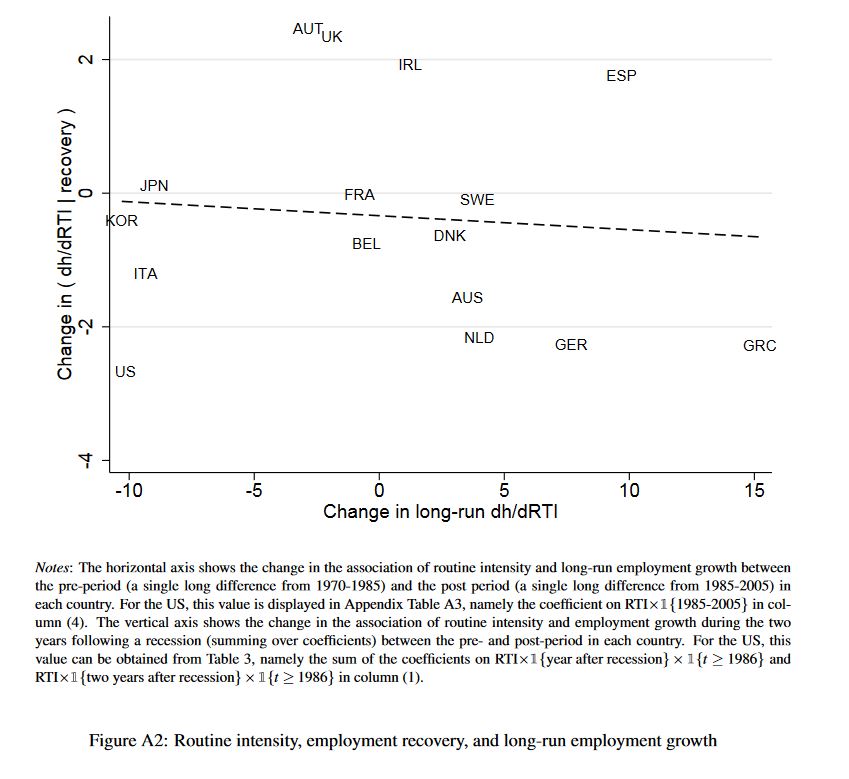
photo credit: Maksim Dubinsky via Shutterstock
Filed Under: Research Tagged With: automation, employment, job growth, jobless, labor market, recession, recovery, United States

How to improve compliance with sectoral minimum wages

February 3, 2017 by admin

Research on minimum wages focuses mainly on their impact on employment. More recently some papers have looked also at prices, profits and productivity. But they disregard a potentially important issue: non-compliance.

Economists tend to assume that the minimum wage is respected by all firms, which is not the case, especially where authorities seem to turn a blind eye. There have been some attempts to estimate non-compliance with national minimum wages, especially in developing and emerging economies (see IZA World of Labor for an overview).

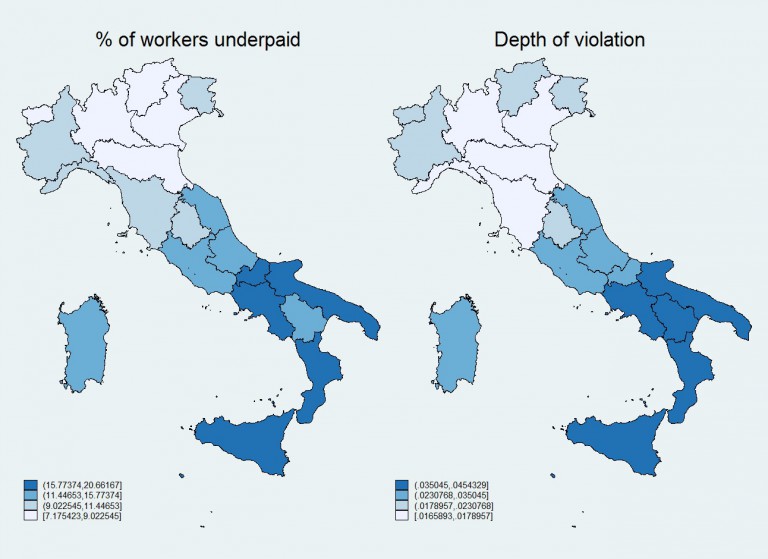
A new IZA Discussion Paper by Andrea Garnero (OECD, ULB and IZA) extends the research on this topic by looking at non-compliance in the case of wage floors set by collective bargaining at the sectoral level in Italy. The results show that non-compliance rates are sizeable (around 10%) and also the amount of underpayment is quite large (20%, which means e.g. a loss of 200 euros for the worker when the wage floor is 1,000 euros per month).

“Not surprisingly, non-compliance is particularly high in the South and in micro and small firms, and it affects especially women and temporary workers. Overall, the Italian collective bargaining system seems unable to safeguard a level playing field for firms and ensure that minimum wage increases are effectively reflected into pay increases for workers at the bottom of the distribution,” says Garnero.
His paper therefore develops a series of relatively simple and almost free-of-cost policies to increase compliance beyond more effective inspections:

  • Streamline the number of collective agreements
  • Ensure that agreements are signed by representative unions and employers’ organizations
  • Make the information on negotiated wages publicly and easily available
  • Establish a helpline and/or an online form for employers and workers
  • Awareness campaigns
  • Name and shame

Filed Under: Research Tagged With: collective agreements, compliance, employer organizations, Italy, sectoral minimum wages, underpayment, unions, workers

Three mechanisms to boost firm productivity

February 1, 2017 by admin

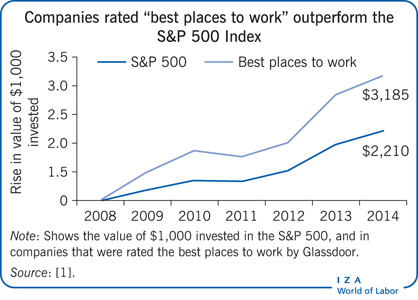
Monetary incentives are not always the most cost-effective way to make employees more productive. Three recent IZA World of Labor articles look at alternative mechanisms to improve worker productivity and boost firm performance: peer effects, employee well-being, and employee ownership.

Peer pressure and knowledge spillover

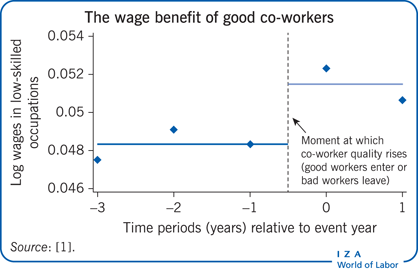
Should one expect a worker’s productivity, and thus wage, to depend on the productivity of their co-workers in the same workplace, even if the workers carry out completely independent tasks and do not engage in team work? Thomas Cornelissen (University of York & IZA) argues that this may well be the case because social interaction among co-workers can boost productivity through knowledge spillover or peer pressure.

Cornelissen points at one of the downsides of the trend towards alternative workplace arrangements: Due to positive peer effects, the total productivity of the workforce is higher when workers are working together within the firm rather than from home. It would thus be beneficial for the firm to create spaces and occasions for social interaction and communication (to facilitate knowledge spillover), and to disseminate information about own and co-worker productivity (to facilitate peer pressure).

Knowledge spillovers seem to be most relevant in situations when newly trained and untrained workers interact, in collaborative team settings, or between senior and junior workers. In such instances, Cornelissen recommends that firms encourage social interaction. Peer pressure, on the other hand, can help mitigate free-rider problems in teams, but in excess it can also depress worker well-being and require firms to pay higher wages to retain workers.

Happy workers are more productive

Well-being is covered in more detail by Eugenio Proto (University of Warwick & IZA), who looks at the existing evidence on the link between employee well-being and company performance. Both laboratory studies and real-world findings suggest that not only do better performing companies have happier employees, but happy employees also contribute to better company performance.

These findings have several implications for company practice, management strategies and for research. First, if happiness in a workplace carries with it a return in terms of enhanced productivity, there are enormous implications for firms’ promotion policies and for the way they structure their internal labor markets. For example, managers could be rewarded on the basis of employees’ job satisfaction, and workers could be allowed to take a more active part in decision-making, which in general raises job satisfaction.

Second, the effect of happiness on productivity raises the possibility of self-reinforcing spirals—potentially even operating at a macroeconomic level. Happiness might lead to greater productivity in an economy, and that might in turn result in greater well-being in the population.

Employee ownership increases company performance

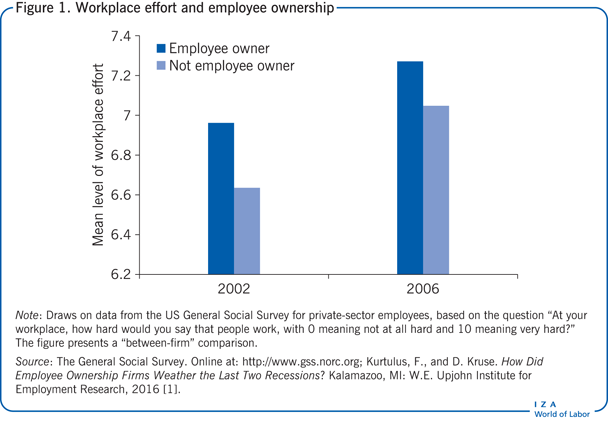
Douglas Kruse (Rutgers University & IZA) identifies employee ownership as another mechanism that can enhance company performance by creating closer ties between employee performance and rewards. Employees are effectively “working for themselves,” and by sharing the overall economic “pie” more widely, the incentives of workers and owners can become aligned so that productivity-reducing conflict is minimized and productivity-enhancing cooperation and innovation encouraged. This is particularly so when employee ownership is combined with employee participation in decision-making and other high-performance work practices.

Not only is employee ownership linked to higher company performance on average, but it may also add to worker pay, employment stability, and company survival. While free-rider problems may occur and employees are put at higher financial risk, Kruse outlines ways to overcome these problems. Apart from benefiting companies and workers, the findings point to the potential for employee ownership to increase economic stability and reduce unemployment and inequality in the overall economy.

Filed Under: Research Tagged With: emotions, employee ownership, firm performance, firm productivity, happiness, IZA World of Labor, peer effects, productivity, spillover effects

Globalization’s stabilizing effect on manufacturing jobs in Germany

January 23, 2017 by admin

Recently, there has been strong interest in the decline of manufacturing in the United States. Although the share in real output has been constant since the 1960s, the share in aggregate employment has been steadily decreasing over time. A popular explanation for this pattern is often attributed to labor-saving technological progress, but recent literature argues that rising trade with China has also contributed to the manufacturing decline, especially after 2000. That conclusion may, however, be specific for the US case, given the large and persistent trade deficit vis-à-vis China.

A new IZA Discussion Paper by Wolfgang Dauth, Sebastian Findeisen and Jens Suedekum focuses on this topic in the context of Germany, whose economy has a traditional focus on manufacturing and runs an overall current account surplus with relatively even trade balances with China and emerging economies in Eastern Europe. The study investigates broad sectoral employment trends between 1993 and 2014, the underlying labor transitions at the micro-level that were behind broader aggregate trends, and how this micro anatomy of structural change was affected by globalization.

Rising trade with China and Eastern Europe had heterogeneous effects

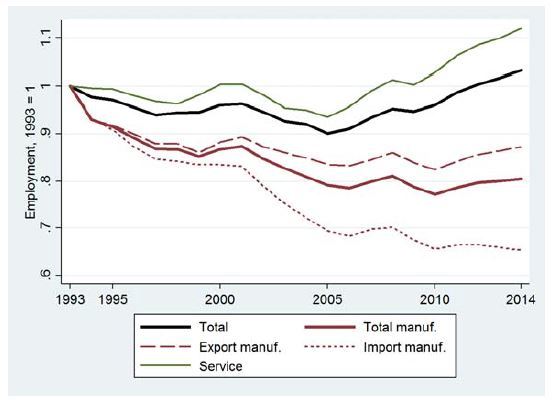
At the aggregate level, the authors observe some important compositional shifts during those 21 years. Services were on a secular upward trend, while manufacturing jobs largely declined during the first decade. But parallel to this overlying expansion of services were marked changes inside manufacturing: industries with strong increases in net import-exposure from China and Eastern Europe declined much faster than export-oriented manufacturing. The number of jobs in the latter industries has been, in fact, roughly stable since 1997, while job losses in import-competing manufacturing industries continued even after the “jobs miracle” starting in 2005.

Manufacturing and Service Employment in Germany, 1993-2014

The study also documents which labor market transitions at the individual worker level are behind those trends. This analysis conveys several novel facts about the underlying micro anatomy of sectoral employment trends. In particular, it shows that the aggregate shift from manufacturing to services does not happen smoothly. The authors find little evidence that the rise of the service economy comes from incumbent manufacturing workers who directly switch jobs. The rise is, instead, entirely driven by young entrants who exhibit different sectoral entry behaviors than previous generations and by returnees coming out of non-employment who take up jobs in different industries than their previous ones.

Without expanded trade, fewer manufacturing jobs

The second part of the study analyzes the causal impact of trade on these key labor market transitions. Dauth and his colleagues find that the long-run growth rate of manufacturing jobs would have been between 1.58 and 3.11 percentage points lower via the (re-)entry channel. In other words, as of 2014, Germany would have had between 128,000 and 259,000 fewer manufacturing jobs without the increased trade exposure from China and Eastern Europe. Because entrants and returnees would not have been pulled by the rising net export manufacturing opportunities, those jobs would, instead, have been in services (or the public/agricultural sector).

Summing up, unlike in the case of the US, rising trade with emerging low-wage countries did not speed up the decline of manufacturing in Germany. Trade, in fact, slowed it down because the rising exports to these new markets worked to stabilize industry jobs, which might have otherwise been replaced by service jobs.

Filed Under: Research Tagged With: export, Germany, globalization, import, manufacturing, services, trade, unemployment

The economics of mental health

January 12, 2017 by admin

Mental illness accounts for half of all illness up to age 45 in rich countries, making it the most prevalent disease among working-age people. Mental illness costs billions in welfare payments and lost taxes. Sir Richard Layard (London School of Economics) shows in a new IZA World of Labor report that providing evidence-based therapies for people with a mental illness should be at the heart of public policy making. And this policy would more than pay for itself.

People with a mental illness are less likely to be working, and, if working, are more likely to be out sick or working below par. If mentally ill people worked at the same rate as the rest of the population, total employment would be more than 4% higher, boosting production and tax revenues.

Physical effects of mental illness

“Presenteeism” is another cost of mental illness—the less effective work done when a person is suffering from a mental illness. By a conservative analysis, the combined effect of non-employment, absenteeism, and presenteeism in the UK reduces national income (gross national product) by 7%—almost as much as most countries spend on education.

Mental illness also imposes costs on physical health care. People who have mental health problems use 60% more physical health care services than those who are equally ill but without mental health problems. This amounts to a massive extra cost (for example, £10 billion in England). Finally, many crimes are mental health-related and crime has a clear economic cost: ca 2% of national income.

Cutting therapy funding costs rather than saves money

Despite the considerable costs, no country spends more than 1% of national income on mental health care. For example, the UK spends just 1% of national income to reduce the expense of conditions that cost the country 7%. Progress in evidence-based psychological therapies has resulted in 50% recovery rates for people with clinical depression or chronic anxiety disorders and substantial improvements for others.

Yet, in most countries, only a tiny fraction of people receive these therapies—even though providing them involves no net cost to public funds. Layard shows that if savings on welfare benefits, lost taxes, and physical health care are included in the calculations, the treatments pay for themselves, twice over.

Layard concludes: “Psychological therapy is a remarkably good bargain. Yet health care commissioners and insurers in the UK, the US, and elsewhere regularly see psychological therapy as an easy area to cut. They need to know that every time they do this, it costs rather than saves money.”

Filed Under: Research Tagged With: absenteeism, anxiety, depression, healthcare, mental health, non-employment, presenteeism, productivity, therapy

Do employers care where you’re from?

December 22, 2016 by admin

In the last two decades, economists’ interest in social networks has increased dramatically. This has come with a parallel awareness that putting humans in their social context is not only a matter of embellishing theoretical models with human behavior but can also be a potentially powerful tool for understanding how market forces work in many economic transactions.

Social interactions and connections affect the way information spreads between individuals and the way people perceive themselves relative to their peers, ultimately shaping the way they form decisions. Thus, belonging to the “right” network, by chance or purposefully, can make a significant difference in many circumstances but especially when an unanticipated shock suddenly changes plans.

One such unpredicted event studied by Tommaso Colussi and Livio Romano in their new IZA Discussion Paper is the case of a worker whose company gets acquired and is now forced into a new employer-employee relationship. Does the worker’s social network determine whether she will retain her job in the acquired company? Will the wage offered by the new company be affected?

Employer localism favors employees from the same hometown

By relying on a rich matched employer-employee dataset from the social security records of the Italian region of Veneto, the authors investigate whether the employer of the acquiring company systematically shows preferential treatment for workers coming from the same hometown.


Because of the randomness of the potential matching of the new employer’s city of birth with the existing employees of the acquired company, the researchers are able to isolate the importance of, and ultimately the job premium placed on, this factor in the new employment relationship. They find that regardless of the worker’s observed characteristics, being from the same city of birth as the new employer increases the probability of keeping the job after the takeover by about 2.7 percentage points, which accounts for about 4% of the average probability of staying at the firm.

On the other hand, localism is not found to systematically affect the wage dynamics of those workers that retained their job after the takeover.

Managers, especially from smaller towns, benefit more than others

However, there is significant heterogeneity in the observed results depending on the characteristics of workers, firms and the network. The likelihood of retaining the job after the takeover is five times larger for managers as compared to blue and white collar workers; this effect increases with the size of the acquired firm, but decreases with the size of the community of origin (i.e., when both come from a bigger city, the effect is not as strong). Moreover, after the takeover, there is evidence of a wage premium for managers and trainees, but not for blue and white collar workers.

The paper also analyzes whether the effect of a local social network is beneficial or detrimental for the acquiring company’s performance. Colussi and Romano find, consistent with the idea that the existence of a community network in the labor market reduces the costs of the employer’s potentially “wrong” hiring decisions, that localism has a positive impact on the probability of survival of the acquiring companies.

Note that an older IZA Discussion Paper also found that business partners are more likely to close a deal when they speak in the same dialect.

Image sources: pixabay

Filed Under: Research Tagged With: employee, employer, localism, social networks, takeover

The Empirics Strike Back Again: Abel Brodeur wins Leamer-Rosenthal Prize for his dedication to open science

December 16, 2016 by admin

In 2013, IZA Research Affiliate Abel Brodeur (University of Ottawa) and his co-authors published an IZA discussion paper titled “Star Wars: The Empirics Strike Back” (see also our IZA Newsroom article). Analyzing 50,000 statistical tests published in top economics journals, the authors concluded that researchers might be tempted to inflate the value of almost-rejected tests by choosing a “significant” specification. The reason is that journals favor rejection of the null hypothesis, which means that positive findings increase the chances of publication.

Abel Brodeur

The IZA paper was published in the American Economic Journal: Applied Economics in January 2016 and received coverage in various media outlets, including The Economist. Abel Brodeur has now been awarded one of ten 2016 Leamer-Rosenthal Prizes for Open Social Science from the Berkeley Initiative for Transparency in the Social Sciences (BITSS), a network of researchers and institutions committed to strengthening scientific integrity in economics and related disciplines by identifying and disseminating useful tools and strategies for improving transparency, including the use of study registries, pre-analysis plans, data sharing, and replications.

Brodeur receives the prize, which includes $10,000, for his work on the above-mentioned paper and “for his clear dedication to and advocacy of open science and reproducibility,” according to BITSS. Promoting open science is also among IZA’s core objectives. We have repeatedly stressed the value of replications and launched initiatives such as the open-access IZA Journals and the IDSC data repository.

Filed Under: IZA News, Research Tagged With: data, empirics, integrity, open science, replications, transparency

How deporting all undocumented workers would hurt the U.S. economy

December 8, 2016 by admin

Immigration issues are at the top of many western countries’ political agendas. The EU is still processing all of the ramifications of the refugee crisis. Illegal immigration was also a central theme during the U.S. presidential race. Donald Trump’s promise to deport “illegal immigrants” on a large scale was highly controversial, but this pledge touched a nerve with voters skeptical about the negative consequences of illegal immigration.

Now that Donald Trump has been elected, many are seeking to examine what this promise would mean in reality. A number of people, especially in the agricultural sector, are concerned about potential negative economic consequences that would be incurred if the unauthorized workforce were excluded from the labor market. But the virtual “invisibility,” at least in terms of official records, of these migrants and their work makes it difficult to assess their exact economic contribution without documentation across sectors.

A new IZA Discussion Paper by Ryan Edwards and Francesc Ortega of Queens College, CUNY, takes an innovative approach in order to estimate how the absence of unauthorized workers could damage the U.S. economy.

Simulation of mass deportation

The main findings are based on a simulation using an industry-level model of the U.S., which is calibrated, i.e., adjusted in parameters, to observe present conditions. The authors then estimate certain counterfactuals, situations that have not yet happened and as such cannot be observed directly. They pursue the following thought experiment: what would happen if all unauthorized workers would suddenly be removed from the U.S. labor market (ignoring the obvious obstacles and costs related to such a large-scale deportation)?

The results highlight the substantial economic contribution of unauthorized workers to U.S. GDP. Edwards and Ortega estimate this economic share at approximately 3% of private-sector GDP annually. Amounting to close to $5 trillion over a 10-year period, this is comparable to the contribution to GDP of the whole state of Massachusetts.

These aggregate estimates, however, mask large differences across industries and states. Unauthorized workers may be responsible for 8-9% of the value-added in agriculture, construction, and leisure and hospitality. Naturally, their economic contribution is larger in states where these workers account for a large share of employment. For instance, the estimates imply that the economic share of unauthorized workers in California is around 7% of private-sector GDP in the state.

Legalization would increase worker productivity

Compared to their shares in employment, the contribution of unauthorized workers to production is relatively smaller. The reason is that unauthorized workers are less skilled, on average, and appear to be less productive than natives and legal immigrants with the same observable skills. This may be a reflection of their more limited job opportunities.

But this productivity penalty can be mitigated in part through legalization. The authors estimate that legalization would significantly increase the productivity of undocumented workers, triggering further investment by employers. Legalization would therefore increase the economic contribution of the (currently) unauthorized population by about 20%, to 3.6% of private-sector GDP.

Image source: Pixabay

Filed Under: Research Tagged With: Donald Trump, employment, illegal immigration, legalization, migration, U.S. economy, unauthorized workers, United States

“Jobs for Development”: How job creation can drive progress and what policies can support this process

December 6, 2016 by admin

Job creation is at the heart of development. This was the central message of the World Bank’s “World Development Report 2013: Jobs”, to which IZA had also contributed. Jobs raise living standards and lift people out of poverty, they contribute to gains in aggregate productivity, and they may even foster social cohesion.


But which jobs make the greatest contribution to development and what policies can facilitate the creation of more of these jobs? There is no universal answer – it depends on the country’s level of development, demography, natural endowments, and institutions.

A new volume, edited by IZA research fellows Martin Rama (World Bank) and Gordon Betcherman (University of Ottawa) as a sequel to the World Development Report, explores the diversity of jobs challenges and solutions through case studies of seven developing countries.

These countries, drawn from four continents, represent seven different contexts – a small island nation (St. Lucia), a resource-rich country (Papua New Guinea), agrarian (Mozambique), urbanizing (Bangladesh), and formalizing (Mexico) economies, as well as young (Tunisia) and aging (Ukraine) populations.

We wanted to know from Gordon Betcherman what readers may take away from the book.

IZA: Even if there is no one-size-fits-all solution to country-specific labor market policy challenges, are there any general lessons to be learned from these case studies?

G.B.: The cases that we study are not unalloyed success stories but they have been chosen to illustrate the different challenges that countries face in creating jobs. The book highlights this diversity, as is reflected in the subtitle. So certainly one general message that we hope comes through is that different countries have different priorities when it comes to employment and understanding these priorities is a key to developing effective jobs policies. But this focus on country context does not mean that there are not universally applicable requirements for success in creating jobs. The experiences of all of the countries included in our book show that strong fundamentals are needed.

What do you mean by “fundamentals”?

We include the sorts of things that are necessary for establishing a positive environment for employment – a favorable macroeconomic environment, an attractive investment climate, rule of law, and a productive workforce. Also sound labor institutions that support equity and social protection goals without constraining efficiency and economic growth.

Countries that cannot provide these basics are unlikely to experience sustained success in creating good jobs. However, the case studies do show that these fundamentals can look quite different in different country contexts. For example, what constitutes sound labor institutions in an “urbanizing” country like Bangladesh will undoubtedly look very different than in an “agrarian” economy like Mozambique.

What are some of the impediments to job creation in the countries studied?

Of course, where these fundamentals are not present, job creation will be impeded. But, in addition, we are particularly concerned in these cases about jobs that will have substantial development spillovers. These are what we call “good jobs for development”, a concept which was introduced in the 2013 World Development Report. What those jobs are depends on the country situation, as do the factors that may be getting in the way of creating them.

Can you give an example?

Tunisia, for example, has a large youth bulge and high youth unemployment. The price of this youth unemployment has obviously been great in both economic and social terms, and it is hard to imagine anything that would benefit Tunisia, like several other countries in the Middle East and North Africa, more than suitable jobs for these young people. At first glance, it might seem plausible to point to inadequate education or overly restrictive labor market rules as the obstacles. However, the authors conclude that the binding constraint for young people is on the demand side, specifically Tunisia’s anti-competitive formal and informal rules and practices.

What about other countries?

Gordon Betcherman

A very different example in the book is Mexico where, despite substantial economic progress, much of the workforce remains in the informal sector. The major challenge there is to generate formal jobs that can provide the economic and social benefits found in more developed OECD countries.

Why has there been so little progress in formalization?

Here, the case study points to two factors: the preponderance of microenterprises with low-productivity and what the authors call “social segmentation”, whereby households without access to formal jobs are constrained by low human capital and, in some cases, discrimination.

Do the case studies suggest the need for new policy approaches to the creation of more and better jobs?

On the one hand, the cases reinforce the importance of a favorable economic and business environment and good labor policies. This is familiar territory. But a prominent conclusion from the studies is that policies that can affect job creation go well beyond these. Addressing country-specific priorities often calls for policies in areas that are normally not considered as “jobs” policies.

What are some of those policy areas?

For example, in Papua New Guinea, a “resource-rich” country, the management of sovereign wealth funds may be the decisive policy area for jobs. In Mozambique, an “agrarian” economy where rural living standards need to rise, the policies that will have the greatest impact are in areas we normally consider as agricultural or rural policy: increasing farming productivity and diversifying to non-farm rural activities. So one of our conclusions is that a much wider range of policies is relevant for a jobs strategy than is normally considered.

Apart from the policy prescriptions for developing countries, is there a need for donor countries to rethink their development policies?

Employment should be a more central and explicit element in development programs. Jobs are often seen by donors as a by-product of growth (demand-side strategies) or human capital (supply-side). Where donor programs explicitly target jobs as the development outcome, they tend to focus quite narrowly on labor policies such as regulation and active labor market programs. While these are not insignificant, our cases show that they are usually not the most important factors in determining how successful a county is in creating jobs that are good for its workers and for the society at large.

Are you seeing any progress in this regard?

One optimistic sign that development actors are more explicitly focusing on jobs is that, while employment was barely evident in the Millennium Development Goals, the new Sustainable Development Goals include a goal directly concerned with jobs.

+++

Read more about the book at Oxford University Press.

Filed Under: Research Tagged With: demography, Development, good jobs, institutions, jobs, labor market policy, natural endowments, unemployment

Labor market disadvantages for persons with disabilities need tailored policy responses

December 3, 2016 by admin

December 3rd marks the International Day of Persons with Disabilities. In Europe, about one in eight people of working age (aged 15–64) report having a disability, defined as the presence of a long-term limiting health condition. Despite the introduction of a range of legislative and policy initiatives designed to eliminate discrimination and facilitate retention of and entry into work, disability is still associated with substantial and enduring employment disadvantages.
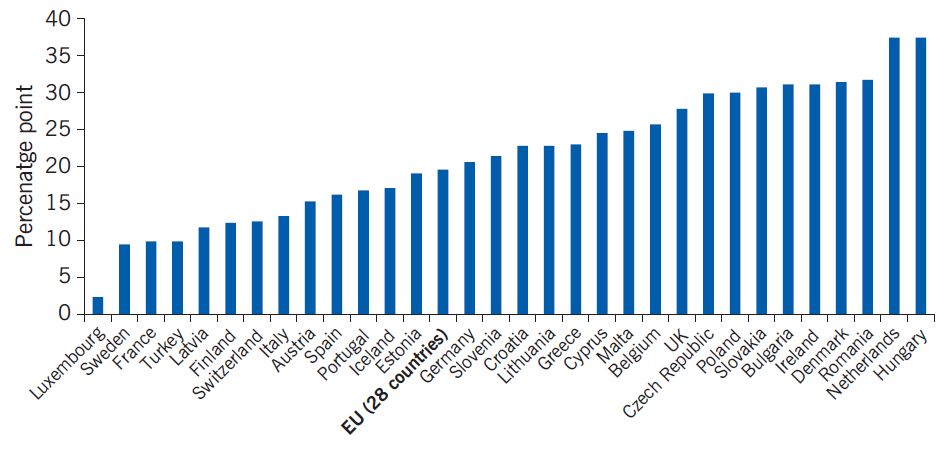
An IZA World of Labor article by Melanie Jones (Cardiff University) scrutinizes the relevant literature and points to possible policy solutions to reduce labor market discrimination.

As the figure shows, the gap in the employment rate between those who report a disability and those who do not is substantial. Identifying the reasons for the enduring employment disadvantages is complex, but critical to determine effective policy solutions that reduce the social and economic costs of disability disadvantage. While a large part of the employment gap is due to the disability itself, less than half of the gaps in employment and earnings are typically explained by other observable factors, such as education.

Discrimination may be overestimated

However, the exact reasons for the residual disadvantage remain contested, because it is difficult to separate the influence of the disability on productivity and preferences for work from discrimination, resulting in a risk of discrimination being overestimated. Nevertheless, despite the introduction of legislation that prohibits disability discrimination in countries such as the UK and the US, there is little evidence that this has led to a narrowing of the disability employment gap.

As disability is heterogeneous, differences in the type, severity and chronicity of a disability have to be taken into account when designing effective support mechanisms. Recent studies highlight the importance of a more tailored policy response and, in particular, matching individual job demands to functional limitations in order to mitigate negative productivity effects in work. A critical role is played by the employer, who has to ensure effective occupational health by supporting flexibility and adjustments to work in order to enable employees to retain or reengage with work.

More incentives for disabled individuals to remain in work

The government also plays an important role in this regard, such as by providing incentives for employers to retain disabled workers and by designing welfare systems that support working disabled individuals. In contrast, many current welfare schemes provide permanent support conditional on not working. The broadening of permitted employment and the provision of temporary financial support to facilitate work-related adjustments would provide greater incentives for disabled individuals to remain in work, or return to work, when they are able.

Sources: United Nations(image), European Union Labor Force Survey (EU-LFS), 2011 (graph)

Filed Under: Research Tagged With: disability, employment gap, labor market, labor market discrimination

  • Previous Page
  • Page 1
  • …
  • Page 34
  • Page 35
  • Page 36
  • Page 37
  • Page 38
  • …
  • Page 69
  • Next Page

Primary Sidebar

© 2013–2026 Deutsche Post STIFTUNGImprint | Privacy PolicyIZA