Social connections influence individual behavior and ultimately affect a variety of economic outcomes, such as welfare program participation, criminal activity, and labor supply. For professional careers, social networks undoubtedly play a crucial role, but they can cut both ways: Personally knowing a job candidate might improve the outcome of a selection process but also bears the risk of favoritism.
 A vast literature in labor economics has investigated the use and beneficial effects of network membership on labor market outcomes (see e.g. IZA DP 5240). A new IZA Discussion Paper by Tommaso Colussi focuses on the efficiency of connections and whether they harm or improve the outcomes of selection processes.
His study analyzes the role of social connections in the publication process in economics, looking at the ties between editors and authors. His results show that an editor’s former PhD students and faculty colleagues experience an increase in their publication outcomes when the editor is in charge of a journal. At the same time, these connections improve the quality of published papers, as the analysis of citation suggests.
The ecosystem of economists
It is no secret that knowing the right people can help your career. But assessing the real impact of social ties and favoritism is more difficult than it seems, given that reliable data on social connections among (future) colleagues is often not available. The academic sector provides a rewarding exception, as scholars openly publish their academic histories and reveal much about their social connections. Colussi exploits this situation to empirically investigate the extent to which connections between authors and editors influence the selection (and quality) of articles in economics journals.
The world of economists who publish in high-impact journals is small and composed of interconnected scholars. Descriptive statistics show that about 43% of papers published in the journals considered are authored by at least one scholar that is connected to at least one editor at the time of the publication. Moreover, 72% of authors become connected to at least one editor at some point in time.
In order to explain the role which social ties play in this situation, Colussi built a unique dataset on articles, authors and editors of the top general interest journals in economics (American Economic Review, Journal of Political Economy, Econometrica and Quarterly Journal of Economics) over the period 2000-2006. These data allow to identify whether social ties between each author and each editor exist along various dimensions. An author was considered to be connected to an editor if he/she is a faculty colleague, a former PhD student, from the same PhD program, or a co-author.
Knowing the editor helps getting published, but doesn’t hurt quality
The results of Colussi’s study reveal that social ties with editors positively increase the chance for an author to get published. When a scholar is in charge of a journal, the number of papers published by his connections increases by about two papers in three years. Furthermore, editors tend to publish papers of scholars’ faculty colleagues and former graduate students. Connected scholars are also more likely to publish lead and longer articles.
To verify his findings, Colussi examined if his results could also be explained by other factors. For example, a journal’s preference towards papers in a particular research field could simultaneously affect the appointment of an editor, who is a prominent scholar in that field, and the publication outcomes of his connections. But the robustness checks showed that neither this “field effect”, nor other unobserved characteristics of connected scholars generated the correlation. Colussi illustrates that due to tastes and technological complementarities between connected scholars, editors always prefer to publish papers authored by researchers they are connected to.
In the second part of his study, Colussi looked at how this apparent academic favoritism affected the quality of the papers. He analyzed the effect of social ties on the number of citations that papers receive. The results showed that papers authored by an editor’s former PhD students increase the number of citations by more than 27% when this editor is in charge. However, this positive effect on quality does not apply to papers authored by past and current faculty colleagues.
In sum, Colussi found a twofold effect of social connections in academia: While editors clearly tend to favor connected authors, the connections are also likely to improve selection decisions and, in the case of former PhD students, lead to better results.
 “From subjective well-being research, we learn how to operationalize normative concepts like dignity, develop relevant measures, and use the information to better understand human experience,” she said.
 coined by David Brooks (2000) in a famous book about the rise of a new knowledge elite. This new kind of bourgeoisie is generally considered as prevalent in globalized capital cities, and its lifestyle and political attitude stands in contrast to that of the traditional bourgeoisie. While bobos are likewise a politically powerful group, they generally support environmentalists and socialist parties. They have been instrumental in bringing about left-wing governments in municipalities such as Berlin, Paris or San Francisco, despite the relatively high economic status of this social class. The political consequences of the bobo takeover are recognizably different from the ones implemented both by the right and by the traditional left. They focus on:
 For instance, it has been shown that more patient adults perform better at work and stay in their job longer; they have lower credit card debt and are less likely to smoke. For teenagers, a positive relation between patience and school performance or a healthy lifestyle has also been documented. Even more impressive, long-term studies have shown that a child’s degree of patience is positively related to long-term outcomes in adulthood, such as higher education, higher income, better health status (by being less likely obese, drinking or smoking) or lower crime rates.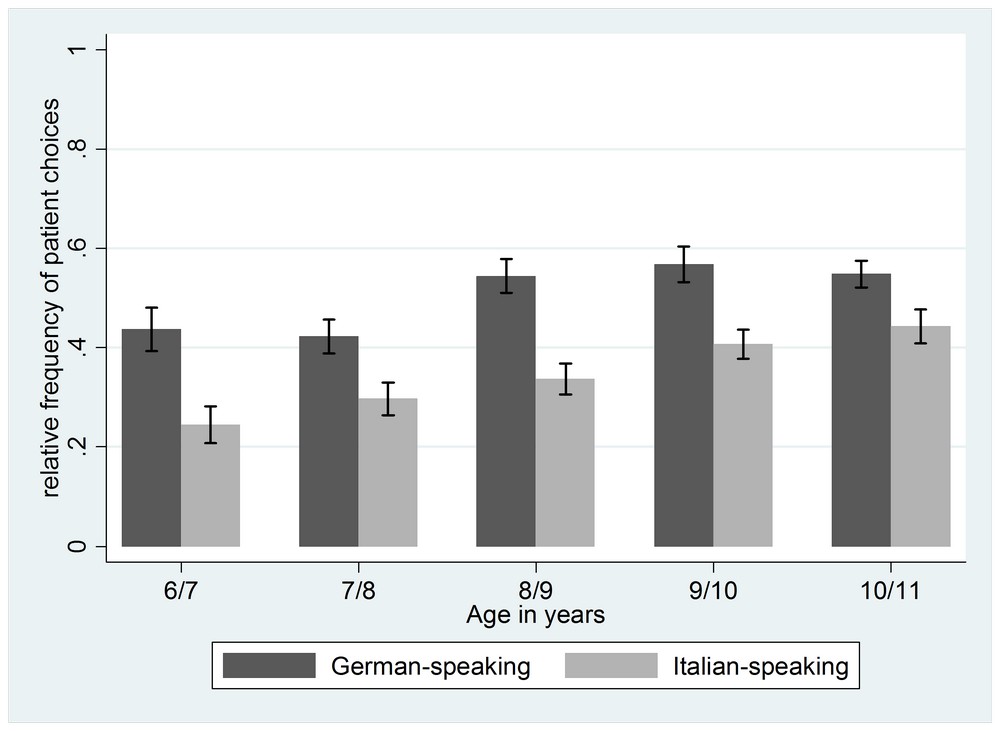
 Fulfilling one of the
 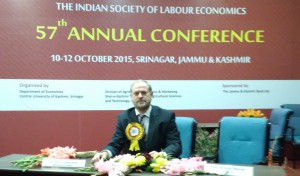 On October 10, 2015, IZA Director Klaus F. Zimmermann devoted his keynote speech at the
  into Europe, the largest since World War II, have made these scenes reality in many European neighborhoods. Feelings of empathy and shock are increasingly joined by worries about the consequences the refugee crisis will have on society, welfare institutions and labor markets. In the EU these worries drive public opinion and political action, causing closings of Schengen borders and the resistance against a fair allocation of refugees among EU member states.
 Attention deficit hyperactivity disorder (ADHD) is one of the most common diagnoses of behavioral problems among school-aged children. ADHD diagnoses remain controversial since they are perceived as stigmatizing, and drug-based therapies may be accompanied by severe side effects.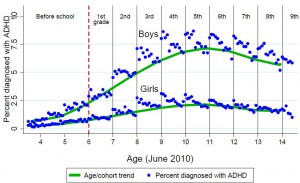
 Today marks the 25th anniversary of German reunification. The signing of the German unification treaty had set in stone what Germans had not expected, but long desired: the unity of the German people. At the time, former German Chancellor Willy Brandt marked the iconic words: “Now what belongs together will grow together”. For this statement to become true, Germany had to make unprecedented efforts with regards to institutional, economic and societal unification. Especially in East Germany, the transition from a socialist planned economy to a free market economy had profound implications for the labor market and affected every aspect of life. Over the last ten years, the IZA has accompanied this process with various economic studies. One of the most recent contributions is a study by
  Designated zones for street prostitution have reduce crime in the Netherlands. Data from 1994-2011 for Dutch cities show a decrease in registered sexual abuse and rape by up to 40% in the first two years after introduction of prostitution zones. While perceived crime also dropped, positive long-term effects are only reported for prostitution zones that included a licensing system. These are the findings of an IZA paper by Paul Bisschop,