• Skip to primary navigation
  • Skip to content
  • Skip to primary sidebar

IZA Newsroom

IZA – Institute of Labor Economics

  • Home
  • Archive
  • Press Lounge
  • DE
  • EN

Roadmap to vocational education and training: IZA research in ILR Review symposium on skills

March 12, 2015 by admin

The latest issue of the Industrial and Labor Relations Review addresses the closely linked topics of skill shortages, skill mismatch and structural unemployment. The core of this collection of articles consists of three papers on skill demand and skill supply issues, complemented by papers on firm-level developments in countries like Korea, Spain, Italy and China, which point at the role of differently skilled segments of the workforce.

The articles by Peter Cappelli and Katharine Abraham focus on the current situation in the United States. A third contribution by IZA researchers Werner Eichhorst, Núria Rodríguez-Planas, Ricarda Schmidl and Klaus F. Zimmermann outlines a “Roadmap to Vocational Education and Training in Developed Countries”. This article provides a broad and structured overview on the evidence that is available on the effects of different types of vocational education and training, such as vocational schooling, formal apprenticeships and dual vocational training on the transition from school to work and early individual labor market careers.

The paper makes a strong point in arguing that dual vocational training can pave the way to sustainable jobs for young people because during the dual apprenticeship they acquire a combination of occupational and general skills that matches the skill demand from the employer side. Hence, effective forms of vocational training can help avoid skills shortages on the one hand, and mismatch and unemployment on the other. Dual vocational training systems are quite demanding as they require the involvement of firms, social partners and government. Building such capacities is not an easy task for policy makers as existing points of departure vary considerably between countries. Nonetheless, developing effective training models seems viable if they take these conditions into account.

Related IZA Newsroom posts:

  • What can we learn from Germany’s dual vocational training model?
  • Youth unemployment in France at record high: Study recommends activation policies and dual system of vocational training
  • The youth unemployment crisis: a fix that works and pays for itself

photo credit: Goodluz via Shutterstock

Filed Under: Research Tagged With: dual apprenticeship, skill demand, skill mismatch, skill shortages, skill supply, structural unemployment, sustainable jobs, training models, transition, vocational education

The negative labor market outcomes of a Muslim minority: How policy can make a big difference

March 10, 2015 by admin

The labor market success of ethnic and religious minorities often lags behind the average population. Discrimination, segregation and cultural frictions are suspected to drive

Nitsa Kasir, Eran Yashiv

this gap in wages and employment probabilities. Israeli Arabs are a striking example of such a disadvantaged minority. IZA fellow Eran Yashiv and his co-author Nitsa Kasir analyze the role that government policy can play to mitigate this disadvantage through investment in education, active labor market policies, physical infrastructure, tax and benefits reform, and anti-discrimination legislation and enforcement.

(Note: This column was originally published on voxeu.org; edited and reposted with permission.)

In Israel, almost 21% of the 8.3 million population is Arab, predominantly Muslim. The economic performance of this native minority lags behind that of Jews, in particular in the labor market. Recent work has documented the key features of this under-performance and has studied policy solutions. Some of these issues and solutions may be relevant for other advanced economies with Muslim minorities.

[Read more…] about The negative labor market outcomes of a Muslim minority: How policy can make a big difference

Filed Under: Research Tagged With: discrimination, education, employment, infrastructure, labor market outcomes, minority, Muslim, segregation, wages

Interview with the authors of Applied Nonparametric Econometrics

March 6, 2015 by admin

The majority of empirical research in economics ignores the potential benefits of nonparametric methods, while the majority of advances in nonparametric theory ignore the problems faced in applied econometrics. A new book by IZA fellow Daniel J. Henderson (University of Alabama) and Christopher F. Parmeter (University of Miami) helps bridge this gap. In an interview with IZA Newsroom, the authors explain what it’s all about.

What are nonparametric methods? Sounds like pretty dry stuff…

It’s all in the pitch. Nonparametric regression is simply a special case of classic linear regression. Anyone who understands weighted least-squares can understand nonparametric regression. For example, local-linear regression is simply linear regression local to a point of interest. That is, instead of weighting via say heteroskedastic errors, we give more weight to observations near the point of interest. When this is repeated over a grid of points, we end up with a smooth function that does not require a priori restrictions and hence better fits the data.

Why is this particularly relevant for labor economists?

Labor economists recognize that the impact of a policy is likely heterogeneous across a population. Some individuals may benefit more than others while some may actually be worsened. These differences often result from underlying nonlinearities in the relationships between variables policy makers have control over and the observed outcomes. Typically the underlying relationship is not known to the researcher/policy maker and hence many labor economists are turning to nonparametric methods.

Can you give an example from the real world?

In a recent IZA Discussion Paper, Ozabaci, Henderson and Su look at the relationship between child care use by single mothers in the United States and their children’s subsequent test scores. The choice of when/whether a woman should return to work is an important question and it is also relevant whether or not the government should subsidize such care. The use of nonparametric methods here confirms many of the findings in the literature (e.g., negative returns to child care when mothers have higher levels of education), but as the estimators allow for heterogeneity both across and within groups, they are able to contradict many findings in the literature. Specifically, they are able to show that it is the amount (more child care leads to more negative returns) and not type (formal versus informal) of child care that matters.

What was your motivation for writing this book?

We believe the majority of empirical research in economics still ignores the potential benefits of nonparametric methods. Applied economists do not necessarily dismiss these methods because they do not like them. We believe a major reason many do not employ them is because they do not understand how to use them. Our book helps bridge the gap between applied economists and nonparametric econometricians/statisticians by teaching the methods in terms that someone with one year of graduate econometrics can understand.

Read more:

  • Publisher website
  • Book website (with code and data to replicate every example in the book)

Filed Under: Research Tagged With: econometrics, empirical research, nonparametric regression

The last will: Unequal division between children is more common than you think

March 4, 2015 by admin

There are many reasons why parents may consider distributing their inheritance unevenly among their children. One of them might have a much higher income, or a larger family. Or perhaps the daughter took care of the ill parents while the son only showed up for Christmas (or vice versa).


An IZA Discussion Paper by Marco Francesconi, Robert A. Pollak and Domenico Tabasso shows that unequal bequests are much more common than generally recognized, with one third of parents with wills planning to divide their estates unequally among their children. This behavior is particularly concentrated in complex families, that is, families with stepchildren and families with genetic children with whom the parent has had no contact (e.g., children from previous marriages). The researchers use data from the Health and Retirement Study (HRS) that regularly interviews 22,000 Americans above age 50.

Comparing parents who have had no contact with at least one of their genetic children with those who have had at least some contact with all of their genetic children, the authors find the no-contact parents about 25 percentage points less likely to intend equal bequests. The data also indicates that as the proportion of stepparents has risen considerably in the last twenty years, so has the fraction of parents who plan unequal bequests.

Furthermore, the researchers find that many elderly Americans have not made wills. 30 percent of HRS respondents aged 70 and over have no wills. And of the HRS respondents who died between 1995 and 2010, 38 percent died intestate (i.e., without wills). So focusing exclusively on the bequest intentions of parents who have made wills provides an incomplete and misleading picture of end-of-life transfers.

image source: pixabay

Filed Under: Research Tagged With: bequest, children, death, distribution, estate, family, inequality, inheritance, parents, patrimony

James Heckman on Gary Becker’s unique approach to economics

February 24, 2015 by admin

Gary Becker (December 2, 1930 – May 3, 2014) has changed the economic profession like few before him. With his brilliant work on human capital and the economics of the family, but also on such issues as drug abuse and crime, he broadened both the scope and the methodology of economics.

Gary S. Becker † 

A new IZA Discussion Paper by James Heckman analyzes what made Becker’s approach so unique and fruitful in transforming empirical economics by extending the range of problems considered by economists.

Becker’s approach was distinguished by data-driven model-building, going back and forth between empirical analysis and theoretical hypotheses. Initial mismatches between models and data led to creative insights to empirical challenges. Consistent research schemes along his long career demonstrate his ability to focus on problems over long stretches of time.

Filed Under: Research Tagged With: economics, Gary Becker, human capital, methodology, research, theory

Don’t doze off… Being tired might make you risky

February 23, 2015 by admin

It is common sense that making important decisions after a night of poor sleep might be a bad idea. Marco Castillo, David L. Dickinson and Ragan Petrie put this notion to an experimental test. In a study published in the IZA series, they exploit differences in people’s circadian cycle. Individuals differ in what is called the “diurnal preference”: Some people are early risers or “morning types” while others are most alert in the evening.

The experimenters assigned individuals from both groups to sessions early in the morning or late at night, where they were asked to place tokens on more or less risky investments. The results indicate that being tired is associated with a higher willingness to take risks.

This experimental evidence is in line with real world observations, such as the increased likelihood of being involved in traffic accidents for individuals who are “off” their circadian cycle. The findings may also have important implications for businesses in the financial sector, where long working days with little sleep are common and go hand in hand with risky decisions involving large monetary stakes.

image source: pixabay

Filed Under: Research Tagged With: experiment, irrational, preferences, rationality, risk, sleepiness, tired

Sports and exercise boost labor market performance and earnings

February 20, 2015 by admin

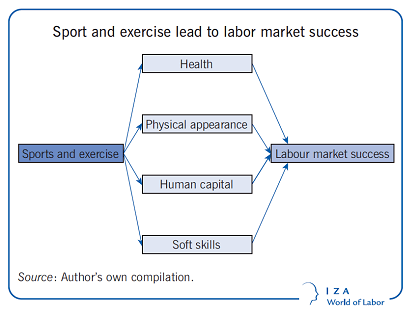
Many public policy campaigns aim at encouraging people to be more physically active. Sports and exercise enhance physical and mental health, as well as soft skills like self-discipline, endurance, stress management, and team work. All of this can also boost an individual’s productivity and earnings in the labor market. An IZA World of Labor article by Michael Lechner therefore suggests including sports in active labor market programs.
Why do sports? The economist’s view

From a theoretical perspective, there are several reasons why exercising is beneficial. First, sports is (usually) enjoyable and thus yields an immediate reward. Second, there is also an investment motive. Exercise leads to better fitness and an improved physical appearance. This is no only relevant in the labor market but also, for example, in the marriage market.

Since doing sports is time-consuming, the resulting welfare effects are ambiguous: If sports and exercise crowd out other “non-productive” activities such as watching TV soaps or playing computer games, overall productivity gets enhanced. However, if people give up educational activities or even work hours to play sports, reduced earnings might outweigh positive productivity effects. And if physical training is too intense, it may hurt concentration and effectiveness on the job.

What does the literature say?

Almost all existing studies on the topic find a positive correlation between sports and labor market performance. There are, however, possible shortcomings when using surveys because people tend to overstate their activity levels, and surveys may not run long enough to establish causal links between exercising and labor market performance.

An experimental study for Sweden circumvents the problems of long-term impacts, positive selection, and measurement issues: 8,000 job applications were sent to employers, with information about different types of sports and exercise randomly added. The study showed that including a statement about being physically active increased call-back rates by two percentage points.

Using German panel data from the SOEP, researchers found that men who do sports at least once a week earn five percent more on average than men who do not. Women who were involved in sports at age 15 earn about six percent more later in life. Furthermore, a positive correlation between engaging in physical activity and moving from unemployment to employment for women with at least three years of work experience is established.

For other countries, similar results apply. The evidence for positive labor market effects of sports and exercise is strong, especially for earnings. Earnings effects range from about 4 to 17 percent.

What are the policy implications?

It is apparent that increasing the general level of physical activity is very likely to boost productivity among employees at all levels. Governments may also want to include among their active labor market policies encouragement of sports and exercise for unemployed people whose productivity is comparably low and whose participation in these activities is below optimum, in order to increase the re-employment chances for this group.

  • See selected press coverage in German language:
    BILD (Germany), Der Standard (Austria), Blick (Switzerland)
image source: pixabay

Filed Under: Research Tagged With: active labor market policy, earnings, employment, fitness, health, IZA World of Labor, soft skills, sports

When parents divorce, children’s personality development suffers

February 17, 2015 by admin

Disruptions in family structure are suspected to impede the development of children’s personality, with far-reaching consequences for school performance and labor market success. An IZA paper by Tyas Prevoo and Bas ter Weel adds to the empirical evidence by investigating the effect of parental separation, divorce and death on personality development of British children.

The authors demonstrate that increases in favorable personality traits, such as self-esteem or internal locus of control (the extent to which individuals believe they can control events affecting them), are lower for children experiencing family disruptions during adolescence. At the same time, these children are more likely to develop behavioral problems. The effects on personality development are smaller when children are older at the time of the experienced disruption.

Parental divorce has as stronger impact than separation and even death of a parent. However, the effects differ by gender: The results suggest that boys are on average more negatively affected by parental death than girls, while girls seem to suffer more from a separation or divorce of their parents.

As another recent IZA paper shows, behavioral problems caused by family disruptions can affect other children through peer effects: According to the study by Jannie H. G. Kristoffersen, Morten Visby Krægpøth, Helena Skyt Nielsen and Marianne Simonsen, boys with divorced parents have a negative influence on their classmates’ test scores.

image source: pixabay

Filed Under: Research Tagged With: children, death, Development, divorce, family, parents, personality

New volume on gender convergence in the labor market

February 16, 2015 by admin

For most countries in recent years women’s labor force participation has risen while men’s has fallen. At the same time, fertility rates declined, marriage rates decreased, and the average husband-wife age difference shrunk slowly but steadily. The number of single mothers rose, and women’s schooling levels surpassed men’s in some countries.

Along these trends, men’s and women’s wages and occupational structures have been converging. Research published in the new volume of Research in Labor Economics, edited by IZA Fellows Solomon Polachek and Konstantinos Tatsiramos together with IZA Director Klaus F. Zimmermann, investigates whether these trends are related, and whether we indeed observe gender convergence in the labor market.

One explanation given for the gender wage gap is the division of labor in the home. According to this argument, husbands specialize in market work whereas their wives specialize more in home activities, especially when they face family constraints such as the presence of children. As a result, husbands work a greater portion of their lives, invest more in human capital, and attain higher wages.

But why are husbands the breadwinners and women the homemakers?

One of the studies contained in the current Research in Labor Economics volume proposes a new explanation. The idea is that men have a comparative advantage in the market even at the very start of their marriage because they are typically older and more educated than their wives, and thus earn more even if there was no discrimination. Data from 200 countries indicate this is the case in all but San Marino. On average husbands are over two years older than their wives, but the age difference is as large as nine years, especially in less developed countries. The demand for children exacerbates these differences. Since women have limited years of fecundity, a high demand for children strengthens men’s demand for younger less educated wives. Over time, as fertility decreased, the husband-wife age gap narrowed, division of labor lessened, and the gender wage and occupational disparities diminished.

Long parental leave may reinforce the glass ceiling

Although the wage gap between men and women has been narrowing, there still remains a substantial difference. One important question is whether government policies are effective in reducing the gap. One such policy is family leave legislation designed to subsidize parents to stay home with newborn or newly adopted children. One of the RLE articles shows that for high earners in Sweden there is a large difference between the wages earned by men and women (the so-called “glass ceiling”), which is present even before the first child is born. It increases after having children, even more so if parental leave taking is spread out. These findings suggest that the availability of very long parental leave in Sweden may be responsible for the glass ceiling because of lower levels of human capital investment among women and employers’ responses by placing relatively few women in fast-track career positions. Thus, while this policy makes holding a job easier and more family-friendly, it may not be as effective as some might think in eradicating the gender gap.

The issues explored by the other eight studies in this volume include patterns in lifetime work, gender complementarities, career progression, and the gender composition of top management.

Filed Under: Research Tagged With: gender, parental leave

Immigrants and host countries benefit from liberalized access to citizenship

February 12, 2015 by admin

Politicians, the media, and the public express concern that many immigrants fail to integrate economically. Research shows that the option to naturalize has considerable economic benefits for eligible immigrants, even in countries with a tradition of restrictive policies. An article by Christina Gathmann published in IZA World of Labor shows that the benefits of naturalization for first-generation immigrants are significant.

Citizenship results in higher wage growth, more stable employment relationships, and increased upward mobility into better-paid occupations and sectors. A better assimilation of immigrants in the labor market in turn also benefits destination countries through fiscal gains and better social cohesion. As such, liberalizing access to citizenship could be a key policy instrument toward improving the rate of economic integration of immigrants in the host country.

Germany is a case in point: In 2000, the country shortened the waiting period for immigrants to become eligible for citizenship from 15 to eight years of residence in Germany. The gains from easier access to citizenship are particularly apparent among immigrants from poorer countries and among women. In contrast to other countries like France, however, acquiring German citizenship seems to have no effect on labor market participation.

See also the German media coverage in DIE WELT.

image source: pixabay

Filed Under: Research Tagged With: citizenship, employment, Germany, immigration, IZA World of Labor, labor market, migration, naturalization

  • Previous Page
  • Page 1
  • …
  • Page 47
  • Page 48
  • Page 49
  • Page 50
  • Page 51
  • …
  • Page 69
  • Next Page

Primary Sidebar

© 2013–2025 Deutsche Post STIFTUNGImprint | Privacy PolicyIZA