
• Skip to primary navigation
  • Skip to content
  • Skip to primary sidebar

IZA Newsroom

IZA – Institute of Labor Economics

  • Home
  • Archive
  • Press Lounge
  • DE
  • EN

Early school tracking: no long-term impact on labor market outcomes

January 31, 2014 by admin

School tracking systems, which allot students to certain school types according to their ability, seek to improve efficiency in education by tailoring curricula to students’ needs. Yet, early tracking bears the risk of misallocating students, as information about their full academic potential may be incomplete at the time of tracking. This risk of misallocation is likely to be higher the younger the age at which children are tracked.

Germany’s school system tracks students at the particularly young age of 10, and has therefore often been criticized for perpetuating disadvantage. However, so far there is no conclusive evidence that pupils who are at the threshold between two tracks (and therefore very similar in terms of their academic potential) experience different career outcomes when they are tracked in a higher versus a lower track. Whether, and to what extent such differences are to be expected depends on a very important, but nevertheless often overlooked feature of tracking systems: the possibility to revise initial tracking decisions at a later stage.

In a recent IZA Discussion Paper, Christian Dustmann, Patrick A. Puhani and Uta Schönberg investigate the effects of being tracked into a higher vs. a lower track at age 10 on long-term labor market and educational outcomes. Comparing students of similar ability around the threshold between a higher and a lower track, they find no difference in terms of completed education or long-term labor market outcomes.

This surprising finding is even more remarkable as these children have been exposed to very different learning environments for about 5 years. The authors show that this is due to the built-in flexibilities in the German tracking system, allowing children to up- or downgrade after grade 9/10 and explaining why there are no long-term effects of initial track misallocation for students at the margin between two tracks.

According to the authors, two important conclusions emerge from this research. First, when evaluating tracking systems, it is important to consider not only the potential misallocation of pupils across tracks, but also the flexibilities in the system that allow students to remedy initial track choices at a later stage when more information about their academic abilities is available. These flexibilities are an important, though often overlooked, feature of the German education system. Second, the research shows more generally that substantial disadvantages in terms of teaching curriculum and peer exposure do not need to have long-term consequences, as long as the education system allows revising initial choices at later stages. This second implication is not only relevant for tracking systems, but for education systems more generally.

Filed Under: Research Tagged With: education, human capital, labor market outcomes, school choice, tracking system

Soccer motivates the unemployed

January 27, 2014 by admin

International soccer tournaments attract enormous attention in most countries. Germany is one country in which these soccer tournaments are especially salient: media coverage is very high during the tournaments and the whole nation seems to be obsessed with the performance of the “Nationalmannschaft” — the German national team. Given all the attention and excitement, people have been speculating whether events like the FIFA World Cup or the UEFA Euro Cup also have economic consequences — to be sure, in standard economic theory they shouldn’t.

A new discussion paper by Philipp Doerrenberg and Sebastian Siegloch, forthcoming in Economics Letters, analyzes whether the excitement of the soccer-fanatic German population affects the labor market, in particular the behavior of unemployed people. Looking at all World and Euro Cups from 1984 to 2010, they find that tournaments have a substantial and important economic impact: unemployed individuals are more motivated to work after a tournament. They plan to pick up a job earlier, they would rather work full-time than part-time, and they seem to be more confident, which is reflected by their perception that it will be easier to find a job and by their higher wage demands in future job negotiations. In addition, the authors find that people feel healthier after a soccer tournament.

Filed Under: Research Tagged With: FIFA World Cup, health, job search, motivation, reservation wage, soccer, sports event, subjective well-being, UEFA Euro Cup, unemployed

Global warming: one hot day costs up to 70 cents per capita

January 24, 2014 by admin

With rising temperatures, sea levels and more and more episodes of extreme weather, most people agree that the global climate change is among the severest problems mankind will have to face in the next decades, and potentially centuries. Yet, there is surprisingly little evidence on the impact of (extreme) weather on health.

A new IZA discussion paper by Nicolas R. Ziebarth, Maike Schmitt and Martin Karlsson comprehensively assesses the immediate effects of extreme weather conditions and high concentrations of air pollution on population health. For Germany and the years 1999 to 2008, the authors link data on all hospital admissions — 170 million in total — and all deaths (8 million) with weather and pollution data reported at the day-county level.

They find that extreme heat significantly increases hospitalizations and deaths. In contrast, extreme cold has a negligible effect on population health. High ambient concentrations of particulates (PM10), high ozone (O3) and nitrate (NO2) are associated with increased hospitalizations and deaths, particularly when ignoring simultaneous weather and pollution conditions.

The authors find strong evidence that heat mostly affects humans in bad health conditions who, in the absence of heat, would have likely died shortly after. They, however, demonstrate that extremely high temperatures do not lead to a permanent increase in hospitalizations and deaths. Thus, the instantaneous heat-health relationship is only present in the short term. The study calculates that one “Hot Day” with a temperature higher than 30 °C (86 °F) triggers short-term adverse health effects valued between $0.10 and $0.68 per resident.

Filed Under: Research Tagged With: advanced economies, ambient air pollution, climate change, economic costs, extreme weather, global warming, health, NO2, O3, PM10, pollution

Migrants are different from the average – but does it matter?

January 20, 2014 by admin

Migrant self-selection – the question who migrates and who does not – is one of the most fundamental issues in the study of migration and often appears in the political discussion on skill-selective migration policies. But despite the vast evidence of the existence of migrant self-selection, its consequences are far from clear. Does it really matter who leaves a country? And if so, who is most affected? A new IZA Discussion Paper by Costanza Biavaschi and Benjamin Elsner answers these questions by estimating the impact of migrant self-selection on welfare in the sending and receiving countries. The authors compare GDP per capita under the observed migration pattern to a simulated scenario, in which the skills of the migrants resemble those of the home population, while the number of migrants remains constant.

Two episodes of mass migration to the US serve as examples: the migration from Norway in the 1880s and the migration from Mexico in the 2000s. Norwegian emigrants were positively selected – they had higher skills than people who stayed in Norway – whereas Mexican emigrants were negatively selected. In both periods, the authors find virtually no aggregate effect in the US, while the effects are large in the sending countries: migrant selection decreases Norwegian GDP by 0.3%, and increases Mexican GDP by almost 1%. 1% may not seem like a large impact at first, but the authors show that it is as large as the difference in GDP per capita between zero migration and the current level of migration.

Yet, self-selection only matters if a number of conditions are met. The migration flow has to significantly change the population size, and the skills of migrants have to be sufficiently different from those of stayers. This was the case in Mexico, but not in Norway. In the US, the effect is zero due to the low transferability of migrant skills. Mexican immigrants are so heavily concentrated at the lower end of the US skill distribution that an improvement of their skills due to a more positive skill selection would not have any aggregate effect in the US.

Overall, the results suggest that it matters who migrates, but only for the sending countries, and only under certain conditions. Unless the level of immigration is much larger than it is today, migrant selection has no impact on GDP per capita in the receiving countries.

Filed Under: Research Tagged With: GDP, Mexico, migrant self-selection, migration, Norway, skill selection

First up, then down: life satisfaction of young adults

January 17, 2014 by admin

Early adulthood is a time of important transitions that shape the future of young adults. How do these transitions affect well-being, and to what degree can they account for the life satisfaction path followed during young adulthood? To answer these questions, Malgorzata Switek analyzes data on Swedish young adults between 22 and 40 years of age and relates the observed changes in well-being to the main life transitions undergone during that period. She finds that life satisfaction increases in the 20s, peaks at age 30 to 32 and declines thereafter. The paper shows that common transitions can explain this life satisfaction pattern, which looks like the inverted letter U: Between ages 22 through 30, most young adults form partnerships – either by marriage or cohabitation – start their first jobs and become parents. All these events are associated with increasing life satisfaction – especially with respect to the financial and family situation. Yet, after age 30 partnerships are more and more under strain: monetary burdens increase, and parenting older children seems to be more exhausting, which leads to an overall decline in life satisfaction.

Filed Under: Research Tagged With: family situation, financial situation, life satisfaction, young adults

Fighting crime: incarceration does not always help

January 13, 2014 by admin

Does putting people in jail make the world a safer place? A new IZA discussion paper by Magnus Lofstrom and Steven Raphael gets after this question by evaluating the effects of one of the largest declines in a state’s incarceration rate in U.S. history on local crime rates. The authors study the consequences of a recent reform in California that caused a sharp and permanent reduction in the state’s incarceration rate. The paper shows very little evidence of an effect of the large reduction in incarceration rates on violent crime. On the other hand, property crime, in particular auto theft, increased modestly. The estimates suggest that each prison year served among the population of California prevents roughly one to two property crimes per year and little to no violent crime. This implies that the return on one additional dollar spent on prison expenditures is below 50 cents and thus quite low. The estimates of the prison-crime effect are smaller than the findings of previous studies, which analyzed changes of the incarceration rate when the rate was at a much lower level. Hence, the authors suggest that putting people in jail makes the world safer, but that this positive effect quickly declines as incarceration rates increase.

Filed Under: Research Tagged With: California, crime, incarceration, jail, safety, United States

More midwives, fewer doctors: a safe way to cut medical costs?

January 10, 2014 by admin

Medical expenditures increased tremendously over the last few decades throughout the entire developed world. This is especially true for spending on newborns. Against this backdrop, a new IZA Discussion Paper by N. Meltem Daysal, Mircea Trandafir and Reyn van Ewijkand assesses the potential to save medical costs by investigating the impact of doctor supervision – as opposed to midwife supervision – on the short-term health of low-risk newborns in the Netherlands. The Dutch system is unique in its division between the primary care provided by midwives and the secondary care provided by gynecologists/obstetricians (OB/GYN). Women without known medical risk factors start their pregnancy under the supervision of a midwife and stay under the supervision of a midwife as long as no additional risk factors appear. Midwives, who are prohibited by law from performing any medical intervention, also supervise the delivery where no OB/GYN is present. However, if labor is premature, that is before 37 completed gestational weeks, women should be sent to a doctor who will supervise the delivery. This “week-37 rule” generates a discontinuity in the probability of being treated by an OB/GYN at gestational week 37 among low-risk women. Exploiting this cut-off, the authors find no positive health benefits for the newborn due to the supervision of an OB/GYN, although the rates of neonatal intensive care unit admissions among births supervised by obstetricians increased. These results indicate potential cost savings from increased use of midwifery care for low-risk deliveries. Hence, the findings are relevant to the ongoing policy debates on cost reduction through increased use of physician extenders as a growing number of women in developed countries are giving birth with a midwife.

Filed Under: Research Tagged With: cost savings, doctors, health economic, medical costs, midwives, Netherlands, pregnancy

Making work more attractive: increase the VAT and reduce labor taxes

January 7, 2014 by admin

What is the right mix between direct taxes, such as personal income taxes or social security contributions, and indirect taxes like the Value Added Tax (VAT)? This question is controversially discussed in both the economic literature as well as among policy-makers, since direct and indirect taxes affect work incentives and people’s budgets in different ways. Proponents of indirect taxes argue that shifting taxation from labor to consumption would increase work incentives by lowering marginal tax rates and hence increase competitiveness and employment. Opponents however object that increasing consumption taxes would increase income inequality, since the ratio of consumption taxes paid over disposable income is typically higher for low-income households. Hence, a shift from direct to indirect taxes is associated with the classical trade-off between efficiency and equity. This implies that the extent to which potential increases in employment incentives are outweighed by adverse distributional impacts is an empirical question.

In a recent discussion paper, IZA researchers Nico Pestel and Eric Sommer provide such an analysis and investigate the mechanisms of the efficiency-equity trade-off for Germany. Using IZA’s behavioral microsimulation model IZAΨMOD, they simulate the effects of an increase in the standard VAT rate while simultaneously reducing either personal income taxes (PIT) or social security contributions (SSC). They show that reducing progressive income taxation and increasing the VAT leads to a higher level of inequality: rich households benefit while low-income earners, pensioners and unemployed are found to be the main losers in such a scenario. However, reducing social security contributions instead of income taxes yields distributional outcomes, which are far less severe, since SSC are themselves a regressive form of taxation.

Pestel and Sommer therefore conclude that reducing payroll taxes seems particularly promising, given that SSC reductions affect household budgets already at a rather low income level, and therefore bear a higher potential for increasing work incentives than lowering income tax rates for the rich. This is especially true for a country like Germany with a comparatively high level of payroll taxes. Moreover, from a distributional perspective, reducing social security contributions is superior to a shift from personal income taxes. Still, shifting taxes from labor to consumption would imply negative distributional effects for a significant share of the population, mainly pensioners, who do not benefit from lower direct taxes but would be burdened with higher consumption taxes. For that reason, the authors believe that policy-makers would have to work out compensations for the losers to make such a reform politically feasible.

Filed Under: Research Tagged With: consumption, direct taxation, employment, Germany, income distribution, income taxation, indirect taxation, labor, microsimulation, redistribution, social security contributions, VAT, work incentives

Basketball coaches are neoclassical: evidence from the NBA

January 3, 2014 by admin

In economics there is some disagreement on whether costs that have been incurred and cannot be recovered matter for decision making. While neoclassical economists would argue that bygones are bygones that should not matter, behavioral economists believe that sunk costs do affect future decisions. A new IZA discussion paper by Daniel Leeds, Michael A. Leeds and Akira Motomura takes this economic question to the sports arena by examining the playing time of basketball players in the National Basketball Association (NBA). In the NBA, new young players are recruited via the draft where each team chooses a player from the pool of eligible players according to a pre-determined order. Thus, the team which is allowed to make the first pick has the best chances to select the most skilled player. Having incomplete information of the young players’ abilities, teams might, however, make a bad pick and choose a player who turns out to be not very helpful for the team. In the neoclassical paradigm, a team should give the greatest playing time to its most productive players regardless of how – and at which draft position – they were acquired. However, sports commentators constantly report that teams are committed to specific players because they had used high draft choices or paid high prices to obtain them, which would be more in line with the reasoning of some behavioral economists.
In the paper, the authors investigate whether players picked early in the draft process, that is, those who were relatively costly, are treated differently from otherwise identical players who are chosen later. The authors find no evidence that NBA teams commit more to players whom they picked early in the draft process. The results show that players drafted early receive no more playing time – and, in some situations, even less playing time – than other players. Hence, the authors conclude that their findings strongly support the neoclassical outlook.

Filed Under: Research Tagged With: basketball, behaviroal economics, bounded rationality, decision making, homo oeconomicus, NBA, neoclassical economics, sports, sunk costs

Overcoming the educational mismatch

December 23, 2013 by admin

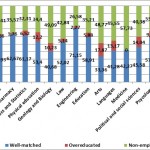
Employment shares by field of study 5 years from graduation (2010)

Nobel laureate Chris Pissarides suggests that in times of recession it’s good for young people to acquire more education. Nonetheless, this remedy may be risky if later on young people find a job for which they are overeducated or overskilled. A new IZA Discussion Paper by Floro Ernesto Caroleo and Francesco Pastore provides the first available evidence based on AlmaLaurea graduates in Italy that for a large number of them the educational mismatch is not a transitory phenomenon: as shown in the figure (click to enlarge), five years after graduation 11.4% and 8% of graduates still experience overeducation and overskilling, respectively. Most arts degrees and social sciences, but also Geology, Biology and Psychology are associated with both types of mismatch. Moreover, the non-employment share is dramatically high for most degrees, with an average of 40%. It ranges between a minimum of 27% in the case of Engineering and a maximum of about 50% in the case of Geology and Biology.

Why are so many graduates non-employed or overeducated/overskilled? The main factor is certainly the low demand for skills typical of the Italian economy, still largely based on traditional manufacturing and services. Nonetheless, keeping constant the level of demand, is there any unexploited component of it which could be reactivated intervening on the supply side? A recent strand of the literature tends to see overeducation/overskilling as consistent with, rather than in contrast to the human capital theory. In other words, overeducation would not be a signal of excess schooling, but rather of a lack of the work-related component of human capital, which makes it hard for firms to employ young graduates. Alternatively, overeducation could be consistent with the job competition model or of the strong competition for jobs in presence of a constant demand for skills that leads graduates to accumulate more and more education to an extent that is in some cases more than that requested to get a job.

Overall, the evidence provided in the paper is consistent with the hypothesis of a low demand for skills typical of the job competition explanations. Nonetheless, overeducation/overskilling is clearly strongly associated also with a very low quality of human capital, while being reduced by curricula including some work related skills. In other words, while increasing in the educational dimension, the human capital of Italian graduates does not sufficiently develop in terms of the competences which are directly requested in the labor market. In turn, this tends to reduce the ability of graduates to access high quality jobs and might hence suggest that there is a potential demand for job specific competences in the labor market which remains unexploited. Some injection of the German dual principle might hence be useful to reduce the educational mismatch.

Filed Under: Research Tagged With: anonymized job application, degrees, dual principle, education, employment, graduates, human capital, mismatch, non-employment, overeducation, overskilling, skills

  • Previous Page
  • Page 1
  • …
  • Page 58
  • Page 59
  • Page 60
  • Page 61
  • Page 62
  • …
  • Page 69
  • Next Page

Primary Sidebar

© 2013–2025 Deutsche Post STIFTUNGImprint | Privacy PolicyIZA