• Skip to primary navigation
  • Skip to content
  • Skip to primary sidebar

IZA Newsroom

IZA – Institute of Labor Economics

  • Home
  • Archive
  • Press Lounge
  • DE
  • EN

Identifying policy levers in education settings

October 14, 2019 by Mark Fallak

Although it might not appear to be the most obvious topic for an economist to work on, the analysis of determinants of educational success has become one of the fastest growing subfields of economics. The IZA program area on the Economics of Education connects many of the leading researchers in this area and its 4th annual workshop, held in Bonn recently, has again proven to be a major success story.
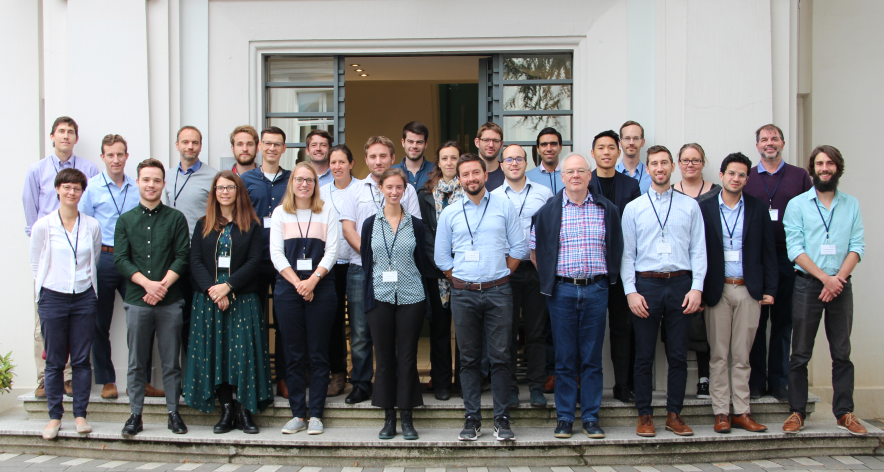
Organized by Ian Walker and Ingo Isphording, this years’ workshop brought together 25 international researchers to present state-of-the art advances that reflected the broad range of policy-relevant topics economists care about in understanding the production of human capital, starting from what makes parents choose the right school for their offspring, to incentivizing teachers to bring out the best in their students, to how exposure to violence can affect student performance.

The keynote speech was given by John N. Friedman, who demonstrated the potential behind using big data approaches on tax data to dig into spatial variations of intergenerational mobility, and the role of higher education in shaping opportunities to leave poverty.

Why schools are segregated

Sándor Sóvágó presented evidence on school segregation in the Netherlands. Based on administrative data from Amsterdam secondary schools, he identified the assignment of students to schools based on their ability, and differences in the preferences of households as the main sources of segregation. His results imply that while quotas for minority students would reduce segregation, this effect would come at a large expense of student welfare by assigning students to schools against their preferences.

How student fees affect study behavior

Jan Marcus analyzed how the introduction of student fees in Germany affected the study behavior of current students. His results showed that even modest fees have important incentive effects on students and shorten their duration of studies. Students who have to pay fees increase their study effort and time investment. For students not yet enrolled though, student fees very well have negative effects by discouraging them from undertaking tertiary education.

Taken together, the presentations (see the workshop program for a full list) led to lively discussions and exchange among the mix of junior and senior researchers, highlighted the importance of education as the main driver for labor market success later in life, and pointed to important but often under-utilized policy levers.


Filed Under: IZA News, Research Tagged With: education

Matching workers and jobs online

October 8, 2019 by Mark Fallak

Leveraging the internet as a data source of social science, and labor economics in particular, is the main research mission of IDSC, IZA’s research data center.

Market transactions, including the labor market (e.g. job boards) but extending into the marriage market (e.g. Tinder), the transportation (e.g. Uber) or the information market (e.g. Google) and beyond, take place online because information and communications technology naturally optimizes the main purpose of markets: the matching of supply and demand.

While for market participants (end users) participation is non-invasive through the adoption of personal technology (smartphones bring markets in their pocket), digital technology allows market operators to experiment live and to seamlessly record transactions with rewind and replay capabilities so that studying and understanding markets depends heavily on access to such transaction data.

Organized by Nikos Askitas and Peter J. Kuhn, a two-day workshop brought together economists and computer scientists from academia and practice to showcase research with data from internet job boards, one of the main modes of matching facilitation in labor markets worldwide today. The workshop, jointly organized and financed by the IDSC of IZA and the Center of Advanced Internet Studies (CAIS), was hosted by CAIS in Bochum.

Future work
Past work

Participants had a chance to interact and program industrial robots and other intelligent industry 4.0 means of production during a visit of the University of Bochum’s Learning Factory, which is a real industrial production site as well as a multidisciplinary training and education site. They were also given a guided tour of the German Mining Museum in Bochum, which hosts several generations of functioning mining technologies in a tunnel system 17 meters below the earth.

See the workshop program for a full list of presentations, some of which are summarized below.

As markets thicken, so does the plot

In her presentation on “Search, Selectivity and Market Thickness in Two-Sided Markets,” Jessica Yu reported results from field experiments on an internet dating platform that manipulate the participants’ perceptions of market thickness.  As expected, participants raise their matching standards in response to increases in participation on the “other” side of the platform (e.g. men versus women, or firms versus workers), and reduce their standards when participation on their own side increases.  Estimates from a two-sided search model suggest that increases in overall participation raises welfare.

Changes in the supply and demand for skills

Alicia Modestino presented joint work using a novel database of 87 million online job postings aggregated by Burning Glass Technologies. The authors test and verify the hypothesis that changes in skill requirements within some occupations have reduced the matching efficiency within some classes of jobs, which contributed to the outward shift in the Beveridge Curve since 2007, i.e., higher unemployment coinciding with more vacancies.

Labor market tightness and wages

Reamonn Lydon and his co-author found that “big” data from Indeed closely track vacancy data from firm-level official surveys while they are delivered in a more timely fashion. Moreover, they are more granular in the information they contain about what jobs employees search for, what skills employers want, and what the wage levels of various roles are. Controlling for observable job characteristics and traditional tightness measures, such as regional unemployment, the paper finds that the number of clicks on a posting is a strong predictor of wages posted in job vacancies.

+++

The 3rd IDSC of IZA workshop on matching jobs and workers online, co-financed by and organized with the University of Luxembourg, will take place at IZA in Bonn on September 18-19, 2020.

Filed Under: IZA News, Research Tagged With: internet data, labor demand, labor supply, matching, online job boards

New research team structure at IZA

August 19, 2019 by Mark Fallak

IZA has established six new in-house research teams to further sharpen our research focus. Within our four general areas of expertise, these teams will explore key aspects of the changing world of work from a national and international perspective.

Shaping a joint research agenda will enable the teams to exploit the synergies needed to produce top-quality research output. They also benefit from collaboration opportunities with over 1,600 members of our global IZA research network.

Our goal is to respond swiftly to new research questions in academic science and policy advice in order to deliver evidence-based answers. Led by experienced researchers, the teams will cover topical issues ranging from digitalization and skill formation to institutional changes, strategic policy challenges, and the influence of human behavior on the effectiveness of labor market policies.

  • The “Digital Transformation” team analyzes how the trend towards digitalization and automation affects the labor market, and how firms and workers adapt to these technological changes.
  • The “Skill Formation” team examines the competencies that the workers of the future will need in order to succeed in changing labor markets.
  • The “Personalized Labor Policy” team studies how to improve the effectiveness of labor market programs by tailoring policy instruments to the preferences, backgrounds, and needs of different population groups.
  • The “Policy Challenges” team focuses on the implications of the changing world of work for the design and reform of labor market institutions.
  • The “Labor Market Institutions” team adopts an international comparative perspective in exploring how institutional arrangements and reforms influence labor market structures and dynamics.
  • The “Structural Policy Evaluation” team develops a dynamic simulation model for ex-ante policy evaluation based on a behavioral approach.

Strengthening the institute’s profile in empirical labor economics, our new research teams underscore IZA’s role as a “bridge-builder” that aims at expanding the scientific knowledge base and making it accessible for labor market policy practitioners.

Filed Under: IZA News

IZA Journals now published by Sciendo

July 16, 2019 by Mark Fallak

The market for scholarly journals has been rapidly changing towards electronic formats. Among global research institutions in economics, IZA was one of the first to pursue a strictly open-access strategy for our own peer-reviewed journals. We now have three well-established electronic journals: IZA Journal of Labor Economics, IZA Journal of Labor Policy, and IZA Journal of Development and Migration.

While the readership of printed or traditional electronic journals is limited by costly subscriptions, open-access publishing provides immediate worldwide access to all articles, thereby stimulating the exchange of knowledge while maintaining highest quality standards.

Reaching a wider audience and gaining more citations

A recent IZA discussion paper by Seth Gershenson, Morgan S. Polikoff and Rui Wang found that article downloads increased by 60 to 80 percent when the paywall to several prestigious educational research journals was unexpectedly taken down for two months. The researchers conclude that open access makes scholarly articles available to a substantially larger number of academics and practitioners while at the same time increasing the probability of the work being cited.

By transferring the IZA Journal Series to Sciendo as our new publisher, we have now taken the next step towards establishing the open-access principles in the field of labor economics. Owned by the renowned publishing house De Gruyter, Sciendo has specialized in publishing services suited to the needs of journal owners in academia. Its lean production facilitates smoother submission and article processing, faster publication and circulation of articles, as well as substantially reduced publication costs.

The main benefits of our move to Sciendo are:

  • Simplified submission process via Editorial Manager
    Sciendo has set up clearly structured and simple processing via Editorial Manager allowing for hassle-free submissions within a few minutes.
  • Reduced publication fee: €975 instead of €1250
    A growing number of institutions in the field of economics explicitly offer funding for open access publication. While IZA does not expect authors to pay publication fees from their personal funds, we aim at exploiting available funds at research institutions and third party resources. If no other funds exist, IZA will cover the publication costs. The IZA Journals do not charge any submission fees.
  • Well-organized article processing
    Authors, editors and reviewers will benefit from a streamlined workflow that will also further speed up publication.
  • Automated plagiarism detection
    Sciendo implemented an efficient routine to check every submitted paper for plagiarism to meet IZA’s high standards of research integrity. The results will be kept strictly confidential and only shared with the authors if necessary.

We are confident that this will further increase the attractiveness of the IZA Journals as a scientific resource with high visibility and impact.

Filed Under: IZA News Tagged With: academics, journals, open access, peer review, publications

Improving jobs outcomes in developing countries

June 24, 2019 by Dajan Baischew

The global economy faces massive transitions due to automation and the “Fourth Industrial Revolution.” Mobilizing investment to create better jobs and improve access for disadvantaged groups has never been more important – especially in developing countries.

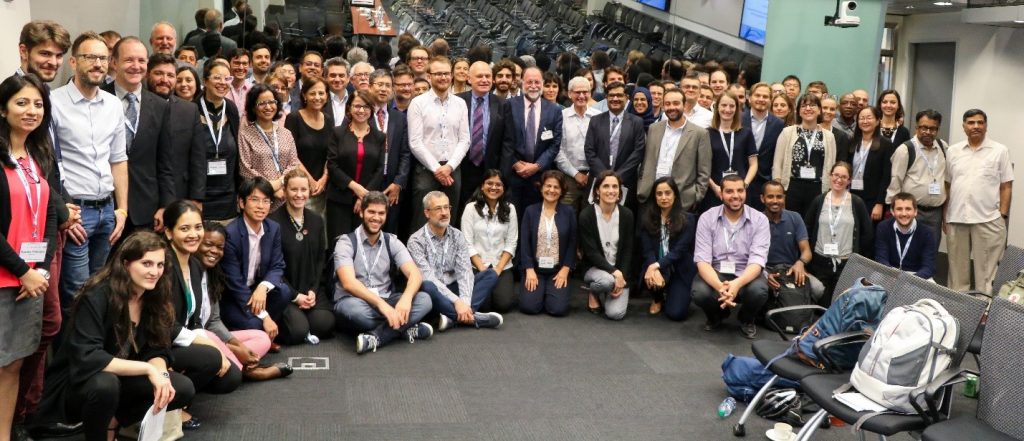
Focused on Improving Jobs Outcomes in Developing Countries, the third edition of the Jobs and Development Conference was at World Bank headquarters in Washington, DC on June 6-7, 2019. It was organized by IZA together with the World Bank and the five partner institutions of the Network on Jobs and Development.

“This conference opened space for policymakers and labor economists to exchange ideas about what works for improving jobs outcomes and how developing countries are shaping up to tackle the future of work agenda,” said co-organizer Gary Fields (Cornell University and IZA).

The conference, attended by more than 100 registrants as well as by delegates from Washington-based institutions, kicked off with a policymakers’ panel, where Prakash Loungani (IMF), Indhira Santos (World Bank), Steven Ayres (DFID), and Kunal Sen (UNU-WIDER) discussed how to improve the design of labor market institutions in developing countries to accelerate the growth of good jobs and promote universal access to social protection; how to improve jobs outcomes for women; and ways to transform agriculture to generate better jobs in Africa.

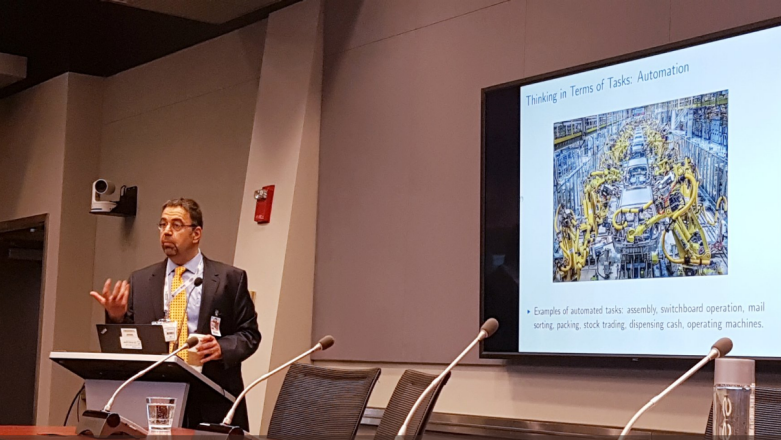
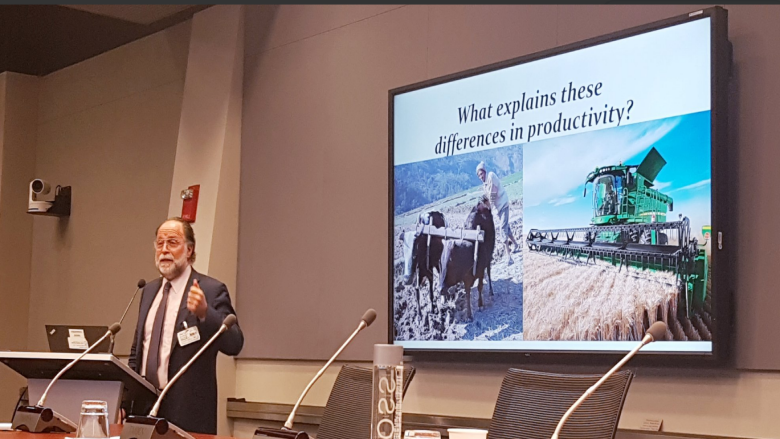
Keynote speeches from MIT’s Daron Acemoglu and Harvard’s Ricardo Hausmann made the case for paradigm shifts in how we think about economic growth, jobs, productivity, wages, and the future of work – both in developed and developing countries.

Automation and the future of work

Acemoglu emphasized how automation is transforming the nature of work. Repetitive tasks previously performed by humans can now be automated. Contrary to what many pessimists have predicted, that isn’t making work redundant. Instead, other new tasks are being created, where humans have a comparative advantage. According to Acemoglu, the real threat to labor does not come from brilliant new technologies, but from “so-so” technologies that are “just good enough to be adopted but not so much more productive than the labor they are replacing” (read more in a recent IZA Newsroom article).

Development Scrabble

Hausmann highlighted how complex combinations of inputs lie at the heart of productivity and income growth. The problem is that “you run out of some inputs before others.” Hausmann laid out an extended metaphor of “Development Scrabble” where letters equate to expertise (normally requiring both people and tools); and words equate to the innovations that result from new combinations of letters. As a country or region assembles more letters, the possible combinations grow exponentially. Seen this way, development is a process of increasing complexity.

Parallel sessions included another sixty-five papers. Fifteen presentations were organized by the partner institutions, while fifty papers were chosen from more than 200 submissions in response to the Call for Papers. The program included researchers from more than twenty countries. Annual Jobs and Development Conferences are planned for the next five years in countries around the world.

Filed Under: IZA News, Research Tagged With: Development, future of work

Causes, costs and benefits of migration

May 31, 2019 by Dajan Baischew

For the 16th Annual Migration Meeting, the organizers chose a location with one of the richest histories of migration in the world, namely Ireland. Hosted by the UCD Geary Institute for Public Policy, the meeting brought together 16 presenters discussing the latest research in the economics of migration in a two-day workshop.

The highlight of this year’s workshop was the keynote by Prof. Sir Paul Collier from the University of Oxford, one of the leading development economists. In a thought-provoking lecture entitled “Sustainable Migration”, he focused on potential welfare costs of migration that cannot be explained by the standard models in labor economics and their implication for migration policy. One example is that immigration may induce firms to train domestic workers less, which leads to an under-investment in tacit knowledge. Another example is the location choice of high-skilled immigrants, who predominantly locate in large cities.

While migrants contribute to the success of cities, they are often the main beneficiaries of agglomeration rents while medium-skilled natives get priced out of large cities. As a consequence, migration may contribute to the growing divide between big cities and the periphery, which affects the social fabric in many countries. Despite some well-documented benefits of migration, it is important that these costs be measured and that they feed into the design of migration policy. Collier advocates a sustainable migration policy that minimizes the economic, political and social costs of migration for the sending and receiving countries.

Investigating refugee flows

A key theme of the meeting was the economic impact of refugee flows. Looking at the recent wave of Syrian refugees to Turkey, work by Onur Altindag shows that refugee inflows led to an increase in local economic activity by enhancing the productivity of existing as well as the creation of new firms.

Panu Poutvaara makes use of novel data on refugee flows to investigate the self-selection of refugees and irregular migrants in 2015 and 2016. He documents a strong positive selection of both groups; it is mainly the most skilled workers who flee to Europe while the less skilled remain behind.

Work by Dany Bahar shows that returning refugees can enhance economic growth in their country of origin. The paper looks at refugees from former Yugoslavia who were living and working in Germany before being repatriated after the end of the Balkan wars. The paper reveals a striking finding: industries that welcomed many returning refugees grew faster after the war and showed stronger export performance. This suggests that returnees brought back knowledge from Germany which had a large benefit for local companies.

Besides refugees, the presentations covered a broad range of topics such as the impact of high-skilled migrants on the labor market, the effect of sanctuary cities on law enforcement in the US, the effect of  migrant rights on the desire to emigrate, the effect of identity on the economic and social integration of second-generation immigrants, and the effect of teachers speaking the same foreign language on the test scores of immigrant children.

See the workshop program for a full list of presentations.

Filed Under: IZA News, Research Tagged With: illegal migration, immigration polices, labor market, migration, refugee

How environmental policies affect the labor market

May 27, 2019 by Dajan Baischew

Do environmental regulations actually destroy jobs? Will a cleaner environment improve people’s health, education and performance on the job? These were the key questions discussed at the 7th annual workshop of IZA’s “Environment, Health and Labor Markets” program held in Bonn. The program area focuses on the interaction between the environment and environmental policies with labor markets, health and human capital. Given that many politicians and people around Europe and the rest of the world have remained opposed or skeptical about environmental policies, addressing these highly policy-relevant issues with rigorous empirical research has become ever more important.

Air pollution and human capital formation

In his keynote presentation, Michael Greenstone (University of Chicago) showed that childhood exposure to air pollution has substantial negative consequences not only for people’s health and human capital accumulation in the long run. His research exploits China’s “Huai River Policy”, a natural experiment where the government provided free coal for heating during the winter months, but only north of a geographic line. This policy implies that people born north of the line are exposed to substantially higher levels of air pollution during childhood than those in the south. By comparing adults who were born just north of the line to adults born just south, the results show that the Huai River Policy causes people to get 0.8-1.0 fewer years of education and reduces incomes by 12-21%.

Adverse effects from childhood exposure to pollution on human capital accumulation are not unique to settings like China with extreme levels of air pollution. In her presentation, Claudia Persico (American University) uses data from Florida to compare students attending schools within one mile of a local industrial pollution site that opens or closes to students attending schools between one and two miles away. She finds that being exposed to air pollution is associated with lower test scores, increased likelihood of suspension from school, and increased likelihood that a school’s overall high stakes accountability ranking will drop.

Consequences for cognitive performance

Particulate pollution also affects people’s cognition. Juan Palacios (Maastricht University) presented his work using data on the performance of chess players combined with information on indoor conditions. By using a chess computer to evaluate the quality of moves in tournament games he finds that elevated levels of indoor air pollution substantially increases the probability of making an erroneous move and also increases the magnitude of errors. The impact becomes larger during phases of the game when players are under time pressure.

Against the background of global warming, the effects of rising average temperatures have received a lot of attention in recent research. Joshua Graff-Zivin (UC San Diego) showed that temperature plays an important role in high-stakes cognitive performance. His research uses data from the National College Entrance Examination in China, one of the most important higher education institutions in China. He finds that an increase in temperature decreases the total test score as well as the probability of getting into first-tier universities, which has potentially far-reaching impacts for the careers and lifetime earnings of students.

See the workshop program for a full list of presentations.

Filed Under: IZA News, Research Tagged With: climate change, climate costs, environmental policy, human capital, pollution

IZA Young Labor Economist Award goes to Leah Boustan and Philipp Kircher

May 13, 2019 by Mark Fallak

We are pleased to announce the 2019 IZA Young Labor Economist Award. This biennial prize is awarded to outstanding labor economists whose Ph.D. was received fewer than 15 years ago. The 2019 Award goes to Leah Platt Boustan (Princeton University) for her historical research on immigration, and to Philipp Kircher (University of Edinburgh and European University Institute) for his work on search, sorting and matching in labor markets.

“The Award thus typifies the tremendous breadth of what is classifiable as labor economics,” said Daniel Hamermesh, who chairs the IZA Prize Committee.  This year’s committee choosing the Awardees further consisted of Oriana Bandiera (LSE), Richard Blundell (UCL), George Borjas (Harvard), Pierre Cahuc (Sciences Po), Chinhui Juhn (Houston) and Shelly Lundberg (UC-Santa Barbara).

The Award contains a small monetary prize, which will be conferred during the IZA Reception at the ASSA Meetings on January 3, 2020, in San Diego, California.

Filed Under: IZA News Tagged With: IZA Young Labor Economist Award

Children benefit from school construction and conditional cash transfers

May 4, 2019 by Dajan Baischew

The 3rd Annual IZA Workshop on Gender and Family Economics was held jointly with the Adolfo Ibáñez University, Chile, on April 12 – 13, 2019. It was an excellent opportunity for researchers in Central and South America to become familiar with IZA and for the excellent research taking place in Central and South American to be exposed to a wider audience.

Among the many excellent papers, two in particular stood out. Richard Akresh evaluated the long-term impact of one of the largest school construction programs ever that took place in Indonesia in 1973. Exploiting variation across birth cohorts and districts in the number of schools built, the paper shows that education benefits for men and women persisted 43 years after the program. Exposed men are more likely to be formal (and non-agriculture) workers and to migrate. Women are more likely to migrate and have fewer children. The paper also shows evidence for transmission of the education benefits to children, particularly from mothers to daughters.

Florencia Lopez Boo evaluated the impact of a randomly assigned conditional cash transfer in Honduras. The paper shows significant and sizable (0.34 SD) impact of the cash transfer program on cognitive development in children aged 0-60 months. Families that received the “health” transfer, which targeted 0-5-year-old children only, benefited significantly from the program, whereas families receiving the “education” transfer, which targeted 6-18 year-olds, received no benefit. The “health” transfer families were more likely to attend health checkups, which may have induced behavior changes that improved children’s health and cognitive development, including purchasing more nutritious food.

See the workshop program for a full list of presentations.

Filed Under: IZA News, Research Tagged With: cash transfer, child development, cognitive development, familiy economics, gender, school

Half of German employees would like to work fewer hours

April 30, 2019 by Mark Fallak

According to a recent survey conducted by IZA in cooperation with the career network XING, about 39% of German employees would choose to reduce their weekly working time by up to 10 hours at lower pay. An additional 8% would even prefer a reduction by more than 10 hours. While 30% are satisfied with their current working hours, 22% would consider working more.

On average, men express a stronger desire to reduce working hours than women, which is likely to reflect the lower part-time rate among male employees. Younger workers and those with a university degree are also more interested in a larger reduction of working hours.

Both job preferences and workplace characteristics have an influence on the desired working time reduction. For example, employees who would prefer a more flexible and mobile work environment tend to express a stronger desire to work fewer hours. However, when employers offer flexible hours and home office use, the gap between actual and desired working hours becomes smaller.

In addition to the representative survey, XING members were also asked about their working time preferences. Linking respondents’ preferences to their XING profiles, which contain information on personal interests and hobbies, suggests that employees who spend much of their leisure time with family activities and traveling would favor a larger reduction of working hours – in contrast to those whose main interests are in sports and politics.

For more details and figures, see the German version.

Filed Under: IZA News Tagged With: flexibility, home office, working time

  • Previous Page
  • Page 1
  • …
  • Page 4
  • Page 5
  • Page 6
  • Page 7
  • Page 8
  • Page 9
  • Next Page

Primary Sidebar

© 2013–2026 Deutsche Post STIFTUNGImprint | Privacy PolicyIZA