• Skip to primary navigation
  • Skip to content
  • Skip to primary sidebar

IZA Newsroom

IZA – Institute of Labor Economics

  • Home
  • Archive
  • Press Lounge
  • DE
  • EN

Working conditions in online labor markets

July 5, 2019 by Dajan Baischew

Among the trends which characterize the changing nature of work, the growth of the online platform economy has been steady and fast in recent years. Technological progress and digitalization are at the basis of its current development. Due to the overall exponential growth of internet facilities, an increasing number of workers are participating in what is described as the gig, on-demand, or platform-based economy.

These workers are usually called crowdworkers, where crowdwork is defined as an “employment form that uses an online platform to enable organizations or individuals to access an indefinite and unknown group of other organisations or individuals to solve specific problems or to provide specific services or products in exchange for payment.”

Poor working conditions?

A number of studies have shown how these workers suffer from the erosion of fundamental labor rights, the loss of social protection and difficulties in exercising collective action. These issues are especially acute for platform workers involved in the so-called micro-tasks (a series of small tasks which together comprise a large unified project and can be performed independently over the Internet in a short period of time), which are more exposed to risks concerning low pay, precariousness and poor working conditions.

It would be a mistake, however, to assume that platform work has a causal effect on working conditions solely based on the evidence of these descriptive studies, as it could be argued that the characteristics of crowdwork are intrinsically different from traditional salaried professions.

In light of these crucial issues, a recent IZA discussion paper by Michele Cantarella and Chiara Strozzi analyzes a large fraction of the available evidence on earning and working conditions of crowdworkers involved in micro-tasks, focusing on data both from the United States and Europe.

Platform workers vs. traditional workers

Does working on online labor markets have an impact on earnings and working conditions across the US and the EU? Are individuals involved in micro-task crowdsourcing intrinsically different from traditional salaried workers involved in comparable occupations? The paper addresses these questions by comparing outcomes in working quality between online-platform and traditional workers in a quasi-experimental approach, exploiting caregiving as an exogenous source of variation influencing participation in crowdwork rounds across the female population.

The authors’ contribution is based on an empirical analysis of cross-sectional data collected from three different surveys and harmonized in order to obtain the greatest degree of comparability. The aim is to provide an unbiased comparison of earnings and working conditions of platform workers and ‘traditional’ workers across control and treatment groups, where variations in outcomes are analyzed conditionally on a binary ‘treatment’ variable indicating participation into crowdwork.

For both the US and Europe the treatment groups include information on crowdworkers from a number of online platforms – namely, Amazon Mechanical Turk (AMT), Crowdflower, Clickworker, Microworkers and Prolific Academic – coming from two dedicated surveys distributed by the International Labour Organization, while the control groups include information from available extended surveys on American and European workers’ conditions (American Working Conditions Survey, European Working Conditions Survey).

Crowdworkers earn less and would like to work more

Their findings indicate that, overall, crowdworkers earn about 70% less than ‘traditional’ workers with comparable ability, while working only a few hours less per week. For both the US and EU, those differences are not affected by the observed and unobserved ability of individuals. Also, platform workers appear to be uninterested in looking for other forms of occupation, while still expressing the desire to work more than what they currently do.

According to the authors, these results suggest that the labor force in crowdworking arrangements may suffer from high levels of under-utilization, relegating crowdworkers into a new category of idle workers whose human capital is neither fully utilized nor adequately compensated.
Filed Under: Research Tagged With: digitalization, future of work, Internet, online, platform economy, platform work

Labor market impacts of digitalization and automation

June 28, 2019 by Mark Fallak

The past decades have been characterized by a tremendous rise in computing power, reducing the costs of automating so-called routine tasks which follow clear, explicit rules and can thus be put into computer code. This has led to a polarization of labor markets in advanced economies with declining shares of middle-paid, routine-intensive occupations and rising shares of both, high- and low-paid jobs.

While this computerization has not led to employment declines, the question whether this holds true for the effects of further technological advances in the near future remains open. Whereas previous automation methods were limited to problems that are sufficiently well understood to be put into algorithms of well-defined steps, now even less structured problems appear automatable using big data and machine learning.

Continued increases in computing power, the growing availability of big data, and significant advances in Machine Learning methods are shifting the boundaries of what can be automated by machines. Against this background, some studies predict that about half of the U.S. workforce is “at risk of automation”, which has spurred public fears of technology-induced mass unemployment.

Workers adjust to automation

A new IZA/ZEW paper by Melanie Arntz, Terry Gregory and Ulrich Zierahn contrasts such fears with the scientific debate. The study shows that many estimates of automation potentials are severely upward biased as they often are conducted at the occupational level, ignoring the great variation in what people actually do at work.

As many workers in seemingly automatable occupations already adjust their task schedules to non-automatable tasks, they often face much lower exposure to automation. The study finds that the share of workers in automatable jobs is likely to be less than 10% in the U.S. and many other countries. These numbers, however, only refer to technological potentials and must not be equated with actual job losses or employment effects as is often done in the public debate.

The study outlines three main reasons why the job destruction potential of automation is overrated:

  1. The diffusion of new technologies into the economy is a rather slow process, leaving workers time to adjust. Diffusion is slow due to high costs, uncertainty, the need to undergo organizational change for implementing the technologies, and the need for acquiring workers with suitable skills.
  2. Workers are flexible and adjust. In fact, much of the adjustment to automation is not made by making seemingly replaceable occupations redundant, but by workers doing other tasks in the same occupations. Being in an occupation that is “at risk” thus does not necessarily imply that the worker is about to lose his or her job, but that the worker has to adapt by switching to the right tasks and learning the right skills.
  3. While automation indeed does displace jobs, it simultaneously creates new jobs. The overall effect on the employment has actually been positive, not negative. It thus remains an open question whether the next wave of digitalization and automation will lead to fewer or even more jobs.

The paper also describes scenarios for the potential impact of digitalization and automation via cutting-edge technologies on the German labor market, exploiting a recent survey on the adoption of new digital technologies.

The results suggest that the net effect remains small, and is actually positive in the next five years. However, there appear large structural shifts between occupations and industries, which are accompanied by rising inequality and employment polarization.

Coping with structural change

The main challenge for the future thus is not mass unemployment, but structural change. In addition, the simulations suggest that firms are currently in an investment phase where they first have to incur high investment costs and need to acquire the right skilled workers before being able to reap large productivity gains.

Therefore, the effects of these cutting-edge technologies may change in the medium to long run when the technologies mature. Nonetheless, this does not imply that they will reduce employment in the longer run. Once they mature, productivity effects will also raise the demand for labor. It remains to be seen whether the job-creating effects continue to dominate the job-destruction effects in the longer run.

These results entail three main policy implications:

  1. Promoting the adoption of new technologies seems to be a reasonable policy goal, as these technologies apparently raise employment and production. The focus should be on medium and small firms who currently seem to fall behind.
  2. The introduction of these technologies requires workers with the right skills. The lack of such workers seems to partly hinder the introduction of new technologies. The second recommendation thus is to address skill shortages by education, qualification, and further training.
  3. The coming wave of technological change seems to be associated with a further rise in inequality, as high-skilled, high-wage occupations are on the rise, whereas low- and medium-paid jobs further fall behind. In order to prevent further rising inequality, targeted training and qualification measures may help workers to switch to the expanding occupations, thus helping them to participate in the technology-induced benefits while lowering the losses of those who cannot change their skills and jobs and thus remain in shrinking occupations and sectors.

Filed Under: Research Tagged With: automation, digitalization, future of work, machine learning, technological change

Expansion of paid parental leave may work against intended goals

June 25, 2019 by Mark Fallak

Currently, the United States is the only high-income country that does not have nationwide paid parental leave. This is in stark contrast to European countries which provide new parents with generous periods of benefits. Between 2013 and 2015, the median duration of leave among developed countries was 60 weeks.

While a large body of literature documents significant gains from relatively short leaves (see the IZA World of Labor for an overview), it is less clear how extended periods of benefits affect household behavior and child well-being. A new IZA discussion paper by Serena Canaan provides some of the first evidence that offering lengthy leaves can have detrimental effects on a range of family outcomes.

Cash benefits for up to three years

The paper focuses on a French gender-neutral leave program, which offered parents a fixed monthly cash benefit to take up to three years of time off from work after the birth of a child. Leave take-up was conditional on the parent either working part-time or exiting the labor force, with the latter option yielding a greater amount of benefits.

Upon its introduction, the leave was reserved for parents of three or more children. Benefits were then extended to parents whose second child was born or after July 1, 1994. To identify the causal effects of leave extension, the study compares the outcomes for families with children born just before or after this date-of-birth cutoff.

Revival of traditional gender norms

The findings indicate that leave eligibility induces mothers to take the maximum amount of benefits by exiting the labor force. Barely eligible women are around 16 percentage points more likely to be out of the labor force compared to those who are barely ineligible. Fathers, in contrast, do not alter their leave-taking behavior but provide an additional 2.5 working hours per week on average. Since men’s earnings are unaffected, additional results suggest that fathers could be spending more time at work in order to boost their chances of promotion and raise future earnings.

With regard to responses in the marriage market, the analysis provides no evidence of leave expansion affecting divorce or couple separation. However, cohabiting mothers who benefited from the reform are around 10 percentage points less likely to marry within the next four years. According to the study, this reduction in marital surplus could be driven by couples spending less time together due to household specialization.

Leave eligibility harms children’s verbal development

Finally, the study documents that leave eligibility harms children’s verbal development at ages 5 to 6. The author suggests several mechanisms that could explain this finding. Children could be adversely affected through a reduction in their social interactions if maternal care is substituting for other childcare arrangements. The documented couple instability could have also hurt child development. Since the program does not offer full income replacement, loss of household income could be another potential channel driving the results.

Some of the main arguments for parental leave programs are that they can help narrow the gender gap in the labor market as well as promote family stability and foster child well-being. Thus, the results suggest that parental leave programs can work against their intended goals. “Indeed, leave-induced specialization can play a key role in exacerbating gender inequalities in the labor market,” Canaan writes.

Extensive leave expansions may increase inequality

Furthermore, the documented negative effect on child development is important in light of evidence that childhood circumstances can shape future outcomes and that early interventions can be critical for reducing initial inequalities.

The author stresses that the extent to which these results can be generalized to other settings largely depends on the design of other parental leave programs. Nonetheless, her findings imply that extensive expansions in the duration of parental leaves can have significant negative consequences.

Filed Under: Research Tagged With: family, gender gap, household, maternity, parental leave, paternity, well-being

Improving jobs outcomes in developing countries

June 24, 2019 by Dajan Baischew

The global economy faces massive transitions due to automation and the “Fourth Industrial Revolution.” Mobilizing investment to create better jobs and improve access for disadvantaged groups has never been more important – especially in developing countries.

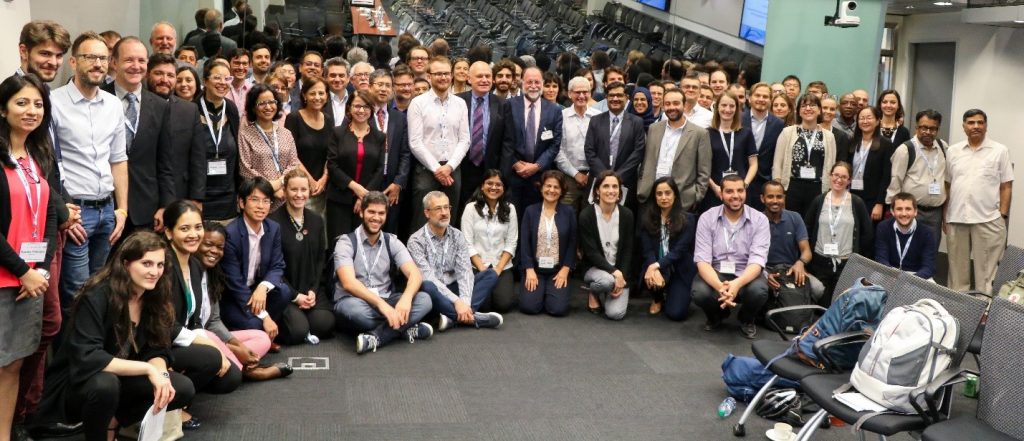
Focused on Improving Jobs Outcomes in Developing Countries, the third edition of the Jobs and Development Conference was at World Bank headquarters in Washington, DC on June 6-7, 2019. It was organized by IZA together with the World Bank and the five partner institutions of the Network on Jobs and Development.

“This conference opened space for policymakers and labor economists to exchange ideas about what works for improving jobs outcomes and how developing countries are shaping up to tackle the future of work agenda,” said co-organizer Gary Fields (Cornell University and IZA).

The conference, attended by more than 100 registrants as well as by delegates from Washington-based institutions, kicked off with a policymakers’ panel, where Prakash Loungani (IMF), Indhira Santos (World Bank), Steven Ayres (DFID), and Kunal Sen (UNU-WIDER) discussed how to improve the design of labor market institutions in developing countries to accelerate the growth of good jobs and promote universal access to social protection; how to improve jobs outcomes for women; and ways to transform agriculture to generate better jobs in Africa.

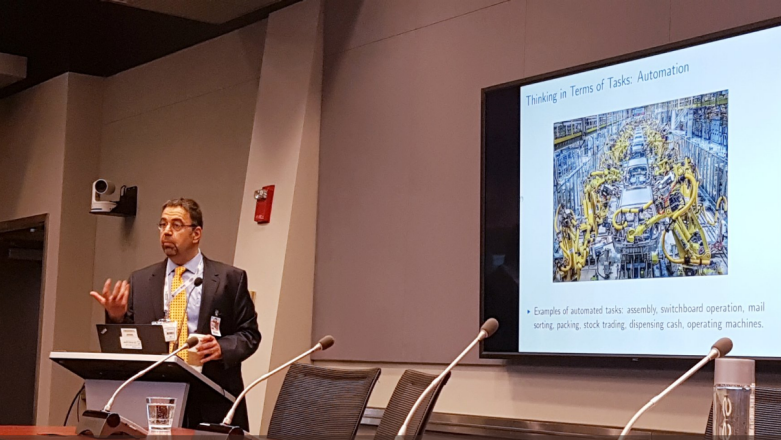
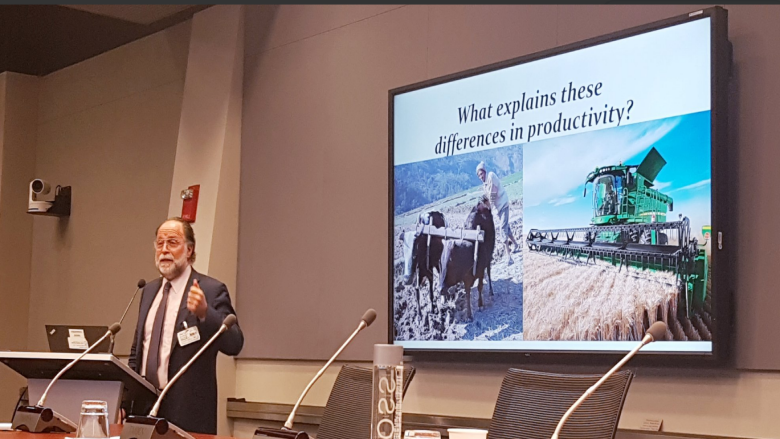
Keynote speeches from MIT’s Daron Acemoglu and Harvard’s Ricardo Hausmann made the case for paradigm shifts in how we think about economic growth, jobs, productivity, wages, and the future of work – both in developed and developing countries.

Automation and the future of work

Acemoglu emphasized how automation is transforming the nature of work. Repetitive tasks previously performed by humans can now be automated. Contrary to what many pessimists have predicted, that isn’t making work redundant. Instead, other new tasks are being created, where humans have a comparative advantage. According to Acemoglu, the real threat to labor does not come from brilliant new technologies, but from “so-so” technologies that are “just good enough to be adopted but not so much more productive than the labor they are replacing” (read more in a recent IZA Newsroom article).

Development Scrabble

Hausmann highlighted how complex combinations of inputs lie at the heart of productivity and income growth. The problem is that “you run out of some inputs before others.” Hausmann laid out an extended metaphor of “Development Scrabble” where letters equate to expertise (normally requiring both people and tools); and words equate to the innovations that result from new combinations of letters. As a country or region assembles more letters, the possible combinations grow exponentially. Seen this way, development is a process of increasing complexity.

Parallel sessions included another sixty-five papers. Fifteen presentations were organized by the partner institutions, while fifty papers were chosen from more than 200 submissions in response to the Call for Papers. The program included researchers from more than twenty countries. Annual Jobs and Development Conferences are planned for the next five years in countries around the world.

Filed Under: IZA News, Research Tagged With: Development, future of work

New moms are healthier when dads can stay home

June 17, 2019 by Dajan Baischew

Giving fathers flexibility to take time off work in the months after their children are born improves the postpartum health and mental well-being of mothers. This is the main finding of a new IZA discussion paper by Stanford economists Petra Persson and Maya Rossin-Slater.

The researchers examined the effects of a reform in Sweden that introduced more flexibility into the parental leave system. The 2012 law removed a prior restriction preventing a child’s mother and father from taking paid leave at the same time. And it allowed fathers to use up to 30 days of paid leave on an intermittent basis within a year of their child’s birth while the mothers were still on leave.

The policy change resulted in some clear benefits for the mother’s health, including reductions in childbirth-related complications and postpartum anxiety, according to the empirical analysis. “A lot of the discussion around how to support mothers is about mothers being able to take leave, but we often don’t think about the other part of the equation—fathers,” Rossin-Slater said.

Giving families flexibility

The study underscores that the father’s presence in the household shortly after childbirth can have important consequences for the new mother’s physical and mental health: Following the reform, mothers are 14 percent less likely to need a specialist or be admitted to a hospital for childbirth-related complications—such as mastitis or other infections—within the first six months of childbirth. And they are 11 percent less likely to get an antibiotic prescription within that first half-year of their baby’s life.

There is also an overall 26 percent drop in the likelihood of any anti-anxiety prescriptions during that six-month postpartum period—with reductions in prescriptions being most pronounced during the first three months after childbirth.

Moreover, the study found that the average new father used paid leave for only a few days following the reform—far less than the maximum 30 days allowed—indicating how strong a difference a couple of days of extra support for the mother could make.

“The key here is that families are granted the flexibility to decide, on a day-to-day basis, exactly when to have the dad stay home,” Persson said. “If, for example, the mom gets early symptoms of mastitis while breastfeeding, the dad can take one or two days off from work so that the mom can rest, which may avoid complications from the infection or the need for antibiotics.”

Filed Under: Research Tagged With: child care, maternal health, mental health, paid maternity leave, paternity leave, physical health, spillover effects, workplace flexibility

Exposure to “high-achieving” boys in high school may harm girls in the long run

June 14, 2019 by Dajan Baischew

The gender composition of a class, a group of competitors, or a team has been shown to affect both individual and group outcomes. These findings point to potentially important consequences for issues ranging from effective teaching and the optimal structuring of teams to the design of evaluations in a variety of environments.

In a recent IZA Discussion Paper, Angela Cools, Raquel Fernández and Eleonora Patacchini attempt to move beyond the question of gender per se and instead focus on investigating a particular characteristic: “high-achievers” of a given gender. Does greater exposure to “high-achievers” of the same or different gender matter? To whom does it matter? And why?

The study investigates these questions in the context of high-school education using data from Add Health, a nationally representative sample of U.S. students in grades 7-12. To identify “high achievers” in terms of predetermined abilities rather than grades, which may be affected by interaction with fellow students at school (thus reversing cause and effect), the researchers look at parents’ educational attainment as a strong predictor of children’s academic achievement.

The analysis shows that greater exposure to “high-achieving” boys decreases the likelihood that girls go on to complete a bachelor’s degree. It also negatively affects their math and science grades and, in the long term, decreases labor force participation and increases fertility.

Exploring possible mechanisms, the researchers find that greater exposure leads to lower self-confidence and aspirations and to more risky behavior, including having a child before age 18. The girls most strongly affected are those in the bottom half of the ability distribution and those attending a school in the upper half of the socioeconomic distribution.

Greater exposure to “high-achieving” girls, on the other hand, has a positive effect of essentially the same absolute magnitude, increasing bachelor’s degree attainment for lower-ability girls, those without a college educated parent, and those attending “better” schools.

Boys, in contrast, are unaffected by “high-achievers” of either gender.

It remains unclear whether “high-achieving” boys have a direct negative effect on fellow female students, or a more indirect effect that may arise from how teachers react to these students or even from how the parents of these boys affect teachers or the allocation of resources.

Nonetheless, the findings suggest that policies should aim at increasing girl’s ambition and self-confidence, and at “counterbalancing” the negative effects of high-achieving through exposure to more high-achieving girls.

+++

Visit the IZA World of Labor to learn more about gender differences in…

  • …competitiveness
  • …risk attitudes
  • …team performance
  • …corporate hierarchies

Filed Under: Research Tagged With: achievement, education, gender, high school, peer effects

Breaking the cycle of poverty through education

June 12, 2019 by Dajan Baischew

Children that grow up surrounded by poverty often remain in poverty even into adulthood. To try to break this cycle, governments and nonprofit institutions have developed a broad range of policies and interventions. One such program is the Pathway to Education program that offers disadvantaged youth in Grades 9 through 12 free public transportation and postsecondary financial aid in exchange for commitments to regularly meet with an advisor, access tutoring assistance, and attend character-building group events.

Programs like Pathway appear effective at improving education attainment, but cost thousands of dollars per student. To justify these costs, it is necessary to consider long-term benefits. What policy makers are ultimately concerned with is return on investment in improving lifetime outcomes, such as earnings, in order to break the cycle of poverty. With the possibility that short-run impacts on academic outcomes may not easily translate to significant long-term impacts, the ability for comprehensive programs to improve long-run outcomes is an open question.

A recent IZA Discussion Paper by Adam M. Lavecchia, Philip Oreopoulos and Robert S. Brown delivers encouraging evidence that comprehensive student support programs can indeed lead to meaningful, long-run labor market benefits, including higher employment rates and earnings and a reduced reliance on social assistance.

Student support program in one of Toronto’s poorest community

The Pathway program started at Regent Park, Canada’s oldest and largest public housing project and one of the poorest communities in Toronto. Eligibility is based solely on the place of residence; for example, at its Regent Park site, only students living in the neighborhood’s public housing units are eligible for the program. Participation in the program, although voluntary, is extremely high, often in excess of 85-90 percent.

The research design compares the outcomes of individuals that were assigned to live in Regent Park during high school with students that were assigned to other Toronto public housing projects. To estimate long-term labor market outcomes, the authors matched high school administrative records to income tax records.

Increases in annual earnings and employment

The researchers find that eligibility for Pathways increases annual earnings at age 28 by approximately $3,100 or 19 percent. Eligibility for Pathways is also found to have a large positive impact on the fraction of disadvantaged youth that are employed as adults, by 15 percent, and postsecondary educational attainment. In addition, the program decreases the likelihood of receiving social assistance by more than a third.

The study is the first to estimate impacts of comprehensive support programs for high school students on earnings. It also adds to a growing body of evidence that interventions like Pathways have the potential to improve labor market outcomes and reduce reliance on social assistance more than a decade after students participate in the program. An important question remains around whether watered-down versions of these programs could generate similar effects for less cost, or whether programs like that work even better when delivered together with college level programs.

Filed Under: Research Tagged With: disadvantaged, lifetime outcomes, poverty, social assistance, student support program, youth

The wrong kind of AI?

June 7, 2019 by Mark Fallak

Artificial Intelligence (AI) is one of the most promising technologies currently being developed and deployed. There is a lot of excitement, some hype, and a fair bit of apprehension about what AI will mean for our security, society and economy. But a critical question has been largely overlooked: are we investing in the “right” type of AI, the type with the greatest potential for raising productivity and generating broad-based prosperity? Daron Acemoglu and Pascual Restrepo provide answers in a recent IZA Discussion Paper.

How technology affects labor

The standard approach to study the impact of new technologies on the nature of production and work presumes that any advance that increases productivity (value added per worker) also tends to raise the demand for labor, and thus employment and wages.

The reality of technological change is rather different, as Acemoglu and Restrepo explain. Many new technologies – those we call automation technologies – do not increase labor’s productivity, but are explicitly aimed at replacing it by substituting cheaper capital (machines) in a range of tasks performed by humans. As a result, automation technologies always reduce the labor’s share in value added (because they increase productivity by more than wages and employment).

In an age of rapid automation, labor’s relative standing will deteriorate and workers will be particularly badly affected if new technologies are not raising productivity sufficiently – if these new technologies are not great but just “so-so” (just good enough to be adopted but not so much more productive than the labor they are replacing). With so-so automation technologies, labor demand declines: the displacement is there, while powerful productivity gains contributing to labor demand are missing.

Automation and new tasks

In a second IZA Discussion Paper Acemoglu and Restrepo analyze the displacement and reinstatement of labor through the creation of new tasks. They develop a framework for understanding the effects of automation and other types of technical changes on labor demand, and use it to interpret changes in US employment over the recent past. They find that the slower growth of employment over the last three decades is accounted for by an acceleration in the displacement effect, especially in manufacturing, a weaker reinstatement effect, and slower growth of productivity than in previous decades.

Why the wrong kind of AI?

Economists tend to place great trust in the market’s ability to allocate resources in the most efficient way. But according to Acemoglu and Restrepo, most experts recognize that the market’s star doesn’t shine as brightly when it comes to innovation. For example, innovation creates externalities, i.e. other players benefit from the innovator’s new technology as well. Markets do not do a good job in the presence of such externalities.

There are additional factors that may have distorted choices over what types of AI applications to develop. One is that if employment creation has a social value, beyond what is in the GDP statistics (e.g. less inequality or happier citizens), which will be ignored by the market. Another factor is related to the tax policies adopted in the United States and other Western nations, which subsidize capital and investment while taxing employment. This makes using machines instead of labor more profitable.

All in all, while Acemoglu and Restrepo find no definitive evidence that research and corporate resources today are being directed towards the “wrong” kind of AI, they see no compelling reason to expect an efficient balance between different types of AI in the market for innovation. If at this critical juncture insufficient attention is devoted to inventing and creating demand for (rather than just replacing) labor, that would be the “wrong” kind of AI from the social and economic point of view. Rather than undergirding productivity growth, employment and shared prosperity, rampant automation would contribute to anemic growth and inequality.

Filed Under: Opinion, Research Tagged With: automation, digitalization, future of work, production, technology

Global distribution of (non-)routine work

June 4, 2019 by Mark Fallak

Will robots and artificial intelligence take our jobs? This question has been at the center of an intense public debate on the future of work. In this debate it is often overlooked that the task content of a given job may vary substantially, both within occupations and across countries.

In many countries the share of routine jobs – both cognitive and manual – has declined over time, presumably because such jobs are easily replaced by computers or automation, or can be outsourced to other countries.

Much of the existing research assumes that occupations are more or less the same across countries. But considering the large differences in labor productivity, technology adoption and skills between countries, this assumption appears questionable.

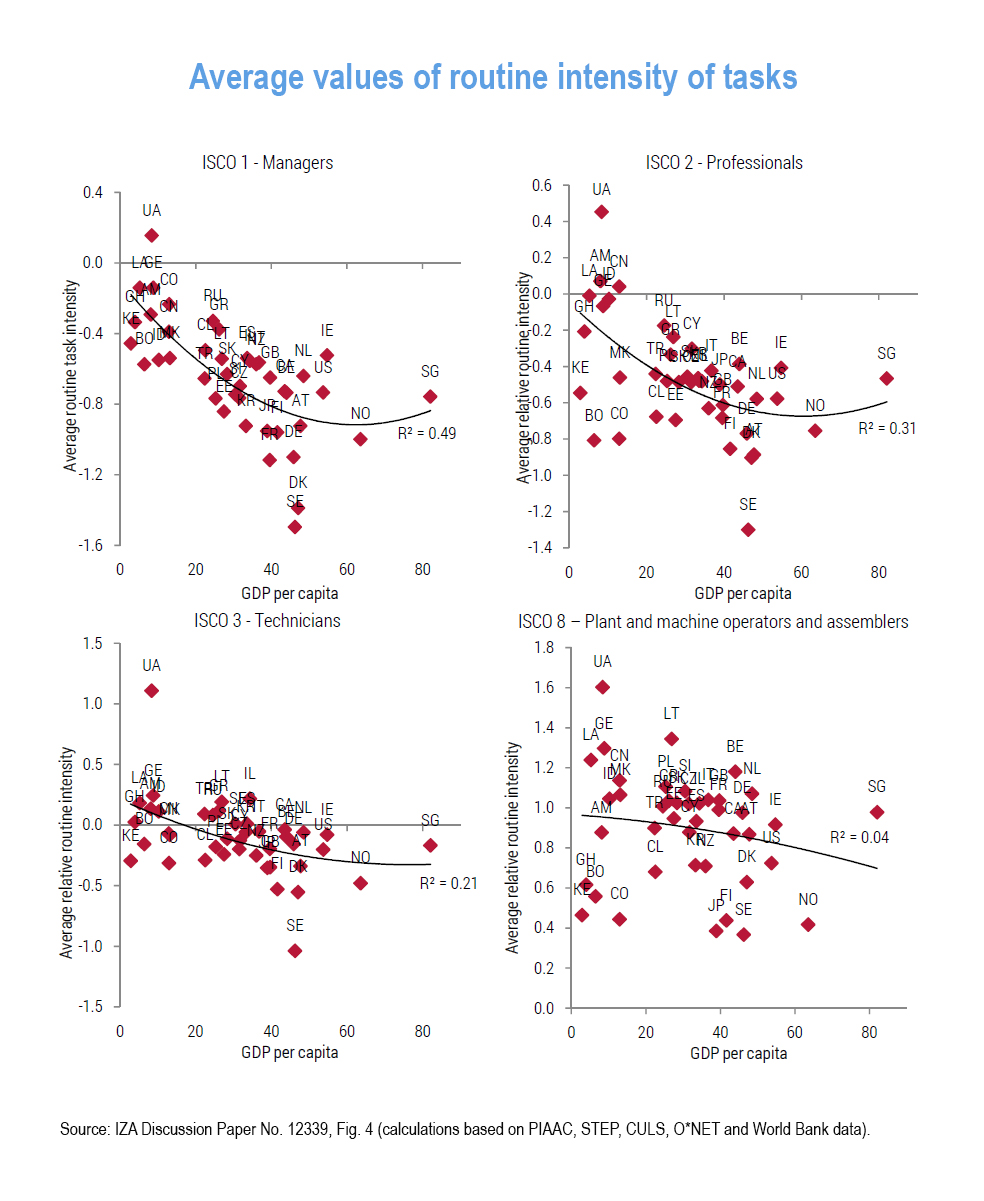
In a new IZA discussion paper, Piotr Lewandowski, Albert Park, Wojciech Hardy, and Yang Du present evidence that occupations are actually quite different in international comparison: Workers in countries with higher technology use, higher skills and broader participation in global value chains tend to perform less routine-intensive tasks.

To quantify the country-specific job tasks, the authors use micro-data collected from large-scale surveys of workers (PIAAC, STEP, and CULS) in 42 countries around the world spanning developed and developing countries.

They develop harmonized measures of occupational task content across occupations and countries. These measures describe the share of routine and non-routine tasks that are performed by workers of a specific job in a specific country to capture differences in job tasks across countries.

More non-routine tasks in developed economies

These differences turn out to be substantial, even within the same occupations. On average, workers in the more developed economies – especially in the high-skilled occupations– perform more non-routine cognitive tasks, both analytical and interpersonal, and fewer routine tasks.

In other words, the routine intensity of tasks performed by managers, professionals and technicians in developing countries is much higher than the routine intensity of tasks performed by their counterparts in the US, Germany or Scandinavian countries.

Therefore, studies that assume identical occupations around the world and apply the US-based measures to countries at noticeably lower stage of development will overestimate the importance of non-routine tasks in poor countries. They may also spuriously attribute wage premia enjoyed by these workers to technological change.

At the same time, for middle-skill occupations like clerical workers, and low-skill occupations like plant and machine operators and assemblers, the relative routine intensity of tasks varies considerably across countries but is not systematically related to the country’s level of development.

The role of technology, globalization and skills

The authors attribute the cross-country differences in tasks to three fundamental forces – technology, globalization, and supply of skills. International differences in the use of computers and other technology can best explain the cross-country variation in routine intensity in high-skilled occupations. This highlights the complementarity between non-routine tasks and ICT.

Globalization, in particular specialization of countries in narrow sections of global value chains, contributes the most to cross-country differences in routine intensity among workers in low-skilled and offshorable occupations. This confirms the view that offshoring enables countries to specialize, within industries, according to their abundant factors, so that poorer countries specialize in routine tasks and richer countries specialize in non-routine tasks.

Finally, the supply of skills also plays a role, especially in the low- and middle income countries, where lower supply of skills accounts for a large share of the difference in routine intensity compared to the most advanced countries.

The supply of skills is often overlooked in the studies of tasks that are focused on the most developed countries. However, this new evidence shows that it in the poorer countries it should be accounted for as it may help to understand not only why the shares of high-skilled occupations are low, but also why the tasks performed by workers in given occupations are more routine-intensive.

In sum, the paper stresses that cross-country differences in task content of jobs are sizable. Understanding the extent and nature of these differences is of both scientific and policy relevance, as they reflect differences in the nature of work that can inform future labor market challenges, such as the share of jobs that can be automated.

Filed Under: Research Tagged With: automation, digitalization, future of work, globalization, occupations, routine intensity, skills, task content, technology

Causes, costs and benefits of migration

May 31, 2019 by Dajan Baischew

For the 16th Annual Migration Meeting, the organizers chose a location with one of the richest histories of migration in the world, namely Ireland. Hosted by the UCD Geary Institute for Public Policy, the meeting brought together 16 presenters discussing the latest research in the economics of migration in a two-day workshop.

The highlight of this year’s workshop was the keynote by Prof. Sir Paul Collier from the University of Oxford, one of the leading development economists. In a thought-provoking lecture entitled “Sustainable Migration”, he focused on potential welfare costs of migration that cannot be explained by the standard models in labor economics and their implication for migration policy. One example is that immigration may induce firms to train domestic workers less, which leads to an under-investment in tacit knowledge. Another example is the location choice of high-skilled immigrants, who predominantly locate in large cities.

While migrants contribute to the success of cities, they are often the main beneficiaries of agglomeration rents while medium-skilled natives get priced out of large cities. As a consequence, migration may contribute to the growing divide between big cities and the periphery, which affects the social fabric in many countries. Despite some well-documented benefits of migration, it is important that these costs be measured and that they feed into the design of migration policy. Collier advocates a sustainable migration policy that minimizes the economic, political and social costs of migration for the sending and receiving countries.

Investigating refugee flows

A key theme of the meeting was the economic impact of refugee flows. Looking at the recent wave of Syrian refugees to Turkey, work by Onur Altindag shows that refugee inflows led to an increase in local economic activity by enhancing the productivity of existing as well as the creation of new firms.

Panu Poutvaara makes use of novel data on refugee flows to investigate the self-selection of refugees and irregular migrants in 2015 and 2016. He documents a strong positive selection of both groups; it is mainly the most skilled workers who flee to Europe while the less skilled remain behind.

Work by Dany Bahar shows that returning refugees can enhance economic growth in their country of origin. The paper looks at refugees from former Yugoslavia who were living and working in Germany before being repatriated after the end of the Balkan wars. The paper reveals a striking finding: industries that welcomed many returning refugees grew faster after the war and showed stronger export performance. This suggests that returnees brought back knowledge from Germany which had a large benefit for local companies.

Besides refugees, the presentations covered a broad range of topics such as the impact of high-skilled migrants on the labor market, the effect of sanctuary cities on law enforcement in the US, the effect of  migrant rights on the desire to emigrate, the effect of identity on the economic and social integration of second-generation immigrants, and the effect of teachers speaking the same foreign language on the test scores of immigrant children.

See the workshop program for a full list of presentations.

Filed Under: IZA News, Research Tagged With: illegal migration, immigration polices, labor market, migration, refugee

  • Previous Page
  • Page 1
  • …
  • Page 22
  • Page 23
  • Page 24
  • Page 25
  • Page 26
  • …
  • Page 69
  • Next Page

Primary Sidebar

© 2013–2025 Deutsche Post STIFTUNGImprint | Privacy PolicyIZA