• Skip to primary navigation
  • Skip to content
  • Skip to primary sidebar

IZA Newsroom

IZA – Institute of Labor Economics

  • Home
  • Archive
  • Press Lounge
  • DE
  • EN

Mark Fallak

Matching workers and jobs online

November 2, 2021 by Mark Fallak

Many types of markets, the labor market among them, take place online over the internet. For that reason, leveraging the internet as a data source of social science, and labor economics in particular, is at the core of the research mission of IDSC, IZA’s research data center.

When markets take place online, the underlying information and communications technology is used to optimize the matching of supply and demand, which is the core problem of any market. Generating transaction data in such markets can be done easily and efficiently, due to the nature of digital technology, which can then be used to rewind and replay the markets so that studying and understanding such markets depends heavily on access to such data.

Organized by Nikos Askitas and Peter J. Kuhn, the fourth IDSC workshop brought together economists from across the globe to showcase research with online data in three sessions (Search and Matching / Evidence from Vacancy Postings / Search Behavior), featuring three keynote lectures (“Salary History and Employer Demand” / “Online Jobs Vacancies in the Covid Crisis” / “Algorithmic Hiring”). A key feature of this year’s workshop was the large number of high quality, deep, multidisciplinary job market papers, some of which are summarized below.

Solving congestion in labor market recommender systems

Designing labor market recommender systems is a fundamentally different problem than designing product recommender systems. This is because most workers can only work for a single firm, while firms can often serve millions of customers at the same time. Thus, while it makes sense for algorithms to suggest the same movie to a large number of customers, suggesting the same worker to all firms would be disastrous. Using data from the French Public Employment Service (PES), Bruno Crépon and co-authors propose and evaluate improvements to existing algorithms that solve this ‘congestion’ problem. Using the mathematics of optimal transport, the study generates substantial improvements on product-type labor market recommendation algorithms.

Predicting wage premia from the language of job postings

Following the rich tradition in the economics literature of estimating wage premia for various job characteristics by applying hedonic regression, Sarah H. Bana applied natural language processing (NLP) techniques on data with salary information from Greenwich.HR linked with job postings data from Burning Glass Technologies to build a model that predicts salaries from job postings text. The model explains 73% of the variation, which is 10 percentage points above a fixed effects model using occupation and location. The result of the paper is a crucial input in the matching process as firms and workers make strategic decisions in the two-sided market.

Alma mater matters: A global look at university quality

While several countries have popular ranking systems for their universities, to date it has been hard to compare the value of degrees from universities in different countries.  Using Glassdoor data on the earnings of a college’s graduates, and exploiting the fact that graduates from top universities are increasingly internationally mobile, Jason Sockin and co-authors are able to solve this comparability problem. While their ranking of colleges is correlated with existing rankings (such as U.S. News), it ranks liberal arts colleges and top science and engineering schools in developing countries much higher. Their paper shows that graduates of the latter schools make an outsized contribution to world entrepreneurship and innovation, regardless of the country they work in.

For a full list of presentations see the workshop program.
Filed Under: IZA News Tagged With: internet data, labor demand, labor supply, matching, online job boards

New contributions of economic research to the study of time, sleep and stress

October 28, 2021 by Mark Fallak

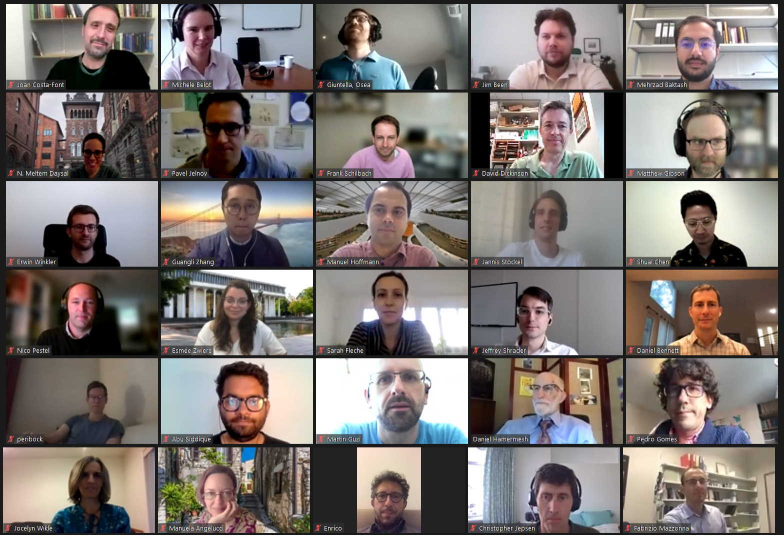
Economists have recently started to dive deeper into the relationship between time, sleep and stress. To present and discuss new research on these issues, the IZA Workshop on the Economics of Time Use and Mental Health: Stress, Sleep, Fatigue and Employment, organized by Michèle Belot, Joan Costa-Font, Osea Giuntella and Nico Pestel, brought together economists analyzing the relation between time use and mental health.

In his keynote address, Dan Hamermesh explained that the unique contribution of economists to the study of time, sleep and mental health is the consideration of the role of time, prices and constraints (income effects). He discussed the importance of time constraints asking about the Keynes conjecture (1980) about how people allocated their time when they don’t need to work anymore and the effect of time gifts. He also focused on the importance of sleep variability (and volatility), which affects well-being and is highly driven by income and education.

Leisure, sleep and mental health

The first presentation of the workshop addressed the question whether watching TV has a positive or negative effect on individual well-being. Manuel Hoffmann explored the roll-out of commercial TV in West Germany in the late 1980s where receipt of commercial TV via terrestrial frequencies was initially restricted to certain geographic areas. According to the study, TV consumption increased in areas with access to commercial TV but did not affect health outcomes while the effects on life satisfaction are positive.

The paper presented by Sarah Fléche explored the impact of DST (Daylight Saving Time) on individuals’ welfare. Using survey data from Germany, she finds that the Spring DST causes a significant decline in life satisfaction. The negative impacts on physical and emotional health seem to follow from deteriorated sleep and increases in time stress induced by the DST policy.

Life shocks and mental health

Next, Petri Böckerman presented evidence on the causal effects of parental death on children’s mental health. Building on unique register-based data from Finland on children born between 1971 and 1986, the authors conduct an event study and find that losing a father has large effects on boys, and losing a mother has large effects on girls, while there is no clear evidence of increased hospitalization following a death of a parent of a different gender. Depression is the most common cause of hospitalization in the first three years following paternal death, whereas anxiety and, to a lesser extent, self-harm are the most common causes five to ten years after paternal death.

Jim Been introduced a study about the effects of job loss on health. Using micro-level panel data from the Netherlands on health, employment, and job loss expectations, the paper finds no evidence of an impact on physical and mental health, but instead positive effects in terms of reductions in headaches and fatigue. The results suggest that the immediate effects of reduced work stress are bigger than the immediate increase in financial stress from job loss.

Medication and gender

Meltem Daysal presented evidence on the impact of adolescent antidepressant use on academic achievement. Using an identification strategy based on heterogeneity in specialists’ propensity to prescribe, the paper finds that antidepressant use leads to an increase in test scores in math.

By using a similar identification strategy based on heterogeneity in average prescription behavior by family doctors, Janet Currie and Esmee Zwiers demonstrated the effects of postpartum depression medication in the Netherlands. They find that postpartum depression medication affects the propensity to use anti-depressants later on in life but does not affect labor market outcomes.

Abu Siddique ended the session with a study of the impact of tele-counseling for women in rural India during the Covid-19 pandemic. The intervention reduced the propensity of women to be stressed and depressed and to be food insecure both immediately after the intervention ended and in a follow-up ten months later.

Economic impact of mental health

Daniel Bennett examined the effect of psychiatric care interventions reducing depression in India. The paper documents positive effects on human capital accumulation, which is explained by reduced barriers to action, though no effects were observed on productivity.

Finally, Barbara Biasi discussed the career effects of individuals with mental disorder by using Danish data documenting labor market penalties in the range of 35-70 percent. To investigate the causal effects of mental health on a person’s career, the paper exploits the approval of lithium as a maintenance treatment, which closed the labor market gap by about one-third.

Filed Under: IZA News Tagged With: fatigue, mental health, sleep, stress, time use

Three IZA Research Fellows receive Economics Nobel Prize

October 11, 2021 by Mark Fallak

The Sveriges Riksbank Prize in Economic Sciences in Memory of Alfred Nobel 2021 will be awarded to David Card (UC Berkeley) “for his empirical contributions to labor economics” as well as Joshua D. Angrist (MIT) and Guido W. Imbens (Stanford University) “for their methodological contributions to the analysis of causal relationships.”

“A very well deserved Prize,” said IZA Network Director Daniel Hamermesh. “Their work has affected and enhanced the thinking and research of all labor economists — and it has added to public interest in and understanding of labor issues.”

All three laureates have been IZA Research Fellows for many years. Card and Angrist joined IZA over 20 years ago and have been among the most active IZA Research Fellows ever since, submitting dozens of IZA Discussion Papers and participating in a number of IZA events. In November 2006, David Card was awarded the IZA Prize in Labor Economics jointly with Alan Krueger.

For more information see the nobelprize.org press release.

Filed Under: IZA News Tagged With: Nobel Prize

It hurts to be economically insecure

September 24, 2021 by Mark Fallak

According to a study published in 2021, about one-fifth of citizens in rich nations suffer from chronic pain. Although the economic costs of chronic pain among workers are substantial, this phenomenon has been relatively little studied in large cross-national samples. To fill this gap, a new IZA discussion paper by Andrew Oswald and Lucía Macchia explores the link between economy-wide fluctuations and the amount of pain in a society. The authors analyze data on approximately 1.3 million adults in a large sample of countries.

Standard economic reasoning would predict that people work longer hours in good times, so pain levels would be expected to increase when the economy booms. However, the paper finds the opposite: The level of physical pain felt by a country’s population is lower in a boom and greater in an economic downturn with high unemployment. The estimated effect sizes are most pronounced in richer countries.

The analysis suggests that an extra three percentage points of unemployment is associated with just under a one percentage point rise in the numbers of citizens in pain. For the United Kingdom with a population of about 65 million, a three-percentage point rise in unemployment (from the UK mean) would be associated with an extra half a million people reporting a lot of physical pain.

The findings hold after adjusting for those individuals who themselves join the ranks of the unemployed in a recession. In other words, the extra half million adults are not the jobless. Instead, the measured rise in national pain can be considered a kind of multiplied external consequence of recession – a spread of pain that extends beyond those made literally jobless and is detectable in the pain levels felt by other adults who were not. This could be explained with the link between mental stress and physical pain. People who are anxious and under psychological strain may be intrinsically tense, and susceptible to illness, and thus might report (and feel) greater physical pain.

Notably, the increase in physical pain is found predominantly among women. There are several potential explanations, including increased domestic abuse and violence, greater exploitation of vulnerable kinds of employees, physical injuries resulting from criminal activity, and physiological effects from the consumption of cheaper and less healthy kinds of food. Also, other studies found that women during recessions are more likely to experience high work demands, have little decision authority at work, lack control over their work situation, and tend to be more pessimistic about the future.

Filed Under: Research Tagged With: boom, health, pain, recession, unemployment, well-being

Costs and benefits of postponing elections during the pandemic

September 17, 2021 by Mark Fallak

During the COVID-19 pandemic, politicians are faced with the enormously difficult task of balancing individual liberties and public health when it comes to human interactions of various sorts. Especially mass gathering events may lead to an exponential spread of infections when social distancing cannot be maintained.

A particular tough policy dilemma is the case of holding elections or referenda at a time of high infection rates. Such official voting events are mass gatherings of vital importance for the functioning of democratic countries, and their postponement or cancellation can undermine the citizens’ trust in the political institutions of a country.

However, during the first 18 months of the pandemic alone, about 80 countries decided to postpone national or regional elections due to public health concerns. Since there has been little scientific evidence on the effects of such events on the spread of COVID-19, the choice whether to hold or postpone forthcoming elections was mostly at the discretion of politicians and their public health advisors.

Voter turnout matters

A new IZA discussion paper by Marco Mello and Giuseppe Moscelli aims to fill this gap. First, the authors evaluate whether holding national-level polls during an epidemic increases the number of new infections in municipalities with a higher turnout. Second, they evaluate the opportunity cost of holding the ballots in terms of the hospital costs and lives saved when a general election to be scheduled during a high infection rate period is postponed.

The paper exploits the polls held in Italy in September 2020 serve as a source of exogenous variation to identify the causal effect of voters’ turnout on COVID-19 infections, and the government crisis of early 2021 (during which new elections were barely avoided) as a real case scenario to build the cost-benefit analysis.

The exogenous and significant increase in the turnout rate, provided by the peculiar setting of the September 2020 election day, allows the researchers to overcome one of the main issues related to the first research question, namely the fact that the choice of voters to cast a ballot depends on the severity of the epidemic stage.

Thousands of lives saved

According to the study, a one-percentage-point increase in the turnout rate leads to an average 1.1% increase in new weekly coronavirus infections. The cost-benefit analysis shows that the choice to avoid a general election during a period of high contagion might have spared Italy around €362 million in hospital care costs and about 23,000 lives saved from COVID-19.

The authors argue that focusing on the turnout impact is relevant for policymakers because the spread of new infections is a function of the ‘mass gathering intensity’ provided by the voters’ turnout, not just by holding in-person elections. Focusing on the turnout intensity also allows policy-makers to elaborate cost-benefit analyses based on realistic scenarios of expected turnout to polls, helping them in the decision whether to keep or postpone the polls.

Filed Under: Research Tagged With: COVID-19, elections, mass gatherings, public health, voting

Air pollution reduces electoral support for government parties

September 13, 2021 by Mark Fallak

Poor air quality has well-documented adverse impacts on health and the environment, but also causes important psychological, economic and social effects. A high level of air pollution can impair cognitive functioning and trigger negative emotions such as anxiety and anger. Recent findings suggests that these psychological impacts have knock-on effects on people’s decision making. In a new IZA paper, Luna Bellani, Stefano Ceolotto, Benjamin Elsner and Nico Pestel study the effect of air pollution on a high-stakes decision made by millions of people at a time, namely voting in parliamentary elections. In elections, people decide on the same issue on the same day but in different locations, which means that they are exposed to different levels of air pollution when making their decision.

Incumbent parties lose support on days with dirty air

The study uses county-level data on 64 federal and state parliament elections in Germany between 2000 and 2018, combined with daily measures of air pollution and weather conditions. The measure of local air pollution is the daily average concentration of particulate matter (PM10), one of the most frequently used indicators for suspended particles in the air. The outcome of interest is the vote share of the parties forming the incumbent government coalition on the day of the election. Voting for incumbent parties can be seen as an expression of support for the status quo. Relative to voting for opposition parties, voting for the current government also represents the less risky option.

The paper’s main finding is a negative effect of air pollution on the vote share of the incumbent parties and a corresponding increase in the vote share of established opposition parties. An increase in the ambient concentration of PM10 by ten micrograms per cubic meter – an increase that would commonly occur in many German cities – reduces the vote share of the incumbent parties by two percentage points and increases the vote share of established opposition parties by 2.8 percentage points. These are large effects, given that the typical drop in support for the incumbent government is around five percentage points.

Effect of air pollution driven by voters’ unhappiness with current government

The authors document similar effects in two large-scale representative surveys from Germany. One is a well-known monthly opinion poll carried out on behalf of German public television (Politbarometer). The results show that on days with higher pollution in a respondent’s region, respondents report a lower intention to vote for the incumbent federal government and a greater intention to vote for the opposition. At the same time, the results indicate a lower approval of the current government’s policies, while approval of the opposition is unaffected.

A second piece of evidence comes from the German Socio-Economic Panel Study (SOEP). Again, on interview days with higher air pollution, respondents show weaker identification with the current federal government and stronger identification with the opposition.

Emotions as a plausible mechanism affecting decision making

Using the SOEP survey data, the authors provide evidence that emotions are an important explanation why voters respond to poor air quality. On days with elevated levels of air pollution, respondents are more likely to be worried, feel angry and sad, and are less likely to feel happy. In contrast, there is no evidence that air pollution affects people’s perceptions of the current state of the economy or their own economic situation.

The authors view their findings as evidence of a behavioral bias. At the levels measured in Germany, the concentration of PM10 is not directly noticeable. People may notice a higher concentration through symptoms such as irritation of the airways or coughing. But since the same symptoms could also be caused by factors other than particulate matter, it is unlikely that people deliberately choose to change their voting behavior because they are exposed to high air pollution. A more likely explanation is that air pollution has an unconscious effect on voting, for example by affecting a person’s emotions or health, which in turn affects how they process information and make decisions.

Filed Under: Research Tagged With: air pollution, behavior, elections, emotions, environment, voting

What happens to workers at firms that adopt new technologies?

September 7, 2021 by Mark Fallak

Recent technological developments such as artificial intelligence (AI), augmented reality (AR), or 3D printing have given rise to a new generation of technologies suspected of having profound impacts on the labor market. Some speak of the second machine age, others call it the Fourth Industrial Revolution. Fears range from major employment losses to the loss of high-skill jobs. Despite such claims, there is little empirical evidence on the implications of these new technologies for firms and workers, partly due to a lack of data at the firm level.

New data on the diffusion of cutting-edge digital technologies

A new study by IZA researcher Terry Gregory, together with colleagues from Utrecht University and IAB, provides fresh insights into the individual-level adjustments of workers in response to technology investments for the case of Germany. The authors collected novel data that links representative survey information on firms’ technology adoption to administrative social security records. This allows the research team to distinguish between firms that invested in older non-digital technologies (referred to as non-adopters), digital technologies (3.0-adopters), and more recent digital and connected technologies (4.0-adopters).

According to the study, the most recent 4.0 technologies (e.g., AI, AR, or 3D printing) still play a relatively minor role across firms in the German economy: only about every fifth firm has adopted technologies associated with the Fourth Industrial Revolution. However, although 4.0-adopters constitute a relatively small group of firms, they are moving forward relatively fast at the technological frontier, as suggested by their heavy investments in the recent five-year period between 2011 and 2016. This suggests that modern technologies will continue to penetrate all sectors of the economy in the coming years.

Improved employment stability, wage growth and earnings

Besides describing the degree of technology adoption in Germany, the authors track workers’ employment biographies in the aftermath of firms’ technology investments. Overall, they find evidence for improved employment stability, higher wage growth, and increased cumulative earnings in response to digital technology adoption. However, the beneficial labor market adjustments split differently across digital technologies: older digital 3.0-technologies relate to a significant increase in workers’ employment stability and translate into higher cumulative labor earnings. In comparison, more recent digital and connected 4.0-technologies are associated predominantly with significantly pronounced wage growth without corresponding pronounced adjustments in employment days and earnings.

On the one hand, this could indicate that cutting-edge 4.0 technologies are less “brilliant” than expected, similar to “so-so” technologies. On the other hand, it could reflect that firms adopting 4.0 technology are currently still in an investment and transition phase, such that their productivity gains and business expansions from these technologies have not yet been entirely generated and realized, a hypothesis put forward in The Second Machine Age.

Do service providers create better jobs in the digital era?

More detailed breakdowns of the results suggest that the beneficial adjustments seem to be driven by technologies used by service providers rather than manufacturers. This aligns with the results of other research in the field, for example on the adjustment of labor markets to robots. One idea put forward by the new study is that manufacturing-related technologies (e.g., industrial robots) tend to be more labor-saving compared to technologies predominantly used among service providers (e.g., personal computers and AI). One implication arising from this finding is that focusing on specific manufacturing-related technologies, as done by many studies on robot adoption, might miss substantial parts of the beneficial adjustments from technology adoption more generally.

IT-related expert jobs benefit, but not necessarily academics

A further result of the study is that the adjustments do not occur equally across worker groups: IT-related expert jobs with non-routine analytic tasks benefit most from technological upgrading, coinciding with highly complex job requirements. To the authors’ surprise, this does not necessarily coincide with a higher demand for academics. In contrast, the jobs that benefit are primarily held by workers with vocational training (e.g., occupations in business organization and strategy or technical production planning controllers). The authors suggest this might reflect the strength of the German vocational training system or point towards supply shortages in the labor market such that firms currently do not find enough workers with academic skills.

Filed Under: Research Tagged With: artificial intelligence, employment stability, Industry 4.0, technological change, wages

IZA/SOLE Transatlantic Meeting of Labor Economists celebrates 20th anniversary

September 6, 2021 by Mark Fallak

Organized by Gerard A. Pfann and Terry Gregory, the 20th edition of the IZA/SOLE Transatlantic Meeting of Labor Economists (TAM) was held in a virtual format. The event traditionally brings together researchers from the IZA network and from the U.S.-based Society of Labor Economics (SOLE) to discuss cutting-edge research in the field of labor economics.

In light of the 20th anniversary, the president of SOLE (Kevin Lang) as well as the TAM originators (Gerard Pfann and Daniel Hamermesh) together with two presenters at the first meeting (Petra E. Todd and Coen Teulings) accepted invitations to present papers to celebrate the occasion. Among others, invited labor economists from both sides of the Atlantic exchanged research on fundamental changes on the labor market due to rapid technological progress, minimum wage policies and forces behind the gender pay gap.

Rising wage inequality in the digital transformation

The conference started with a presentation by Jeanne Tschopp, who addressed the rise in wage inequality observed between firms in many developed countries. She provided evidence on Germany speaking in favor of task-biased technological change in driving this trend. Accordingly, progress in automation and digitization technologies substitutes for workers in occupations that are intensive in routine, easily codifiable tasks. While other studies have shown this to widen the wage gap between workers in different task groups, Tschopp pointed out that rising wage inequality is also driven by increased wage differentials within tasks across firms. In other words, the type of firm to which individuals are matched is crucial: “Routine workers employed in low-productivity firms lose out not only relative to abstract workers in these firms, but also relative to routine workers in high-productivity ones,” Tschopp concluded.

What is an optimal minimum wage policy?

Other researchers discussed minimum wage policies as one of the most popular instruments in fighting wage inequality. For instance, Coen Teulings addressed the question of an optimal minimum wage in his key note lecture. After sketching some of the major challenges in minimum wage research over the past 40 years, Teulings used US data starting from 1979 to show that while minimum wages reduce wage inequality, they also lead to heterogeneous employment effects along the human capital distribution. In particular, he finds negative employment effects for the lowest percentiles of the human capital distribution, whereas employment effects for all other lower-percentile workers are positive, provided that the minimum wage is not set “too high.”

Returns to personality traits as drivers for gender pay gap

A further highlight of the conference was the keynote by Petra Todd on “Labor Market Returns to Personality.” She provided evidence for the impact of the so-called Big Five personality traits on labor market outcomes and related gender disparities using German data. She finds that women and men are rewarded differently for two traits, conscientiousness and agreeableness, which largely explains gender labor market disparities on the labor market. In her final statement, she concluded that “if women were to receive the same return that men receive for their personality traits, the wage gap would be eliminated.”

See the conference  program for the full set of presentations.

Filed Under: IZA News Tagged With: gender pay gap, inequality, labor economics, minimum wage, SOLE, Transatlatic Meeting

Mergers and acquisitions change the hierarchical structure of the firm

August 27, 2021 by Mark Fallak

How do firms restructure their operations after mergers and acquisitions (M&As)? Although a large literature documents that M&As create financial wealth by analyzing stock returns and other financial data, little is known about the creation of these synergies. A recent IZA discussion paper by Britta Gehrke, Ernst Maug, Stefan Obernberger and Christoph Schneider argues that much can be learned from analyzing employee flows and changes in the composition and size of the workforce of the merged firm.

The study investigates a large sample of acquisitions in Germany between 1997 and 2014 and tracks the worker flows after the acquisition. In particular, the worker flows are compared relative to those of control firms with similar characteristics that have not been affected by M&A activity.

Overall restructuring activity is very large

On average, targets lose 55.4% of their workforce by the end of the second calendar year after the acquisition, and the combined workforce of the merged firm declines by 7.2%. This employment decline is concentrated in those targets that are closed completely, whereas employment in surviving targets is stagnant. More than 40% of the employees who leave the merged firm become either unemployed or accept lower-paid jobs. Larger acquirers grow more after acquiring a target of a given size, which is surprising, since larger firms typically grow less. The authors interpret this finding such that larger acquirers have more managerial capacities in place, but lack the growth options to deploy them. These growth options are then acquired externally in M&As.

There is a significant increase in employee turnover, so that net employment changes alone do not reveal the full extent of restructuring. Two years after the acquisition, merged firms have lost 13.4% more employees than comparable control pairs of acquirer and target, about half of whom are replaced by new hires. Turnover shifts jobs from the target to the acquirer, since increased hiring occurs at acquirers, whereas job losses are concentrated at the target.

The study shows that firms replace departing workers with similarly qualified and slightly better educated new hires, but who are on average much younger (about four years or 10% of the average pre-acquisition age of the work force) and less expensive than the departing employees (about 11% reduction in daily compensation). Hence, firms save costs when they replace workers by hiring less-experienced workers, not by hiring workers with lower education or qualification.

Firms trade off the costs of the skills and knowledge of a better-trained workforce against the costs of a more hierarchical structure with more specialized managers, who solve production problems that cannot be solved in the lower tiers of the organization. After M&As firms transfer more problem-solving to the higher layers of the organization, and economize on the costs of employees in the middle and lower layers.

Mergers create internal labor markets

Flows between establishments of the merged firm increase by 3.5% of the merged firm’s total employment. These are mostly flows from the target to the acquirer, with a much smaller flow in the opposite direction. Interestingly, there are also abnormal flows of about 1% of the merged firm’s employment within acquirers or within targets, which would have been feasible before the acquisition and indicate that mergers set in motion a chain of new job assignments within the merged firm.

However, while activity in the newly created internal labor market of the merged firm is significant, it accounts for only about one-quarter of abnormal employee flows. The other three quarters of the restructuring after acquisitions occurs through external hiring and releases of employees to the external labor market, either to other firms or to unemployment. The main driver of a stronger use of internal labor markets is the degree of hierarchization of the acquirer: Operating an internal labor market seems to demand higher managerial capacities.

Targets and acquirers contribute complementary assets

The study emphasizes the complementarity of two intangible assets to create synergies with M&As: (1) growth options and (2) organizational skills and management practices. M&As allow firms to economize on the costs of the labor force in three ways: First, by streamlining production and reducing the size of the workforce; second, by increasing turnover, which shifts jobs from the target’s establishments to those of the acquirer, and leads to the displacement of existing employees by younger, less expensive, and better-educated employees; third, by increasing job rotations in internal labor markets. Building hierarchical structure and managerial capacities appears critical for this process.

Filed Under: Research

Hotter temperatures increased workplace injuries in California

August 20, 2021 by Mark Fallak

Hotter temperatures in California significantly increase the risk that workers will be injured on the job, according to a new IZA discussion paper by Jisung Park, Nora Pankratz and Patrick Behrer. The study finds these incidents are vastly undercounted in official records.

The researchers gathered information on about 18 years’ worth of claims from California’s workers’ compensation system — the largest in the country — and compared it to daily temperature data. They found that workplace injuries and accidents increased by as much as 9% on days when temperatures were in the 90s and rose by as much as 15% on days in the 100s.

Though much of the research and media attention has been on how heat affects people who work outdoors in agriculture and construction, the study found that high temperatures increased accidents for indoor workers, too, endangering people employed in manufacturing, warehousing and wholesale.

The types of injuries were not isolated to heat sickness or exhaustion. Workers were more likely to fall, be hit by a moving vehicle or mishandle dangerous machinery — accidents that researchers suggested could be the result of heat’s ability to impair decision-making.

Judging by official records alone, one would think that heat-related workplace injuries are rare. In California, only about 850 injuries per year are classified as being caused by extreme heat. But by looking at whether injuries increased on hot days, the researchers discovered the true tally is likely much greater.

In total, rising temperatures caused about 20,000 additional workplace injuries per year, imposing an estimated cost of $1 billion on workers, employers and the state as a whole, according to the study.

The authors also found that when temperatures rise, the burden is not shared equally. Men and younger workers are at much greater risk of injury on a hot day, even in indoor settings.

Low-wage workers fare the worst, in part because they tend to work in more dangerous jobs, and they often live and work in the hottest parts of the state. The study found that someone in the bottom 20% of earners was five times more likely to be injured on a hot day than someone in the top 20%. Because workers’ compensation and health insurance cover only a fraction of these employees’ lost wages and medical bills, the research suggests that rising temperatures could also fuel income inequality.

Contrary to the researchers’ expectations, these trends did not worsen over time as climate change makes heat waves in California more frequent and more severe. The data showed that heat began to have less of an effect around 2005, at roughly the same time California adopted a heat illness prevention regulation that required outdoor workers to be given shade, water and training on ways to avoid heat exhaustion.

While there is no clear indication whether the state’s outdoor heat regulation was truly effective, the findings suggest there are things employers can do on hot days to prevent workers from getting hurt.

+++

Adapted from the Los Angeles Times – read the full article here.

Filed Under: Research Tagged With: climate change, heat, inequality, workplace safety

  • Previous Page
  • Page 1
  • …
  • Page 15
  • Page 16
  • Page 17
  • Page 18
  • Page 19
  • …
  • Page 30
  • Next Page

Primary Sidebar

© 2013–2025 Deutsche Post STIFTUNGImprint | Privacy PolicyIZA